[Music]
>>It's very exciting for us to be able to bring a new piece to life,
and that piece is called Mass Observation.
It's by the wonderful composer Tarik O'Regan.
And this is the result of a commission that began a few years ago with Mr. O'Regan.
But it really began before that,
through the generosity of donors,
particularly Barbara Levy
and the Brehm choral commissioning fund
that allowed us then to dream.
When I first contacted Tarik about his interest in writing a work for the Chamber Choir,
I had no idea what he would be interested in
or if he would be interested.
When he said yes, he'd be interested in doing it,
then the door was wide open to say,
What would you like it to be about?
>>The inspiration for this piece began with a magazine article that I'd read
in the New York Times about drone pilots, and this was from 2013.
The US Air Force had shifted the weight of training pilots.
So at that point, just over 50% of pilots were not in planes.
They were in offices, often in remote suburban parts of the United States,
flying drones many thousands of miles away.
And it began to make me think about the psychological relationship of warfare at remove,
but also our relationship with surveillance in general.
So three years ago, it reminded me of something that happened
in the United Kingdom in the 1930's.
The monarch then, Edward VIII, resigned.
It was a huge issue to renounce the throne, and that was because he wanted to marry an
American divorcée, Wallis Simpson.
The reason he was forced to resign is because the establishment said
the public will not accept this.
Now a group of people got together and said, well how do we know what the public want?
And they developed something called Mass Observation.
And Mass Observation was a method by which a group of people,
whether using pens and paper or just accurate memory,
just started listening to conversations in pubs, in bars, in restaurants, in mass transit.
And so I took that title, Mass Observation, as the title for this work.
And it also plays on the idea of a mass, a ritualistic grouping of music,
in this case it's for voices and percussion.
>>There are few pieces written for choir and percussion.
And there are a lot of really great percussion players around,
particularly in music schools and in universities.
>>I think some of the challenges of this work are,
it's a very keyboard-heavy work,
so of the six percussionists, three or four of them are playing a lot of keyboard percussion,
some marimba, vibraphone, glockenspiel, so there's certainly a lot of notes to learn.
The only thing sort of unique, I think, out of a standard orchestral set of instruments
is there are four doumbeks.
So it's an arabic drum, sort of a goblet shape and there are four players that play them.
I have to say, I think it's very well orchestrated and the writing has been really excellent.
>>In terms of levels of difficulty, I try not to make things needlessly difficult.
But I also try not to pander down just because this is a university group of musicians.
The greatest thing I can do in terms of fulfilling my obligation as a composer is to write a
piece that is fitting for the premiere,
for the institution, for the performers, but is also fitting for further performances.
>>I wasn't interested in commissioning a piece that
only the University of Michigan Chamber Choir could do,
that the text was so tied to Michigan.
This is more global.
We're all interested in this subject matter.
But I think we're also interested in the beauty and interest of the piece itself.
This piece in many ways is most often relatively gentle.
There are moments of real drive, but there are also moments of spaciousness, of quietness.
As we think of people listening to us, when you listen you don't make a lot of sound.
And that's part of the whole emotion of the piece.
The moment in the piece that says "I listen to the stillness of you" is a great moment.
𝄞 I listen to the stillness of you 𝄂
>>We get to bring it to life, in a wonderful way.
And particularly wonderful has been to have Mr. O'Regan here.
>>What's been amazing working here has been the rate in which the improvement is witnessed
in a matter of days as the rehearsals begin on the work.
And that's always the most exciting thing to see as a composer.
In my personal experience, if I didn't know that these were students, my assumption would
be that they would be professional musicians.
>>Not often enough do we do pieces in which the composer actually walks through the door.
We do Brahms or we do Bruckner, but they're not gonna walk through the door.
But when a live composer walks through the door
to listen to what you've been working on.
And then to hear his reaction of "maybe a little more of this,
or maybe a little less of that."
Or "here's what I was thinking when I was writing that."
That's fantastic.
And to have that coming from the mind of a composer who's brilliant is a great opportunity.
And students will profit every time that happens.
[Music]
 For more infomation >> Canticuentos - Cristóbal Ratón | Canciones Infantiles - Duration: 1:50.
  For more infomation >> Chirla ofrece consultas legales e investiga presuntas redadas de inmigración en California - Duration: 2:25.
  For more infomation >> Bichectomía | Resolvemos tus dudas sobre las Bolas de Bichat - Duration: 2:02.
  For more infomation >> QUÉ ES LA CREATIVIDAD - Duration: 9:57.
  For more infomation >> Los Horóscopos de Mizada | 10 de febrero - Duration: 3:40.
  For more infomation >> Hija de Guadalupe García: "Es triste ver que Trump me quiere quitar a mi mamá" - Duration: 3:35.
  For more infomation >> Nostalgia se ha vuelto Valeria | Jade - Duration: 2:43.
  For more infomation >> Cómo transformar tu mueble de televisor con poco dinero | Un Nuevo Día | Telemundo - Duration: 4:27.
 For more infomation >> THE LIE OF AIDS, Who Benefits? - Alfredo Embid (Conference June 2010) - Duration: 1:07:51.
  For more infomation >> ¿Qué opciones tiene Trump para defender el veto a inmigrantes de países mayormente musulmanes? - Duration: 1:39.
 For more infomation >> NOCHES DEL PARQUE CIUTADELLA. Documental. - Duration: 39:10.
 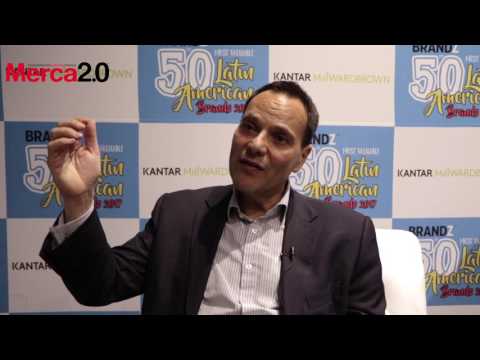 For more infomation >> ¿Qué es lo que hace valiosas a las marcas? Eric Salama, CEO de Kantar - Duration: 2:34.
  For more infomation >> The Peanuts Movie: Snoopy's Grand Adventure (XBOX ONE) - #Ep. 13 - Energy Balls - Duration: 5:29.
  For more infomation >> Michel Onfray 39. Pecorear a los antiguos - Duration: 55:40.
 For more infomation >> Artist Zayn Malik Live
 For more infomation >> Fly vs Jerk 8 - EPISODE 1 - Kanalgratis.se (with German, French & Dutch subtitles) - Duration: 39:32.
 For more infomation >> Toyota Yaris 1.3 VVT-i Orange Sport - Duration: 0:42.
  For more infomation >> Mazda 6 1.8i Touring Hatchback - Duration: 1:31.
 For more infomation >> Toyota Aygo 1.0 VVT-i x-now - Duration: 1:07.
  For more infomation >> Toyota Aygo 1.0 VVT-i x-play - Duration: 1:08.
  For more infomation >> Toyota Aygo 1.0 VVT-i x-now - Duration: 1:20.
  For more infomation >> Toyota Aygo 1.0 VVT-i Aspiration ( Veiligheidspakket) - Duration: 1:09.
  For more infomation >> Toyota Aygo 1.0 VVT-i x-play - Duration: 0:53.
  For more infomation >> Toyota Aygo 1.0 VVT-I X-PLAY - Duration: 1:01.
  For more infomation >> Toyota Aygo 1.0 VVT-I X-NOW - Duration: 0:52.
  For more infomation >> Toyota Aygo 1.0 VVT-i x-wave Cabrio - Duration: 1:23.
  For more infomation >> Toyota Aygo 1.0 VVT-i X-Now (Airco!) - Duration: 1:14.
  For more infomation >> Toyota Verso-S 1.3 VVT-i Trend Automaat Navigatie - Duration: 1:30.
  For more infomation >> Toyota Yaris 1.3 VVT-i Aspiration Parkeercamera! - Duration: 1:09.
  For more infomation >> Toyota Aygo 1.0 VVT-i x-cite - Duration: 0:44.
  For more infomation >> Toyota RAV4 2.0 VVT-i AWD Executive Business - Duration: 1:16.
  For more infomation >> Toyota Corolla 1.6 VVT-i Linea Sol met Climate control! - Duration: 1:01.
  For more infomation >> Opel Corsa 1.2I-16V STUURBEKRACHTIGING, APK - Duration: 0:50.
 For more infomation >> 5 dicas de como usar melhor o CARTÃO DE CRÉDITO - Duration: 2:26.
  For more infomation >> MatheusMT – 25 Barras [Official Video] - Duration: 3:25.
  For more infomation >> C / C ++ Course - #Aula 13 - First Program in C - Duration: 10:47.
  For more infomation >> 11 Plants, Flowers, and Herbs That Will Boost Your Mood - Duration: 4:07.
  For more infomation >> hipopótamo vs 17 leões! Quem será que ganhou? - Duration: 6:23.
 For more infomation >> Tajemství života - JIM CARREY - Duration: 3:16.
  For more infomation >> Pewnego razu w Ombreville - Duration: 9:50.
No comments:
Post a Comment