Tuesday, January 24, 2017

Youtube daily report w Jan 24 2017

♪ [Music] ♪

CHRIS: Hey, welcome to NASA EDGE,

we are here at NASA Kennedy Space Center Press Site

as we get set for the launch of the Geostationary

Observational Environmental Satellite

or the GOES-R Satellite.

I had a chance to sit down with the project manager for GOES-R,

Greg Mandt, of NOAA's satellite operation facility

in Maryland, so let's check that out.

CHRIS: So Greg, I understand that GOES-R is

a game changing satellite, how is it?

GREG: GOES-R is really a continuation, a long series of

Geo-Stationary Weather Satellites.

NOAA started flying them soon after NASA demonstrated the

technology in the 1970s, but ever since we started with

GOES-1 back in the midst of 1970s, we have flown about the

same technology now for 40 years.

This is the first time that we are from end-to-end, redoing the

entire system to introduce state of the art technology

into the GOES program. So it's a very exciting time

for those of us who loved building

satellites to introduce a lot of the technologies, but also for

the users are going to see, like you said, a game changer in

their world of new data sets, different ways of getting it,

that will really help them in their forecast process.

CHRIS: Essentially, this is a complete overhaul?

GREG: It's a complete overhaul, every aspect of

the program is being changed.

CHRIS: So Greg, I understand that this satellite is packed

with a lot of instruments and a lot of cool stuff.

GREG: Every instrument is upgraded and improved

over what we flew in the past.

Our primary instrument is what we're calling

our advanced baseline imager.

In the past we've had about five channels,

we're going to have 16 channels.

So we're tripling the number of channels, the resolution in the

visible spectrum is going to get doubled, so we're going to get a

half a kilometer resolution in the visible,

plus we're scanning at a tremendously faster rate.

So we'll be able to scan to the entire hemisphere from the North

Pole to the South Pole every five minutes.

So when you combine all three of those things, we're going to

have an amazing amount of data coming down to the forecaster so

they really understand all the weather activity that's going on

across the hemisphere and really improve

their ability to forecast it more.

CHRIS: Now, of course, the first letter in GOES is Geostationary,

what does that mean in the scientific community?

GREG: Well geostationary basically means it at an

altitude that its orbit is going around the earth

at the same rate that the earth is rotating.

Therefore, from an observer on the earth looking up, it appears

that the satellite is always over you at every point.

And that's what's really nice for the imager is when you take

loops, it is really a movie of what's

happening over you right now.

NOAA's responsibilities for forecasting really go from the

far western pacific out to Guam, all the way to the west coast of

Africa, primarily for like tropics,

watching the hurricanes form.

So we need two GOES satellites

to cover that whole area. CHRIS: Okay.

GREG: The critical part of the mission is continuity.

So I said, we've been flying this since the 1970s-- So we're

basically continuing that and we've got to continue

to populate the atmosphere as the old ones

reached the end of their life and we removed them from the

orbit, we replaced them with the new capability.

CHRIS: Okay, so as a meteorologist, as a

climatologist, what's cool about this satellite that I can't wait

to see in terms of data or imagery?

GREG: The biggest thing from a forecaster's and I'm getting it

directly from them because we've been actually feeding simulated

data to them, to get them used to the beta product, and so they

are pretty excited, in fact, they are

a very tough crowd to please.

You got to really prove it to them that it's valuable--

CHRIS: Right. GREG: But when we've been

showing this stuff, the comments we've been getting back like,

"Wow, I want this in my office yesterday,

come on, hurry, hurry."

So we have really built up a lot of excitement out there.

And a biggest thing they have said to me is, you know, in the

old GOES, it's like you are showing us pictures of what's

happened, now, you're showing me a movie of real time, but even

better in the past, I was watching old black and white

television, you are showing me HDTV, so when you do that,

example like a hurricane or a tornado, you are watching every

aspect of it, and see how this is forming and how it's changing

so that you can very quickly, say, I know what's going on, I'm

going to put this warning and tell the public, and because of

the faster scanning and the higher resolution, you can get

much more precise knowledge of what's going on and where, in

addition, we're adding a lightning mapper.

And so, for the first time, we'll be able to see not only

cloud to ground but cloud to cloud lightning.

Right now, the surface network, they show cloud to ground.

CHRIS: Okay. GREG: About 90 percent lightning

is cloud to cloud, and the researchers have shown

that if you're watching all these,

there's an incredible spike up of lightning activity as a

tornado is just getting ready to form.

CHRIS: Oh Wow. GREG: And so now, you know,

maybe 30 minutes ahead of time, they will see this

huge burst of lightning activity, and they're

going to go, oh, they're going to focus on that and be able to

say, yes, indeed, a tornado is going to start now, and so

they'll be able to extend the lead time in terms

of their tornado warnings.

And even more importantly, when you hear there's a tornado

warning in your county, what is your response?

I know mine is, I run to the door and see it--

CHRIS: That's true, that's true--

GREG: And a lot of those is because, you

know, there's a lot of well is it really, you know, there's so

much false alarms because they sort of over warn to make sure

people are prepared, well now because of this new data sets,

there is certainty that it's coming is going to double.

So that means, they're not going to pull that alarm nearly as

often, and when they do, people know, oh I got to take this

seriously and act so that improvement in the certainty

that a specific thing and where it's happening, I think will

dramatically improve the warning process, and the forecasters

love to be able to give much more precise information

for the public to be able to respond.

BLAIR: Joining us now is Greg Mandt's deputy Ed Grigsby.

Ed, thanks so much for coming on the show.

ED: Oh, it's my pleasure, I'm glad to be here.

BLAIR: So, GOES-R obviously, we're going to launch today, and

it's going to be a great success, looking forward you've

got four, three more spacecraft after GOES-R?

ED: That's right. BLAIR: And how are they going

to look in comparison to GOES-R, imagine by the time they're

done, there'll be more technology and more things

you can bring into the spacecraft.

ED: Well, we have actually built four duplicates, and four of

them, all of the instruments for all four of the spacecraft are

complete and ready to be integrated.

And in fact, Lockheed is already integrated S and is in

environmental testing, T is being integrated,

U is being integrated as we speak.

So, we're going to have four identical spacecraft, four

satellites that are going to just blow

your socks off, they will.

BLAIR: Now, will it take, having all four satellites launch and

flying to give us the real full impact of GOES or what are we

going to get immediately from GOES-R flying?

ED: Well we're going to take about six months to test, and

make sure that all the systems work, all the data is flowing

properly, and once that test phase is over with, we hand it

over to the operators, the operators started flowing data.

That is going to be immediate, when it starts flowing to the

weather service, you're going to see better forecast in the

continental and United States immediately.

BLAIR: From your perspective, where are you going forward or

you and your team obviously, you said Lockheed still already

doing the development, but in terms of GOES-S, T and U, are

the same team moving forward to assemble this?

Will you be working on it as well?

ED: Oh yeah, yeah, I'll be working and the same team for S,

T and U and a lot of the real hard work is just beginning with

this system. It is a system of systems.

It's not just a satellite. There's a huge ground system

infrastructure that was built and prepared

many years of preparing the users out there to

accept and use this data effectively.

BLAIR: Now you mentioned users, that would be

forecasters and things like that?

ED: Forecasters-well not only forecasters, but you know we

have, these are real scientific instruments.

We calibrated them to the same quality that NASA calibrates all

of it's scientific instruments and that data is going to be

available to universities and anybody that can get to it.

It's free data, it will be freely distributed, they're

going to be able to use that data for new discoveries.

So you're going to see just giant leaps over the next

10, 20 years from the GOES-R system.

BLAIR: That's awesome. It's free data folks,

so don't missed out. ED: That's right.

BLAIR: Ed, thank you so much for being on the show.

ED: Oh, my pleasure, my pleasure.

BLAIR: Earlier Franklin had an opportunity to talk to the

Vanessa Griffin, the satellite operations director at NOAA.

Talking about the benefits of GOES-R, let's check it out.

FRANKLIN: So Vanessa, you are the director of the NOAA

satellite operations facility-- VANESSA: That's right.

FRANKLIN: Tell me exactly what do you do here?

VANESSA: So I lead a very large team that is responsible for

operating all of the nations weather

an environmental satellite.

So we operate the satellites that NOAA has built and

operated, we operated satellites for the Department of Defense,

DMSP satellites, we operate the GOES satellites, the POS

satellites, all the satellites, about 16 in total right now.

And we collaborate with international partners in

helping to operate their satellites as well that collect

meteorological and environmental data.

FRANKLIN: Now, when I drove up to this building, I looked at it

and I said, this is a very interesting

looking building, it's very modern.

Tell us a little bit about the building.

VANESSA: So this building was designed in the early 2000, it

actually opened in 2006, it was very unique because for the

first time we got to take a clean sheet of paper and say,

"If we're building a facility just to operate weather

satellites and do data processing for

those satellites, how would you design it."

And so we designed it from ground up to be a

good building for doing this function.

Where we are here as our operations facility, our floors,

so all of our day-to-day 24/7 operations goes on here in this

big room and then behind this, we have our launch control room,

so we built this building so that we could launch two

satellites, we could start getting ready to launch two

satellites at the same time knowing we will be launching a

GOES-R satellite and a JPSS satellite

pretty much at the same time.

So, it takes about two years for the launch team to practice, to

go through other simulations, we have the space to do that.

So we created two launch control rooms, next door, we have the

floor downstairs, where everybody has their offices and

their desks and do their day-to-day work so that it was a

good opportunity to design a building

just for the purposes for which we need it.

FRANKLIN: So, in this operations facility, you also have

a Search and Rescue, tell me about that.

VANESSA: Okay, so we have what's called, SARSAT, which is Search

And Rescue Satellite Aided Tracking.

Basically all of our weather satellites and not only ours but

our international partners as well, carry instrumentation

onboard that can detect beacons that mariners, boaters, hikers,

aircraft pilots that carry these beacons with them, and if they

get in trouble, they can turn the beacon on, it sends the

signal out so it starts radiating a signal, that signal

gets pick up by our satellites, and it sent back to here to our

mission control center here, and then we basically detect that

signal, we have a database of all those beacons that you buy,

so if you like to hike, you go down to your local REI store,

your local store and you buy a beacon for, you know, however it

cost, and you register it with us, so you register with our

database, your name, your address, your phone number, and

then if you get in trouble on a hike, if you fall down and hurt

yourself, or something happened, and you need help, you just

pushed the button, the next time a satellite comes over, we find

the signal, it takes two satellites to triangulate where

you are, we find out where you are, we're going to about 15

kilometers, and then we will then verify that the signal is

real, that the beacon is registered and who it is

registered to, then we contact the local

rescue authority whoever that is.

So if you're offshore in a boat, sailboat,

we're going to call the Coast Guard.

So if you're in an aircraft that has a beacon that the aircraft

has crashed, we'll contact the air force who is

responsible for aircraft kind of incidents.

We rescue about 300 people a year based on

our satellite data as it contributes.

So you can basically say, that rescue happened because of the

satellite system the SARSAT system.

And since the beginning of time, if you looked at the whole glow

that's been like over 40,000 rescues, around the globe

because of this international SARSET system.

FRANKLIN: So I come out here for week, the chances are that

something would happen over there were some--

VANESSA: Oh if probably you were here for an hour,

you might, we might get an alert.

We get alerts quite often.

FRANKLIN: So also, when I came in, I saw in the sign

where it said, ICE facility, what is ICE?

VANESSA: Okay, so it's a collaboration of the NAVY,

NOAA and the Coast Guard.

They use satellite data to look at the ICE over the Arctic and

Antarctic and other parts of the world.

They also do snow mapping and snow depth analysis over the

whole world, but their primary thing is ice.

So they're looking at ice in the Arctic and in the Antarctic and

they're helping mariners who are trying to get through the ice,

they're trying to take their ships, cargo ships, container

ships and get through the ice, they're helping ice breakers,

the Coast Guard ice breakers that go out and

rescue things or help people get through the ice.

They are determining where the ice is

and also where the ice isn't.

So we're basically helping them plot a course through an ice

infested water to allow them to transit without getting stuck,

so that's what we're trying to avoid. We're trying to

avoid any ship getting stuck in the ice anywhere.

FRANKLIN: Now even though this building is fairly new, you

actually had to change the infrastructure to actually

manage the satellite operations for GOES-R, tell us about that.

VANESSA: Yes, so when we designed this building back in

the early 2000's we had made assumptions about the technology

that we would need to fly the next generation satellites.

Unfortunately, the technology made a major change over that

time, so since we started building that.

So when we actually got in, and we did the design for GOES-R

we realized that the technology had changed so dramatically that

we needed a whole lot more power and a lot more cooling because

we've gone to raid architectures and servers, spinning disc that

generate tremendous amount of heat, and require lots of power.

So the power we had the building,

the cooling we had just wasn't sufficient.

Matter of fact, it was so insufficient we could not even

just like enhance it like, you know, change it or

beef it up, we had to like start over.

So we had ever carefully, over a period of years to take out all

of the generators and replace them with new

generators that are much bigger.

We had to replace all other water cooling systems, the

chillers, and basically maximize the amount of power we could

ever get into this building that the county

can ever provide to us. The utility company,

we've basically maxed out everything

we could take from them. FRANKLIN: For GOES-R?

VANESSA: Well for GOES-R and GPSS together.

FRANKLIN: Okay. VANESSA: They are two big

generations, the two big flagship satellites together.

They each have very large ground systems with lots of computers,

lots of servers, the whole third floor of this building.

As a matter of fact, the third floor had to be doubled in size.

About half of it is the time and the design was for computers the

other half was for different rooms and spaces and classrooms

and things, we basically had to make the whole thing one huge

computer floor to make sure we had a good reliability and

redundancy that we need in the power systems and to be able to

operate all these things and satellites that we're going to

start flying next year with GOES-R.

CHRIS: Hey welcome back to NASA EDGE, we've been talking a lot

about the GOES spacecraft over the course for

the past 45 minutes or so.

And now we're going to switch focus to the Atlas V Rocket and

joining us now is our good friend of the show, Mic Woltman.

Mic, how are you doing?

MIC: I'm doing very well, Chris, thank you very much.

CHRIS: Yesterday, we had a chance to go out to the pad, and

see the Atlas V up close, and this is the first time that

we've seen an Atlas V 541 launched here from Kennedy.

We've seen, I think from Vandenberg.

That's a monster rocket. MIC: It is.

The Atlas V is about 200 feet tall with a five-meter faring on

it, it looks really good, but this rocket for GOES-R has the

four solid rocket boosters which will give it that extra lift to

get into Geostationary orbits, it will be a

great sight to see this evening.

CHRIS: And for those people, we have been saying 541, you know,

at the beginning of the show, so now that 541, correct me if I'm

wrong, the 5 stands for the diameter of the faring?

MIC: That's correct, 5-meter faring, the 4 is how many solid

rocket boosters are needed and then the 1 is how many upper

stage engines were used and in this case

it's a single engine RL10.

CHRIS: Lets' go back to the whole spacecraft processing

side, Mic is our resident expert when it comes to that so we've

got some footage here of GOES-R being sent here.

MIC: Yes, we're seeing GOES-R arriving at the skid strip

there, on Cape Canaveral Air Force Station--

CHRIS: That's the C5, isn't it? MIC: That's a C5, yes.

CHRIS: Because of the size of the satellite.

MIC: Correct. It's a very large satellite.

This is, you know, as you heard earlier about satellite, it's

going to provide some great instruments and stuff for the

weather community and that will be good.

You're seeing the satellite here moved over into the payload

process facility, where they brought it up right and started

preparing the vehicle for testing.

Here, what you're looking at here is actually one of their

test covers that they put on the instrument, the ABI instrument

to test that out and make sure that everything

is working prior to closing everything up.

Here you're seeing them do a lot of cleaning of the solar ray

panels to make sure everything is crisp clean so they get power

up when they're on station there.

And then they move into the encapsulation, put those 5-meter

farings together around that big satellite, and you can see how

they bring that together with a strong back.

Next thing we see is the Centaur vehicle arriving at Cape Canal

Air Force Station from over the road that got to us here roughly

around in October and they move that over to the ASOC, the Atlas

Spaceflight Operations Center, and did some testing there

and then brought that out. Here, what you're looking at

is the first stage booster, heading

out to the VIF, where they'll begin getting it ready to lift

up into the Vertical Integration Facility.

CHRIS: Okay I was going to ask you--

MIC: Yeah, and this is what we called booster on

stand and that occurred here on October 24th,

and they get that booster all hooked up and lift

it from the front end as you can see right there, and then the

back end of the vehicle kind of slides on the trucks right into

the vertical integration facility

and they prepped that up.

The next step of putting the vehicle together is to put those

massive 62-inch solid rocket boosters on, and here you can

see how they brought each one of those in, they have to lift

those up, all the way to the top of the VIF, bring those back

down and mate each in their location on the booster.

CHRIS: And there's our live at this point, right?

MIC: Those are loaded, already to go-they just have to have the

final ordinance connection done. CHRIS: Okay.

MIC: And that was completed October 28th

to get all four of those on.

Here you see what we call the Offsite Vertical Integration.

It's actually the Centaur with its other assemblies around it,

heading out and being mated to the top of the vehicle and then

on top of that, we roll the spacecraft, encapsulated

spacecraft out and that happened on November 9th that was our

spacecraft mate day and they bring that to the base of the

vertical integration facility, they lift that up, all the way

to the top, and into the tower, and they mate that to the top of

the Centaur integration stack there to complete the buildup of

the Atlas V for the GOES-R mission.

And you can see it's a very delicate operation there, as

they bring those in, and they move that down very slowly to

get those final mates done to the assembly.

CHRIS: We can always count on Mic to get up to date

information on the rocket and also the processing and we'd

like to go to him every time we cover a launch, he's the man and

we really appreciate you coming out here, once again--

MIC: Appreciate it, like I said, this

is a great rocket this evening, GOES-R has a long history

with us in launch service program.

We actually started working with NOAA and GOES back on the GOES-L

mission in 2000, so we've done GOES L and M, and then we were

advisors on GOES N, O and P for them where we provided our

unique services to the commercial industry

with the space craft. And so GOES-R is just

the next step in weather satellites and

we're very proud to be part of that partnership.

CHRIS: And you'll be covering the next three satellites

as well. MIC: Absolutely.

GOES-S in March 2018. CHRIS: There we go.

So you heard it from the man himself, and we're going to go

back to the path, and see space launch complex 41 as we see that

huge Atlas V 541 launch vehicle as GOES-R gets ready to launch.

ANNC: T minus 10, 9, 8,

7, 6, 5, 4, 3,

2, 1-and lift off of NOAA's GOES-R,

America's most advance weather eye in the sky,

elevating environmental intelligence

to new heights and saving lives.

MARTY: ... response is good, now flying

to zero angle of attach phase of flight...

engine... throttle down as scheduled.

Response is good.

Roll program is complete-

controlling down the middle.

MIKE: Listening to the voice of Marty Malanowski.

MARTY: Mach 1.

MIKE: Standing by to pass through max Q, this is the

maximum aerodynamic pressure area, when mechanical stress on

the rocket reaches it peak because of rockets velocity and

resistance created by the atmosphere.

NASA's Atlas V- MARTY: Response is good.

MIKE: GOES-R spacecraft, continuing into flight,

BLAIR: You know, a real testament to just how

much goes into making these launches goes off.

We got to hear the pole--

CHRIS: Did you GOES in and GOES off?

BLAIR: GOES-R goes off, yeah, exactly, just to see all the

things that are necessary before launch is very fascinating,

very happy to see it go.

CHRIS: It doesn't get old, when you see an Atlas V or any type

of rocket that goes up, like I said an Atlas 541

that was pretty impressive.

So this signs of our portion of the show, and we're going to

follow GOES-R all the way until it gets checked out

and we start getting the data.

BLAIR: I was going to say until we start getting the data

that's what's really important.

CHRIS: You're watching NASA EDGE.

BLAIR: An inside and outside look, at all things NASA.

♪ [MUSIC] ♪

For more infomation >> NASA EDGE: GOES-R Pre Launch Coverage - Duration: 23:32.

-------------------------------------------

Volvo V60 20% D3 AUT. R-Design Scandinavian, Nav, Tel - Duration: 1:51.

For more infomation >> Volvo V60 20% D3 AUT. R-Design Scandinavian, Nav, Tel - Duration: 1:51.

-------------------------------------------

‹ Euro Truck 2 | G7 1600 LD | Ouro e Prata - Porto Alegre/Bagé - Logitech G27 › - Duration: 15:07.

For more infomation >> ‹ Euro Truck 2 | G7 1600 LD | Ouro e Prata - Porto Alegre/Bagé - Logitech G27 › - Duration: 15:07.

-------------------------------------------

Expensive Cars Under $2 Million Koenigsegg One1-- 2017 - Duration: 1:07.

Expensive Cars Under $2 Million Koenigsegg One1-- 2017

For more infomation >> Expensive Cars Under $2 Million Koenigsegg One1-- 2017 - Duration: 1:07.

-------------------------------------------

Building Your Tomorrow Today

For more infomation >> Building Your Tomorrow Today

-------------------------------------------

Green Tea, Pineapple and Cinnamon - 3 Ingredients That Will Help You Dry Your Tummy - Duration: 3:22.

Green tea, pineapple and cinnamon - 3 ingredients which will help you to dry the belly

If you want to lose some weight and dry abdominal fat should certainly learn

this recipe. The ingredients of it are great and many people have already achieved results

with her.

One is the pineapple. Rich in nutrients such as iron, magnesium, vitamins and fibers

A, B1, B6 and C. The pineapple is a diuretic and contains few calories and helps in digestion.

Pineapple consumption is also indicated when there is a large protein intake. bromelain

contained in the pineapple have anti-infamatórias properties, and this helps to relieve joint pain

and muscle. For the benefits of pineapple, its consumption must be raw, as juice

or tea.

alia Pineapple Tea The thermogenic power diuretic action, helping in losing

Weight.

You can substitute water for tea pineapple, once a week.

ingredients: 1/2 pineapple

1 liter and half of water 200 ml water

1 piece of cinnamon stick 1 green tea bag

How to prepare: Peel the pineapple half, cut the peel

into small pieces. Do the same with fruit.

Wash the shells and put to boil with 1 and a half liters of water for 10 minutes.

Let cool. Beat the egg shells in the blender with water

that was used to boil. Then strain.

Put the water to boil with 200ml cinnamon stick. When boiling place

green tea. Let cool.

Join the two liquids at room temperature and add the diced pineapple.

Keep in the fridge and drink several times daily for one week.

Allying with a healthy diet and exercise physical, you can eliminate from 2 to 4 kilograms.

Do this treatment once per month.

If possible, consume organic pineapple, and is hypertension due to cinnamon, talk

with your doctor before consuming this drink.

Enjoy this video? If you liked the video, short, join the channel and share

with your friends.

For more infomation >> Green Tea, Pineapple and Cinnamon - 3 Ingredients That Will Help You Dry Your Tummy - Duration: 3:22.

-------------------------------------------

A Consciência é Essencial Para a Nossa Evolução e Sobrevivência Coletiva - Duration: 8:28.

For more infomation >> A Consciência é Essencial Para a Nossa Evolução e Sobrevivência Coletiva - Duration: 8:28.

-------------------------------------------

Peugeot 208 1.4 e-HDi Blue Lease - Duration: 1:14.

For more infomation >> Peugeot 208 1.4 e-HDi Blue Lease - Duration: 1:14.

-------------------------------------------

Citroën C3 1.6 E-HDI AIRDREAM COLLECTION * 64.350 KM * / AIRC - Duration: 1:01.

For more infomation >> Citroën C3 1.6 E-HDI AIRDREAM COLLECTION * 64.350 KM * / AIRC - Duration: 1:01.

-------------------------------------------

‹ Euro Truck 2 | G7 1600 LD | Ouro e Prata - Porto Alegre/Bagé - Logitech G27 › - Duration: 15:07.

For more infomation >> ‹ Euro Truck 2 | G7 1600 LD | Ouro e Prata - Porto Alegre/Bagé - Logitech G27 › - Duration: 15:07.

-------------------------------------------

Peugeot 108 Blue Lion 1.0 E-VTI 68PK 5DR - SUPER DEAL - Duration: 1:28.

For more infomation >> Peugeot 108 Blue Lion 1.0 E-VTI 68PK 5DR - SUPER DEAL - Duration: 1:28.

-------------------------------------------

Peugeot 108 Blue Lion 1.0 E-VTI 68PK 5DR - SUPER DEAL - Duration: 1:34.

For more infomation >> Peugeot 108 Blue Lion 1.0 E-VTI 68PK 5DR - SUPER DEAL - Duration: 1:34.

-------------------------------------------

Peugeot 108 Blue Lion 1.0 E-VTI 68PK 5DR - SUPER DEAL - Duration: 1:27.

For more infomation >> Peugeot 108 Blue Lion 1.0 E-VTI 68PK 5DR - SUPER DEAL - Duration: 1:27.

-------------------------------------------

Peugeot 108 Blue Lion 1.0 E-VTI 68PK 5DR - SUPER DEAL - Duration: 1:30.

For more infomation >> Peugeot 108 Blue Lion 1.0 E-VTI 68PK 5DR - SUPER DEAL - Duration: 1:30.

-------------------------------------------

Peugeot 108 Blue Lion 1.0 E-VTI 68PK 5DR - SUPER DEAL - Duration: 1:21.

For more infomation >> Peugeot 108 Blue Lion 1.0 E-VTI 68PK 5DR - SUPER DEAL - Duration: 1:21.

-------------------------------------------

FILA BRASILEIRO - History, general appearance, care and health. - Duration: 7:18.

For more infomation >> FILA BRASILEIRO - History, general appearance, care and health. - Duration: 7:18.

-------------------------------------------

Oscar Nominations 2017 - Duration: 1:55.

Oscar Nominations 2017

Oscar Nominations 2017

Oscar Nominations 2017

Oscar Nominations 2017

For more infomation >> Oscar Nominations 2017 - Duration: 1:55.

-------------------------------------------

PRATICANDO O INGLÊS - Entrevista de emprego - Duration: 1:30.

For more infomation >> PRATICANDO O INGLÊS - Entrevista de emprego - Duration: 1:30.

-------------------------------------------

Sepultura - Inner Self (lyrics) HD - Duration: 5:03.

Walking these dirty streets

With hate in my mind

Feeling the scorn of the world

I won't follow your rules

Blame and lies

Contradictions arise

Blame and lies

Contradictions arise

Nonconformity in my inner self

Only I guide my inner self

I won't change my way

It has to be this way

I live my life for myself

Forget your filthy way

Blame and lies

Contradictions arise

Blame and lies

Contradictions arise

Nobody will change my way

Life betrays, but I keep on going

There's no light, but there's hope

Crushing oppression

Come on Barcelona

Let's show this fucking place

Betraying and playing dirty

You think that you'll win

But someday you'll fall, and I'll be waiting

Laughs of an insane man, you'll hear

Personality is my weapon, against your envy

Walking these dirty streets

With hate in my mind

Feeling the scorn of the world

I won't follow your rules

Nonconformity in my inner self

Only I guide my inner self

Hey Rock fans, what's up?

If someone wants to know my opinion about the song meaning

I wrote in video description

And that's it guys

Until the next video and bye!

For more infomation >> Sepultura - Inner Self (lyrics) HD - Duration: 5:03.

-------------------------------------------

La Marseillaise (Kazoo remix)- Rouget de Lisle - 1792 - Duration: 1:13.

Dos, un ...

deux, un ...

zwei, eins

For more infomation >> La Marseillaise (Kazoo remix)- Rouget de Lisle - 1792 - Duration: 1:13.

-------------------------------------------

Legendado Monster Musume - Duration: 3:51.

For more infomation >> Legendado Monster Musume - Duration: 3:51.

-------------------------------------------

TAG SOU CRISTA - Duration: 3:25.

For more infomation >> TAG SOU CRISTA - Duration: 3:25.
-------------------------------------------

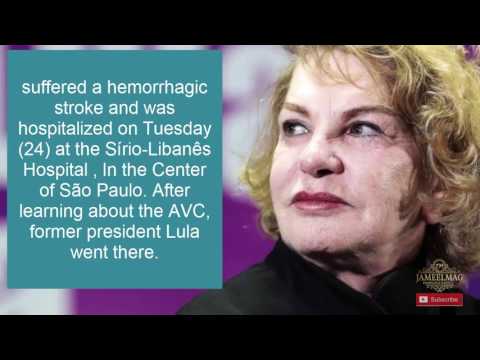
Lula wife, Marisa Leticia is hospitalized in SP - Duration: 0:51.

the former first lady Marisa Letícia, 66, a wife of former President Luiz Inacio Lula

da Silva (PT), suffered a hemorrhagic stroke and was hospitalized on Tuesday (24) at the

Sírio-Libanês Hospital , In the Center of São Paulo.

After learning about the AVC, former president Lula went there.

According to the medical center, she checked in at 3:30 p.m.

The former first lady arrived consciously and was taken directly to the catheterization

room where doctors began a procedure to try and staunch the bleeding.

In his official Twitter account, the former president commented on the woman's hospitalization.

"Dona Marisa Letícia was hospitalized on Tuesday, we are very much hoping she will

recover soon."

#Diana Marisa, "said in the microblog.

For more infomation >> Lula wife, Marisa Leticia is hospitalized in SP - Duration: 0:51.

-------------------------------------------

Relampago Macqueen Esmaga Massinhas Play Doh 🔴🍉 😍 Ovo Surpresa 💚 ☺ 🍎 Aprendendo as Cores - Duration: 13:42.

For more infomation >> Relampago Macqueen Esmaga Massinhas Play Doh 🔴🍉 😍 Ovo Surpresa 💚 ☺ 🍎 Aprendendo as Cores - Duration: 13:42.

-------------------------------------------

2 Radinhos - Kevin Dos Portão (Kevin Gates - 2 Phones Paródia/Versão/Redublagem) - Duration: 4:00.

For more infomation >> 2 Radinhos - Kevin Dos Portão (Kevin Gates - 2 Phones Paródia/Versão/Redublagem) - Duration: 4:00.

-------------------------------------------

DIY Mickey Felt Pin

For more infomation >> DIY Mickey Felt Pin

-------------------------------------------

Build Your Dreams With Lego

For more infomation >> Build Your Dreams With Lego

-------------------------------------------

NASA EDGE: GOES-R Pre Launch Coverage - Duration: 23:32.

♪ [Music] ♪

CHRIS: Hey, welcome to NASA EDGE,

we are here at NASA Kennedy Space Center Press Site

as we get set for the launch of the Geostationary

Observational Environmental Satellite

or the GOES-R Satellite.

I had a chance to sit down with the project manager for GOES-R,

Greg Mandt, of NOAA's satellite operation facility

in Maryland, so let's check that out.

CHRIS: So Greg, I understand that GOES-R is

a game changing satellite, how is it?

GREG: GOES-R is really a continuation, a long series of

Geo-Stationary Weather Satellites.

NOAA started flying them soon after NASA demonstrated the

technology in the 1970s, but ever since we started with

GOES-1 back in the midst of 1970s, we have flown about the

same technology now for 40 years.

This is the first time that we are from end-to-end, redoing the

entire system to introduce state of the art technology

into the GOES program. So it's a very exciting time

for those of us who loved building

satellites to introduce a lot of the technologies, but also for

the users are going to see, like you said, a game changer in

their world of new data sets, different ways of getting it,

that will really help them in their forecast process.

CHRIS: Essentially, this is a complete overhaul?

GREG: It's a complete overhaul, every aspect of

the program is being changed.

CHRIS: So Greg, I understand that this satellite is packed

with a lot of instruments and a lot of cool stuff.

GREG: Every instrument is upgraded and improved

over what we flew in the past.

Our primary instrument is what we're calling

our advanced baseline imager.

In the past we've had about five channels,

we're going to have 16 channels.

So we're tripling the number of channels, the resolution in the

visible spectrum is going to get doubled, so we're going to get a

half a kilometer resolution in the visible,

plus we're scanning at a tremendously faster rate.

So we'll be able to scan to the entire hemisphere from the North

Pole to the South Pole every five minutes.

So when you combine all three of those things, we're going to

have an amazing amount of data coming down to the forecaster so

they really understand all the weather activity that's going on

across the hemisphere and really improve

their ability to forecast it more.

CHRIS: Now, of course, the first letter in GOES is Geostationary,

what does that mean in the scientific community?

GREG: Well geostationary basically means it at an

altitude that its orbit is going around the earth

at the same rate that the earth is rotating.

Therefore, from an observer on the earth looking up, it appears

that the satellite is always over you at every point.

And that's what's really nice for the imager is when you take

loops, it is really a movie of what's

happening over you right now.

NOAA's responsibilities for forecasting really go from the

far western pacific out to Guam, all the way to the west coast of

Africa, primarily for like tropics,

watching the hurricanes form.

So we need two GOES satellites

to cover that whole area. CHRIS: Okay.

GREG: The critical part of the mission is continuity.

So I said, we've been flying this since the 1970s-- So we're

basically continuing that and we've got to continue

to populate the atmosphere as the old ones

reached the end of their life and we removed them from the

orbit, we replaced them with the new capability.

CHRIS: Okay, so as a meteorologist, as a

climatologist, what's cool about this satellite that I can't wait

to see in terms of data or imagery?

GREG: The biggest thing from a forecaster's and I'm getting it

directly from them because we've been actually feeding simulated

data to them, to get them used to the beta product, and so they

are pretty excited, in fact, they are

a very tough crowd to please.

You got to really prove it to them that it's valuable--

CHRIS: Right. GREG: But when we've been

showing this stuff, the comments we've been getting back like,

"Wow, I want this in my office yesterday,

come on, hurry, hurry."

So we have really built up a lot of excitement out there.

And a biggest thing they have said to me is, you know, in the

old GOES, it's like you are showing us pictures of what's

happened, now, you're showing me a movie of real time, but even

better in the past, I was watching old black and white

television, you are showing me HDTV, so when you do that,

example like a hurricane or a tornado, you are watching every

aspect of it, and see how this is forming and how it's changing

so that you can very quickly, say, I know what's going on, I'm

going to put this warning and tell the public, and because of

the faster scanning and the higher resolution, you can get

much more precise knowledge of what's going on and where, in

addition, we're adding a lightning mapper.

And so, for the first time, we'll be able to see not only

cloud to ground but cloud to cloud lightning.

Right now, the surface network, they show cloud to ground.

CHRIS: Okay. GREG: About 90 percent lightning

is cloud to cloud, and the researchers have shown

that if you're watching all these,

there's an incredible spike up of lightning activity as a

tornado is just getting ready to form.

CHRIS: Oh Wow. GREG: And so now, you know,

maybe 30 minutes ahead of time, they will see this

huge burst of lightning activity, and they're

going to go, oh, they're going to focus on that and be able to

say, yes, indeed, a tornado is going to start now, and so

they'll be able to extend the lead time in terms

of their tornado warnings.

And even more importantly, when you hear there's a tornado

warning in your county, what is your response?

I know mine is, I run to the door and see it--

CHRIS: That's true, that's true--

GREG: And a lot of those is because, you

know, there's a lot of well is it really, you know, there's so

much false alarms because they sort of over warn to make sure

people are prepared, well now because of this new data sets,

there is certainty that it's coming is going to double.

So that means, they're not going to pull that alarm nearly as

often, and when they do, people know, oh I got to take this

seriously and act so that improvement in the certainty

that a specific thing and where it's happening, I think will

dramatically improve the warning process, and the forecasters

love to be able to give much more precise information

for the public to be able to respond.

BLAIR: Joining us now is Greg Mandt's deputy Ed Grigsby.

Ed, thanks so much for coming on the show.

ED: Oh, it's my pleasure, I'm glad to be here.

BLAIR: So, GOES-R obviously, we're going to launch today, and

it's going to be a great success, looking forward you've

got four, three more spacecraft after GOES-R?

ED: That's right. BLAIR: And how are they going

to look in comparison to GOES-R, imagine by the time they're

done, there'll be more technology and more things

you can bring into the spacecraft.

ED: Well, we have actually built four duplicates, and four of

them, all of the instruments for all four of the spacecraft are

complete and ready to be integrated.

And in fact, Lockheed is already integrated S and is in

environmental testing, T is being integrated,

U is being integrated as we speak.

So, we're going to have four identical spacecraft, four

satellites that are going to just blow

your socks off, they will.

BLAIR: Now, will it take, having all four satellites launch and

flying to give us the real full impact of GOES or what are we

going to get immediately from GOES-R flying?

ED: Well we're going to take about six months to test, and

make sure that all the systems work, all the data is flowing

properly, and once that test phase is over with, we hand it

over to the operators, the operators started flowing data.

That is going to be immediate, when it starts flowing to the

weather service, you're going to see better forecast in the

continental and United States immediately.

BLAIR: From your perspective, where are you going forward or

you and your team obviously, you said Lockheed still already

doing the development, but in terms of GOES-S, T and U, are

the same team moving forward to assemble this?

Will you be working on it as well?

ED: Oh yeah, yeah, I'll be working and the same team for S,

T and U and a lot of the real hard work is just beginning with

this system. It is a system of systems.

It's not just a satellite. There's a huge ground system

infrastructure that was built and prepared

many years of preparing the users out there to

accept and use this data effectively.

BLAIR: Now you mentioned users, that would be

forecasters and things like that?

ED: Forecasters-well not only forecasters, but you know we

have, these are real scientific instruments.

We calibrated them to the same quality that NASA calibrates all

of it's scientific instruments and that data is going to be

available to universities and anybody that can get to it.

It's free data, it will be freely distributed, they're

going to be able to use that data for new discoveries.

So you're going to see just giant leaps over the next

10, 20 years from the GOES-R system.

BLAIR: That's awesome. It's free data folks,

so don't missed out. ED: That's right.

BLAIR: Ed, thank you so much for being on the show.

ED: Oh, my pleasure, my pleasure.

BLAIR: Earlier Franklin had an opportunity to talk to the

Vanessa Griffin, the satellite operations director at NOAA.

Talking about the benefits of GOES-R, let's check it out.

FRANKLIN: So Vanessa, you are the director of the NOAA

satellite operations facility-- VANESSA: That's right.

FRANKLIN: Tell me exactly what do you do here?

VANESSA: So I lead a very large team that is responsible for

operating all of the nations weather

an environmental satellite.

So we operate the satellites that NOAA has built and

operated, we operated satellites for the Department of Defense,

DMSP satellites, we operate the GOES satellites, the POS

satellites, all the satellites, about 16 in total right now.

And we collaborate with international partners in

helping to operate their satellites as well that collect

meteorological and environmental data.

FRANKLIN: Now, when I drove up to this building, I looked at it

and I said, this is a very interesting

looking building, it's very modern.

Tell us a little bit about the building.

VANESSA: So this building was designed in the early 2000, it

actually opened in 2006, it was very unique because for the

first time we got to take a clean sheet of paper and say,

"If we're building a facility just to operate weather

satellites and do data processing for

those satellites, how would you design it."

And so we designed it from ground up to be a

good building for doing this function.

Where we are here as our operations facility, our floors,

so all of our day-to-day 24/7 operations goes on here in this

big room and then behind this, we have our launch control room,

so we built this building so that we could launch two

satellites, we could start getting ready to launch two

satellites at the same time knowing we will be launching a

GOES-R satellite and a JPSS satellite

pretty much at the same time.

So, it takes about two years for the launch team to practice, to

go through other simulations, we have the space to do that.

So we created two launch control rooms, next door, we have the

floor downstairs, where everybody has their offices and

their desks and do their day-to-day work so that it was a

good opportunity to design a building

just for the purposes for which we need it.

FRANKLIN: So, in this operations facility, you also have

a Search and Rescue, tell me about that.

VANESSA: Okay, so we have what's called, SARSAT, which is Search

And Rescue Satellite Aided Tracking.

Basically all of our weather satellites and not only ours but

our international partners as well, carry instrumentation

onboard that can detect beacons that mariners, boaters, hikers,

aircraft pilots that carry these beacons with them, and if they

get in trouble, they can turn the beacon on, it sends the

signal out so it starts radiating a signal, that signal

gets pick up by our satellites, and it sent back to here to our

mission control center here, and then we basically detect that

signal, we have a database of all those beacons that you buy,

so if you like to hike, you go down to your local REI store,

your local store and you buy a beacon for, you know, however it

cost, and you register it with us, so you register with our

database, your name, your address, your phone number, and

then if you get in trouble on a hike, if you fall down and hurt

yourself, or something happened, and you need help, you just

pushed the button, the next time a satellite comes over, we find

the signal, it takes two satellites to triangulate where

you are, we find out where you are, we're going to about 15

kilometers, and then we will then verify that the signal is

real, that the beacon is registered and who it is

registered to, then we contact the local

rescue authority whoever that is.

So if you're offshore in a boat, sailboat,

we're going to call the Coast Guard.

So if you're in an aircraft that has a beacon that the aircraft

has crashed, we'll contact the air force who is

responsible for aircraft kind of incidents.

We rescue about 300 people a year based on

our satellite data as it contributes.

So you can basically say, that rescue happened because of the

satellite system the SARSAT system.

And since the beginning of time, if you looked at the whole glow

that's been like over 40,000 rescues, around the globe

because of this international SARSET system.

FRANKLIN: So I come out here for week, the chances are that

something would happen over there were some--

VANESSA: Oh if probably you were here for an hour,

you might, we might get an alert.

We get alerts quite often.

FRANKLIN: So also, when I came in, I saw in the sign

where it said, ICE facility, what is ICE?

VANESSA: Okay, so it's a collaboration of the NAVY,

NOAA and the Coast Guard.

They use satellite data to look at the ICE over the Arctic and

Antarctic and other parts of the world.

They also do snow mapping and snow depth analysis over the

whole world, but their primary thing is ice.

So they're looking at ice in the Arctic and in the Antarctic and

they're helping mariners who are trying to get through the ice,

they're trying to take their ships, cargo ships, container

ships and get through the ice, they're helping ice breakers,

the Coast Guard ice breakers that go out and

rescue things or help people get through the ice.

They are determining where the ice is

and also where the ice isn't.

So we're basically helping them plot a course through an ice

infested water to allow them to transit without getting stuck,

so that's what we're trying to avoid. We're trying to

avoid any ship getting stuck in the ice anywhere.

FRANKLIN: Now even though this building is fairly new, you

actually had to change the infrastructure to actually

manage the satellite operations for GOES-R, tell us about that.

VANESSA: Yes, so when we designed this building back in

the early 2000's we had made assumptions about the technology

that we would need to fly the next generation satellites.

Unfortunately, the technology made a major change over that

time, so since we started building that.

So when we actually got in, and we did the design for GOES-R

we realized that the technology had changed so dramatically that

we needed a whole lot more power and a lot more cooling because

we've gone to raid architectures and servers, spinning disc that

generate tremendous amount of heat, and require lots of power.

So the power we had the building,

the cooling we had just wasn't sufficient.

Matter of fact, it was so insufficient we could not even

just like enhance it like, you know, change it or

beef it up, we had to like start over.

So we had ever carefully, over a period of years to take out all

of the generators and replace them with new

generators that are much bigger.

We had to replace all other water cooling systems, the

chillers, and basically maximize the amount of power we could

ever get into this building that the county

can ever provide to us. The utility company,

we've basically maxed out everything

we could take from them. FRANKLIN: For GOES-R?

VANESSA: Well for GOES-R and GPSS together.

FRANKLIN: Okay. VANESSA: They are two big

generations, the two big flagship satellites together.

They each have very large ground systems with lots of computers,

lots of servers, the whole third floor of this building.

As a matter of fact, the third floor had to be doubled in size.

About half of it is the time and the design was for computers the

other half was for different rooms and spaces and classrooms

and things, we basically had to make the whole thing one huge

computer floor to make sure we had a good reliability and

redundancy that we need in the power systems and to be able to

operate all these things and satellites that we're going to

start flying next year with GOES-R.

CHRIS: Hey welcome back to NASA EDGE, we've been talking a lot

about the GOES spacecraft over the course for

the past 45 minutes or so.

And now we're going to switch focus to the Atlas V Rocket and

joining us now is our good friend of the show, Mic Woltman.

Mic, how are you doing?

MIC: I'm doing very well, Chris, thank you very much.

CHRIS: Yesterday, we had a chance to go out to the pad, and

see the Atlas V up close, and this is the first time that

we've seen an Atlas V 541 launched here from Kennedy.

We've seen, I think from Vandenberg.

That's a monster rocket. MIC: It is.

The Atlas V is about 200 feet tall with a five-meter faring on

it, it looks really good, but this rocket for GOES-R has the

four solid rocket boosters which will give it that extra lift to

get into Geostationary orbits, it will be a

great sight to see this evening.

CHRIS: And for those people, we have been saying 541, you know,

at the beginning of the show, so now that 541, correct me if I'm

wrong, the 5 stands for the diameter of the faring?

MIC: That's correct, 5-meter faring, the 4 is how many solid

rocket boosters are needed and then the 1 is how many upper

stage engines were used and in this case

it's a single engine RL10.

CHRIS: Lets' go back to the whole spacecraft processing

side, Mic is our resident expert when it comes to that so we've

got some footage here of GOES-R being sent here.

MIC: Yes, we're seeing GOES-R arriving at the skid strip

there, on Cape Canaveral Air Force Station--

CHRIS: That's the C5, isn't it? MIC: That's a C5, yes.

CHRIS: Because of the size of the satellite.

MIC: Correct. It's a very large satellite.

This is, you know, as you heard earlier about satellite, it's

going to provide some great instruments and stuff for the

weather community and that will be good.

You're seeing the satellite here moved over into the payload

process facility, where they brought it up right and started

preparing the vehicle for testing.

Here, what you're looking at here is actually one of their

test covers that they put on the instrument, the ABI instrument

to test that out and make sure that everything

is working prior to closing everything up.

Here you're seeing them do a lot of cleaning of the solar ray

panels to make sure everything is crisp clean so they get power

up when they're on station there.

And then they move into the encapsulation, put those 5-meter

farings together around that big satellite, and you can see how

they bring that together with a strong back.

Next thing we see is the Centaur vehicle arriving at Cape Canal

Air Force Station from over the road that got to us here roughly

around in October and they move that over to the ASOC, the Atlas

Spaceflight Operations Center, and did some testing there

and then brought that out. Here, what you're looking at

is the first stage booster, heading

out to the VIF, where they'll begin getting it ready to lift

up into the Vertical Integration Facility.

CHRIS: Okay I was going to ask you--

MIC: Yeah, and this is what we called booster on

stand and that occurred here on October 24th,

and they get that booster all hooked up and lift

it from the front end as you can see right there, and then the

back end of the vehicle kind of slides on the trucks right into

the vertical integration facility

and they prepped that up.

The next step of putting the vehicle together is to put those

massive 62-inch solid rocket boosters on, and here you can

see how they brought each one of those in, they have to lift

those up, all the way to the top of the VIF, bring those back

down and mate each in their location on the booster.

CHRIS: And there's our live at this point, right?

MIC: Those are loaded, already to go-they just have to have the

final ordinance connection done. CHRIS: Okay.

MIC: And that was completed October 28th

to get all four of those on.

Here you see what we call the Offsite Vertical Integration.

It's actually the Centaur with its other assemblies around it,

heading out and being mated to the top of the vehicle and then

on top of that, we roll the spacecraft, encapsulated

spacecraft out and that happened on November 9th that was our

spacecraft mate day and they bring that to the base of the

vertical integration facility, they lift that up, all the way

to the top, and into the tower, and they mate that to the top of

the Centaur integration stack there to complete the buildup of

the Atlas V for the GOES-R mission.

And you can see it's a very delicate operation there, as

they bring those in, and they move that down very slowly to

get those final mates done to the assembly.

CHRIS: We can always count on Mic to get up to date

information on the rocket and also the processing and we'd

like to go to him every time we cover a launch, he's the man and

we really appreciate you coming out here, once again--

MIC: Appreciate it, like I said, this

is a great rocket this evening, GOES-R has a long history

with us in launch service program.

We actually started working with NOAA and GOES back on the GOES-L

mission in 2000, so we've done GOES L and M, and then we were

advisors on GOES N, O and P for them where we provided our

unique services to the commercial industry

with the space craft. And so GOES-R is just

the next step in weather satellites and

we're very proud to be part of that partnership.

CHRIS: And you'll be covering the next three satellites

as well. MIC: Absolutely.

GOES-S in March 2018. CHRIS: There we go.

So you heard it from the man himself, and we're going to go

back to the path, and see space launch complex 41 as we see that

huge Atlas V 541 launch vehicle as GOES-R gets ready to launch.

ANNC: T minus 10, 9, 8,

7, 6, 5, 4, 3,

2, 1-and lift off of NOAA's GOES-R,

America's most advance weather eye in the sky,

elevating environmental intelligence

to new heights and saving lives.

MARTY: ... response is good, now flying

to zero angle of attach phase of flight...

engine... throttle down as scheduled.

Response is good.

Roll program is complete-

controlling down the middle.

MIKE: Listening to the voice of Marty Malanowski.

MARTY: Mach 1.

MIKE: Standing by to pass through max Q, this is the

maximum aerodynamic pressure area, when mechanical stress on

the rocket reaches it peak because of rockets velocity and

resistance created by the atmosphere.

NASA's Atlas V- MARTY: Response is good.

MIKE: GOES-R spacecraft, continuing into flight,

BLAIR: You know, a real testament to just how

much goes into making these launches goes off.

We got to hear the pole--

CHRIS: Did you GOES in and GOES off?

BLAIR: GOES-R goes off, yeah, exactly, just to see all the

things that are necessary before launch is very fascinating,

very happy to see it go.

CHRIS: It doesn't get old, when you see an Atlas V or any type

of rocket that goes up, like I said an Atlas 541

that was pretty impressive.

So this signs of our portion of the show, and we're going to

follow GOES-R all the way until it gets checked out

and we start getting the data.

BLAIR: I was going to say until we start getting the data

that's what's really important.

CHRIS: You're watching NASA EDGE.

BLAIR: An inside and outside look, at all things NASA.

♪ [MUSIC] ♪

For more infomation >> NASA EDGE: GOES-R Pre Launch Coverage - Duration: 23:32.

-------------------------------------------

Volvo V60 20% D3 AUT. R-Design Scandinavian, Nav, Tel - Duration: 1:51.

For more infomation >> Volvo V60 20% D3 AUT. R-Design Scandinavian, Nav, Tel - Duration: 1:51.

-------------------------------------------

Expensive Cars Under $2 Million Koenigsegg One1-- 2017 - Duration: 1:07.

Expensive Cars Under $2 Million Koenigsegg One1-- 2017

For more infomation >> Expensive Cars Under $2 Million Koenigsegg One1-- 2017 - Duration: 1:07.

-------------------------------------------

‹ Euro Truck 2 | G7 1600 LD | Ouro e Prata - Porto Alegre/Bagé - Logitech G27 › - Duration: 15:07.

For more infomation >> ‹ Euro Truck 2 | G7 1600 LD | Ouro e Prata - Porto Alegre/Bagé - Logitech G27 › - Duration: 15:07.

-------------------------------------------

Dads Who Play Barbie®

For more infomation >> Dads Who Play Barbie®

-------------------------------------------

The Existence of God

For more infomation >> The Existence of God

-------------------------------------------

Shawn Mendes - Don't Be A Fool - Duration: 3:33.

Shawn Mendes - Don't Be A Fool

Shawn Mendes - Don't Be A Fool

For more infomation >> Shawn Mendes - Don't Be A Fool - Duration: 3:33.

-------------------------------------------

[FREE] Bryson Tiller x Tory Lanez Type Beat 2017 | "Don't Luv You" - Prod. By DigitalBeatz - Duration: 4:10.

Bryson Tiller

Tory Lanez Type Beat

Don't Luv You

Prod. By DigitlaBeatz.net

For more infomation >> [FREE] Bryson Tiller x Tory Lanez Type Beat 2017 | "Don't Luv You" - Prod. By DigitalBeatz - Duration: 4:10.

-------------------------------------------

Opel Corsa INNOVATION 1.0T 90PK 5D - XENON - NAVI - WINTER - Duration: 1:51.

For more infomation >> Opel Corsa INNOVATION 1.0T 90PK 5D - XENON - NAVI - WINTER - Duration: 1:51.

-------------------------------------------

Opel Zafira 1.4T 140PK BUSINESS EXECUTIVE - ADAPTIVE CRUISE - Duration: 1:50.

For more infomation >> Opel Zafira 1.4T 140PK BUSINESS EXECUTIVE - ADAPTIVE CRUISE - Duration: 1:50.

-------------------------------------------

Hack My Life - Hack or Wack: Garbage Bag Pool - Duration: 3:00.

Who wouldn't want their own personal pool

made out of a garbage bag?

There are a lot of upsides -- cleanliness.

How about those maintenance bills?

Yeah.

So, what are

we working with?

The contractor bags.

They're thick.

You know what I'm saying?

Up to 3 mills.

And they also have

something called a flat seal,

which means the seal's running along the side,

pushing the water up, instead of expanding out.

So, you, my friend,

are living life

in your own personal pool.

So, how do we do this?

I think we get in a garbage bag and fill it with water.

Yeah. Yeah.

-Oh, beautiful. -Oh, yeah.

Let me just check that temperature real quick.

Oh, yeah! This is already looking like a thing.

Hey, kids, don't waste your money on spring break.

Okay, Brooke, why don't you jump in and test the water?

All right.

Let's just live life.

This is a thing you're actually doing right now,

like a sexy hobo burrito.

[ Wolf whistle ]

I'm having trouble smiling.

Oh, yeah.

I feel like

I'm being waterboarded.

[ Laughter ]

This is the saddest

hip-hop music video shoot ever.

You know what? I think this is as full as it's gonna get,

and I should just sit in my filth.

Okay. Yeah. Go ahead and set it on down.

Get it low, shorty.

Okay. I'm gonna kneel.

Come on, sweetheart.

-Oh! Refreshing. -You got it. Oh, yeah!

Yeah!

It looks like

Jabba the Hutt.

It's Jabba, yeah. Jabba Jr.

Oh, yeah. Party of one.

I'm gonna go for a little swim.

You can't.

It turns out you can't.

Uh-oh.

I'm gonna see

if I can just sit.

Oh! Whoo-hoo! Okay!

Oh! I sprung a leak.

Oh, no.

Have a throw!

I'll get it.

Wait. I'm gonna race you.

Game on!

Service.

[ Laughs ]

All right. I'm getting pruny.

I think it's about time we call this.

Well, as much

as it looks like

Kevin and I do this stuff for fun,

we're gonna take it to a vote

and see if the personal pool made out of a garbage bag

is Hack or Wack?

Yeah. Let's take it to a vote, Brooke.

Why don't you go first?

Okay. Well, seeing as my personal pool has sprung a leak,

I think I'm gonna call this Wack.

What are your thoughts on this personal pool?

It's Wack.

Come on!

This is really stupid.

[ Buzzer ]

Maybe I'm not giving it a fair shake.

Maybe yours is

a little better than mine.

Could I hop in your pool?

-Oh, come -- Plenty of room. -Pool's open!

-Start with the shallow end. -Okay.

Okay. Yep.

Good to -- Happy season 3.

Okay. All right. Hold on!

I'm kind of sitting on your junk. I want out.

Yes, I know! I'm trying to move.

Don't break it.

You break it, you buy it.

For more infomation >> Hack My Life - Hack or Wack: Garbage Bag Pool - Duration: 3:00.

-------------------------------------------

The Flash | Midseason Recap | The CW - Duration: 1:42.

For more infomation >> The Flash | Midseason Recap | The CW - Duration: 1:42.

-------------------------------------------

Sepultura - Inner Self (lyrics) HD - Duration: 5:03.

Walking these dirty streets

With hate in my mind

Feeling the scorn of the world

I won't follow your rules

Blame and lies

Contradictions arise

Blame and lies

Contradictions arise

Nonconformity in my inner self

Only I guide my inner self

I won't change my way

It has to be this way

I live my life for myself

Forget your filthy way

Blame and lies

Contradictions arise

Blame and lies

Contradictions arise

Nobody will change my way

Life betrays, but I keep on going

There's no light, but there's hope

Crushing oppression

Come on Barcelona

Let's show this fucking place

Betraying and playing dirty

You think that you'll win

But someday you'll fall, and I'll be waiting

Laughs of an insane man, you'll hear

Personality is my weapon, against your envy

Walking these dirty streets

With hate in my mind

Feeling the scorn of the world

I won't follow your rules

Nonconformity in my inner self

Only I guide my inner self

Hey Rock fans, what's up?

If someone wants to know my opinion about the song meaning

I wrote in video description

And that's it guys

Until the next video and bye!

For more infomation >> Sepultura - Inner Self (lyrics) HD - Duration: 5:03.

-------------------------------------------

Hack My Life - Hackmasters: Dog Hair - Duration: 3:45.

If you've got pets, there's a good chance

you've got pet hair,

like everywhere.

And that can be a real nuisance.

Or it can be magnificent!

That's why I'm joined by hack master Jeanie Sanke.

She's gonna show us how to turn pet hair into high fashion.

♪♪

[ Camera shutter clicking ]

You go, girl.

I'm going.

This is Hack Masters.

Jeanie, you own Knit Your Dog...

I do.

...which is a company that turns

what some people would say is unwanted fur into fashion.

Oh, yes. Absolutely.

I never wanted to waste

the stuff,

and then, about 25 years ago,

I saw a woman on TV talking about a book she'd written

about knitting with dog hair, and I thought, "Eureka!"

Jeanie, I see brushes.

We're gonna need some fur.

-Kevin, meet Chloe. -Well, hi, Chloe!

She is one of my Chow Chows.

Okay. I think we found the source of our raw material.

We can make a whole fall line out of her.

Yes, you can.

So, step 1 I get. Big, furry dog.

Step 2 is,

brush the dog?

What we're gonna be looking for here

is the woolly stuff underneath.

This is the undercoat.

So, these are

slicker brushes.

You see they have these little, tiny wires in them.

And they go way down, and they get in the coat.

-Really brush.

-I'm gonna get in there.

Chloe, sweetheart, I want you to guide me.

Chloe, if you understand what I'm saying,

stare blankly

into the distance.

Is Chloe in, like, a special place right now

because she is angry and wants to maul me?

If she doesn't like it, she'll let you know.

Do you love me, Chloe?

Whisper me a poem in your sweet, dog-like way.

You see, now you've got this whole big thing, okay?

So, I've got about a week's worth of brushings

from Chloe here.

Oh, Chloe,

you've been busy, girl.

This will just go into kind of a tepid water,

and you just use a little dog shampoo.

And it doesn't take too much,

depending on how dirty

the dog is.

This is some of Chloe's hair, already washed and dried.

Cheapo slicker brushes from the big-box pet store.

Just like you brushed it off of the dog,

you're gonna brush it off of the second brush.

And it's gonna align those fibers.

Okay, so we've got some wool, we've aligned all the fibers,

but how do we get from wool to sweater or scarf or chaps?

This has to be spun into yarn,

and for that you use a spinning wheel or a drop spindle,

which does everything a spinning wheel does, just slower.

So, we're ready, just like any good dubstep anthem,

for the drop?

The drop spindle.

♪♪

Do we need a clean workspace for the drop spindle?

Yeah, Chloe doesn't need to be here for this.

That's your 15 minutes are up, sweetheart.

That is a wrap on Chloe.

-So, that is the drop spindle. -It is.

You start with a piece of string or yarn that you already have,

and it doesn't matter what it looks like.

We're just gonna use this piece of yarn to start the process,

and when you spin, it's gonna twist it up.

You want to get this as thin as you can,

and you're just gonna continue

to pull this out

without pulling it apart.

So, we take the fibers of Chloe's hair,

and then we spin them into thread?

Yeah. After you get a couple things full of this,

then you ply it.

And when that's done,

you have wool that can be knit, like anything.

That looks like anything I would see at a craft store.

It's actually really amazingly soft.

In terms of, again, resilience to the elements,

it stands up to a wool or any other material?

It's 50% warmer than sheep.

Chloe, you're a sweetheart. This is so gentle.

Well, I know you don't want to let go of her,

so we brought you a watch cap.

This is from Chloe to you.

That is amazing.

Go ahead.

Little piece of Chloe

with me.

I cannot thank you enough for my delightful gift.

You and Chloe

are both absolute angels.

And I got to tell you,

Jeanie Sanke, you're a hack master.

Why, thank you, sir.

For more infomation >> Hack My Life - Hackmasters: Dog Hair - Duration: 3:45.

-------------------------------------------

Fix Dog Marking Behavior Problem - No Punishment Training Method - Duration: 4:44.

Hey everyone, it's Dr. Mike, the bow tie

vet guy. Today I'm here making a house

call at Billy's house he has a couple of

dogs that are urinating inside the house

hopefully we can help him out let's

check it out.

Howdy, howdy.

Hi. How are you?

Good to see you.

You too.

How you doing?

I'm doing well.

okay so the main thing we were gonna

talk about today was that there's

some peeing going on around the house

A lot of it.

We wash these almost weekly or

every other week because they pee on them

all the time.

We've gone...look at this.

yeah

We've gone through

different curtains because I have to buy new ones.

how attached are you to these curtains?

We're probably going to be getting new ones.

yeah

yeah.

You can try cleaning them

Washing them with detergent but also spraying

them with an enzymatic cleaner before that.

For now what I probably would do is pick those up

so they couldn't get to them for a couple

of weeks and then they go at this spot to?

Yes they do.

Yea, I can kind of see a little bit.

what I might consider is keeping them

away from this by even just a few

feet might work, so.

Put something there?

Put something there.

which they might start going to the somethings that's there

but they might not. It might be part of a way that they go, "I

can't get to that, I don't go anymore."

We'll have to try and see but there's a couple

different things you can do. You can set

baby gates up there, you can do -- your very

good.

You can set baby gates up,

you can get some of the pens, the "X" pens, you know

with the panels you can put so they

just can't get to it.

And if you get a couple of

feet away from it they might not go after it at all.

Couple weeks.

Figure this is part

of the training we're going to do this

for 2 to 4 weeks

Might be all we need to get

everything under control.

And then

And then we can try letting the back around this and see

what happens

And that'll teach me for other areas in the house?

yeah

Do certain things like that.

Exactly.

Keep doing that.

Yea, so if they go to a

different spot, say they go over to, you

know, this.

Then next. Then you go now we have to

figure out a way we keep them from this.

If that continues to be a problem

they're out of the room until we feel like

they're anxiety level is down.

and until they're, we feel like they're just doing better overall.

so i have a question.

sometimes my wife will come home to it.

want to punish them, get mad at them.

I want to punish them.

It's very frustrating

it's very easy to lose your cool

and want to yell at them

rub their nose in it.

it's a very common thing to want to do

but don't do it

cause it doesn't do anything but make them

more nervous

so let's look at it this way

if the reason they're doing this is cause they

have some anxiety about their area and

you start punishing them, it's not going

to be make their anxiety less it's gonna make it more

Cause they aren't sure why they're getting

punished.

They're like, I don't know

what did I do wrong?

I don't know maybe I'll just go pee over here

cause it might be better? I don't know.

So it's not gonna make

anything better.

One of the reasons I think

that they're peeing in places where they shouldn't

is that there's a little bit of

territorial and a little bit of

nervousness and anxiety going on

so one thing we're going to do with them

to try and decrease that anxiety is

something called nothing in life is free

and what this means is anything they

want, they have to sit for. so any

treats they want, any attention they want

anything. all they have to do it sit for

it. It's also called sit to say please

so just think of it like, "oh you want me

to pay attention to you?" so we have a dog

that's jumping, we go

what do you do if you want this? that's it

all four feet on the ground.

I'm just gonna wait. i'm gonna ignore. Yes

good dog and then as soon as they're

sitting we're going to say "good dog" or

"yes"

It's a lot like when you have

You're in a foreign country and you don't speak the

language. As soon as you can please and

thank you

you're more confident you can go out and

people are happy and you you're just way

overconfident

so once they're doing it regularly

and they do it a hundred percent of the time

don't give a treat every time

so that's called a variable reward system and

that's why slot machines work so well

It's because you don't know

when the

when it's gonna come or when it's not

And it's like "oh, it could be this time."

And when it comes it actually heightens that

that benefit you get from the reward.

that's really good.

so yeah.

so having lots of little teeny tiny little bitty

things like this and like yes like that

so that they're just like "thanks, can I have another?"

right?

You want it fast.

Then once they're doing it 100%

then the next time it's like,

"oh you did so well.

that was very good"

and that's it. and they go, "why didn't i get the treat?"

"ok, well next time I'm going to sit faster"

and they're like wait and pay attention.

but they aren't always begging for the food then either.

well thank you.

You're welcome. I hope everything works out.

and you know if things are not going well

You know how to get a hold of me.

Well if you come here next time and you see new curtains.

I'll know that

It didn't work.

Well then we'll come up with another plan

You know.

we're gonna have another plan, and another plan and another plan.

I think it's about us.

I think we have to do the work. A little bit.

You do.

i have no issue with that.

Yea.

For more infomation >> Fix Dog Marking Behavior Problem - No Punishment Training Method - Duration: 4:44.

-------------------------------------------

Kylie Jenner Shows Off New Short Bob Haircut | Splash News TV - Duration: 1:00.

Kylie Jenner is bobbing around in black again…

Just check out her new hairdo she shared with her fans on SnapChat.

The reality TV star showed off her new cut and dye job, but also made sure to show fans

that she hadn't lost all her blonde roots that she's been sporting lately.

After Kylie shared her makeover, it was back to business though.

She didn't seem to want her hair distracting her cosmetic promotion…

Instead, she opted for a bunny filter and a hoodie.

She says, [So, Coco collection drops tomorrow, it was the number one requested product and

it's back!]

Her fans should be happy to know that just because Kylie is off getting makeovers and

changing up her style, she's still business minded.

For more infomation >> Kylie Jenner Shows Off New Short Bob Haircut | Splash News TV - Duration: 1:00.

-------------------------------------------

Hack My Life - Hacking the System: Good Guy Discount - Duration: 2:34.

Today's hack is the good guy discount

which basically means if the salesperson

believes you're a good guy,

that might knock a couple bucks

off the total price.

Yeah, it's that simple.

Today's mark is a hardware store.

So, let's see if we can save a couple dollars.

To test this hack,

I'm gonna pose as a homeowner who's remodeling his bathroom.

My goal is to get the salesperson to warm up to me

with some small talk and charm,

and then I'm gonna ask for a good-guy discount

on my purchase.

And what, pray tell,

shall I be buying today?

One of these bad boys.

Pardon me, sir.

Hi. How can I help you today?

Well, I'm doing some remodeling.

Okay.

I don't know squat about toilets. [Chuckles]

No pun intended. [ Chuckles ]

No, it was intended.

But I do know nothing about toilets,

and I need one, so I'm hoping you can help me.

Okay.

I didn't introduce myself, I'm sorry. I'm Kevin.

Rudy.

Rudy. Pleasure to meet you, Rudy.

Absolutely.

This one here is American standard.

They look fairly similar,

but this one looks a little bit lower than the other guy.

Am I crazy?

It is. It's 14 inches.

That's why we call it the "low rider."

Okay.

And this is the standard

17 inches.

So, like, let's say I went with this guy --

This is about as standard as it gets, right?

Well, try it out.

Yeah? Okay.

I mean, I know with cars you kick the tires,

but these guys,

you know...

[ Laughs ] See if it's comfortable.

Okay.

I actually use -- oh, okay.

Well, Kevin, this unit is $299.

You're [bleep] me, Rudy.

[ Chuckles ]

$299?

Uh, yeah. It --

It is $299.

Ooh.

But it's a fantastic model.

I knew it'd be a little pricy.

That's a little outside

of the range

that I wanted to be in, unfortunately. Uh...

It's actually a good price.

I'm sure it is, but, unfortunately,

it's a little outside of where I wanted to be.

Now, listen, you're a good guy, I'm a good guy.

How about a good-guy discount?

What's a good-guy discount?

[ Chuckles ]

It's a thing where, you know, you're a good guy

and I'm a good guy, so you go, "Hey, let me see what I can do,"

or maybe you have, like, a -- I don't know, like,

an employee discount or something you could do?

Give me a minute, all right?

Okay. Yeah, yeah.

Thanks, Rudy. Appreciate it.

[ Sighs ]

Okay. [ Sighs ]

We don't have a good-guy discount.

But I can give you

an open-box discount,

which means I can give you a new unit

for the floor-model display price.

Okay.

That's 20% off.

That's fantastic.

What is that?

Comes out to $239 plus tax.

I appreciate that. Let's do it.

Ring me up. Let's do it.

Okay, come on.

For more infomation >> Hack My Life - Hacking the System: Good Guy Discount - Duration: 2:34.

-------------------------------------------

Hack My Life - Hack vs. Hack: Rollerbag Derby - Duration: 3:59.

Well hello everyone

and welcome to the first-ever "Hack My Life" roller-bag derby.

[ All cheer ]

Today, we have three flight attendants

who will have to navigate a course that replicates

rushing through an airport with a carry-on bag.

Indeed. However, there is one catch --

Every bag has a busted wheel.

-Oh. -Oh.

This is a Hack vs. Hack.

[ Bell dings ]

To help us determine which broken-wheel hack

works the best,

we're joined by Sabrina,

Anderson, and Jeannie.

Here's the thing -- the axle on every bag is intact and fine.

The only part that actually broke was the wheel,

so that's what we're gonna try to approximate

with these three hacks.

Hack number one -- duct tape.

Just cut it into strips and wrap them around the axle

till you've made a wheel.

-This one's interesting. -I didn't see this coming.

It's got a belt.

The hack here is to roll it up and then tape the sides

to keep it from unraveling.

And, last but not least,

we took one of Kev's little toy cars.

Tie it to the axle with some twine,

and you should be good to go.

See all your wheels turning, huh?

What are you all thinking? Sabrina.

I think I want to go with the car.

Really?

A little, cute, little car. It has wheels, so...

Okay.

...should be fine.

Kevin:

Anderson, what about you?

I'll take the duct tape. Man, I'm from the hood.

We can make anything with this duct tape.

[ Laughter ]

-All right. -Last,

-but certainly not least... -No.

Jeannie, what do you feel about this belt?

Um, it's a little small,

but good things come in small packages, you know?

Yes.

I have been saying that since prom night.

[ Laughter ]

Shouting out.

All right, all right,

all right.

Oh, it looks like Jeannie's wheel's coming along.

I guess you want a nice, small, thin belt.

If you don't have that,

you could probably just cut up one of your own belts.

Sure, or steal one

from a child.

Sabrina, how's it going with the car and twine?

I think the best way is to go with the twine

around the axle

and the frame of the car.

If this works, it's the most adorable one, that's for sure.

It really is.

How are you doing with your wheel there, Anderson?

Anderson: Man, I'm doing pretty good.

You know,

got a little bit to go,

but, you know, I think It's gonna be perfect once I'm done.

-Mm. -How's it spinning?

-Yeah, give it a -- ooh. -Oh, man.

-Uh-oh. -Ooh!

Like a little roller-blade wheel.

I think it's time to compete.

♪♪

Good luck to all three of you.

No biting, no kicking,

and keep the wheels down the entire time.

Are you guys ready?

-Let's go. -On your marks,

-Ready. -Oh, yeah.

get set, roll!

[ Whistle blows ]

Everyone's off and running and heading for the security line.

Brooke: [ Laughs ]

Okay, Anderson just cuttin' them off.

Wait, wait, wait a minute!

Looks like the tape wheel's not having any trouble

on those tight turns.

Okay, Jeannie's...

Ooh, ooh, caught up on a cone.

...taking a cone out.

Let's go, let's go!

Next up for the attendants --

the parking lot.

And they are going -- oh, gravel!

Oh, through the gravel! Just dragging it on through.

I don't think the toy car held up with the gravel, though.

It looks a little loose.

Ooh, but that's not the case for Anderson's tape wheel.

It's still going strong into the concrete curb at the taxi stand.

-Whoa! -Jeannie's not doing so great.

I really don't think the wheel's rolling

so much as it's just mushed up and dragging.

Yeah.

Anderson still in the lead.

Oh, oh.

He's heading for the pool of milky,

dirty New York City water.

Right through the drink.

Jeannie's gonna need a massive tail wind to catch up.

Wow! So close!

Anderson in first place, Sabrina second...

By a hair. Oh. Jeannie says, "Out of my way."

And there we go.

Oh!

The bags are up, and that's time.

That was fast.

That was a 25-second race,

guys.

Let's go down the line,

'cause everybody completed the course.

Sure.

Anderson, how's your tape hack?

Is that still intact?

Yeah, it's still intact.

Good and sturdy, still.

Jeannie,

what about your belt?

[ Sighs ]

Oh, man.

It feels like an optical illusion,

because your hand is

brushing by it,

but I do think that the belt has ceased to roll.

Sabrina, you look like you had a car accident over there.

Yeah. It looks pretty brutal.

But it did work through the race.

-It was an adorable idea. -Still cute.

But I don't think that's gonna

stand the test of time.

Still cute.

-Wow. -Definitely not.

Everybody ran a great race, but there is a winning hack today.

Anderson, congratulations to you and the duct tape!

Whoo!

[ Bell dings ]

You're the champion of this Hack vs. Hack.

For more infomation >> Hack My Life - Hack vs. Hack: Rollerbag Derby - Duration: 3:59.

-------------------------------------------

Shawn Mendes - Three Empty Words - Duration: 3:17.

Shawn Mendes - Three Empty Words

Shawn Mendes - Three Empty Words

For more infomation >> Shawn Mendes - Three Empty Words - Duration: 3:17.

-------------------------------------------

Stars React to Their Academy Award Nominations | Splash News TV - Duration: 1:25.

The 2017 Oscar nominations have been announced… and the stars have reacted.

Emma Stone, who received a Best Actress nomination for her work in La La Land, said she was grateful

for the honor and she's so happy to share this feeling with her La La Land family.

She added that she's overjoyed that the movie has connected with audiences in the

way it has, and it's beyond their wildest imaginings and they can't wait to celebrate

together.

Nicole Kidman received a Best Supporting Actress nomination for Lion, and she told Entertainment

Weekly that she said the wants to thank the Academy for all of the acknowledgements they

have given this heartfelt film.

A sentiment that Viola Davis, nominated for her work in Fences, also shared.

She thanked the academy for recognizing their extraordinary, important film and her work

in it.

She also thanked Denzel Washington for being at the helm.

Jeff Bridges got his 7th Oscar nomination for his work in Hell or High Water, and he

told The Hollywood Reporter that the nomination is a thrill, especially for a movie that is

so close to his heart.

The 89th Academy Awards will air live on February 26th, 2017.

And we can't wait to see who wins.

For more infomation >> Stars React to Their Academy Award Nominations | Splash News TV - Duration: 1:25.

-------------------------------------------

Schmidt Freaks Out Over The Amount Of People That Show Up For Dinner | Season 6 Ep. 14 | NEW GIRL - Duration: 1:13.

-Hey.

Hey, there.

Hey.

Wow.

How big is your family?

Oh, my gosh.

Hey.

How many cars did you guys take?

Hey, make yourselves at home.

Everybody come in.

Did you guys rent a bus?

Just breathe.

Just breathe. -Hey.

Hey, now. -Winston?

A word, please? -Huh?

Yeah, coming. -Hey.

Hey, man, you look familiar.

Did I pull you over last week?

How's it going?

Why so many?

Thank you.

There are like, 30 people out there.

We do not have enough china.

Or forks, or prawns.

You can't ask somebody to split a prawn.

Babe, I know, all right?

But you just need to relax.

We will be fine.

We can adjust.

Just remember, we're chill.

No, you're right.

We are totally chill.

We'll just break out the back up china!

You see, we'll just come in tomorrow morning

with a power washer and hose this whole frickin' place down.

That's Lefty.

By the way, there is no back up china!

For more infomation >> Schmidt Freaks Out Over The Amount Of People That Show Up For Dinner | Season 6 Ep. 14 | NEW GIRL - Duration: 1:13.

-------------------------------------------

How To Talk About Your Sex Life With Your Lover - Duration: 2:06.

(upbeat piano music)

- Hi welcome Sotto Casa, I'm Rachel,

I'll be your server this evening.

- Great. - Thank you.

- I take it it's a special evening?

- Oh, it's our weekly date night.

- It's always special when we're together.

- Well can I offer you still or sparkling water to start?

- Still water should be fine thank you.

- Thanks.

I was thinking that we start out with an appetizer,

maybe some anal beads and

heavy thrusting.

- I like that.

Yeah and how about some like heavy kissing

and some groping as well.

- Yeah I like that a lot,

do you want to do like a full entree?

What were thinking for actual dinner?

- I was thinking why don't we mix it up and try

a few of the side dishes.

- Yeah, no offense I feel like we've been doing

the missionary a lot lately and 42 dollars for missionary,

that's a steep price.

- I know, I know.

- I would rather try something new.

- I do like the fellatio for 15 minutes.

Anything stand out to you that you really want to try?

- I was thinking something different, reverse cowgirl.

- Yes. - For a little bit?

- Good, I really wanted to try that.

- Oh my God thank God I'm so glad.

Did you have anything in mind yet for dessert or?

- Um I mean, let's get through this and see where we're at,

but maybe a little bit more of that heavy thrusting.

- Yeah.

- It does look really good.

- We should definitely spoon though.

- I think we're all set.

- Good.

- We were wondering do you guys actually have any,

third party assistance?

- Oh, I'll go get Cheryl, one second.

- Thank you.

For more infomation >> How To Talk About Your Sex Life With Your Lover - Duration: 2:06.

-------------------------------------------

German Media considers killing Donald Trump as possible way to evict him from office! - Duration: 1:32.

Hello, first of all I'd like to greet you all.

My question is as follows:

Is there still a way out of the "Trump-Catastrophy"

Is there a legal possible scenario, or a law in the constitution,

that would cause the eviction from public office [for Donald Trump]

And I hope for all people on earth that you can answer my question with a "yes".

Thank you Miss (Mileburg?), and I wish you a very nice day in Hamburg as well.

Who wants to answer, Miss (Schmelz?) if you may.

Thank you. We actually just talked about this prior to going on air

about what the conditions are for an eviction [of Donald Trump]

because we were pretty sure that this question would be asked sooner or later.

It is so, that for an initiation of an impeachment as it's called

you need a simple majority in the US Congress

where there is currently a majority of Republicans.

I don't think it's impossible

that that might happen before the current term of four years is over.

But for an impeachment to actually be processed

there have to be actual indictments

there has to be a court hearing,

and in the end there has to be a supermajority (66%) in the US Senate

So that the impeachment can actually be executed.

Those are tough political and legal obstacles

There has to happen a lot before this can really be done.

Currently we are very far away from this becoming a reality.

An assassination in the white house for example...

Josef... stay professional!

AN ASSASSINATION IN THE WHITE HOUSE FOR EXAMPLE

Josef... stay professional!

AN ASSASSINATION IN THE WHITE HOUSE FOR EXAMPLE

Josef... stay professional!

For more infomation >> German Media considers killing Donald Trump as possible way to evict him from office! - Duration: 1:32.

-------------------------------------------

Inside Erin Andrews' Courageous Secret Battle With Cancer | Splash News TV - Duration: 1:19.

Erin Andrews does not want the fact that she's a cervical cancer survivor to make coaches

or players look at her any different when she's on the field doing her job.

The sideline reporter was eager to be like all of the athletes she surrounded herself

with and get back to the work she loves as soon as she could.

Sports Illustrated reports that she told her fiance, hockey player Jarret Stoll, "You

wouldn't miss a game…

You'd play through any injury, do whatever it takes to get back out there.

That's going to be me."

And Erin kept her word…

Just five days after emergency surgery to remove the cancer, she was back at work, despite

doctors recommending she take more rest.

Although Erin did reach a $55 million dollar settlement against the stalker that exposed

her in 2008, things haven't been easy for her.

She tells Sports Illustrated, "Just as I felt during my trial, sports were my escape.

I needed to be with my crew."

Now that she's made a courageous recovery, hopefully after the Super Bowl, Erin can take

some time to truly heal both mentally and physically from a tumultuous few years.

For more infomation >> Inside Erin Andrews' Courageous Secret Battle With Cancer | Splash News TV - Duration: 1:19.

-------------------------------------------

The weaker pound - Duration: 12:01.

For more infomation >> The weaker pound - Duration: 12:01.

-------------------------------------------

Joy Corrigan Goes Topless in Cold Miami Beach Photoshoot | Splash News TV - Duration: 1:00.

It might be chilly in Miami, but Sports Illustrated model Joy Corrigan can bare it!

[spl1427757_009].

The swimsuit model hit the beaches, despite the weather hovering around 70 degrees, which

doesn't make being topless in the water appear very warm.

Still, Joy and her friend looked incredible doing what they do best…

Being professional models, making it look like the middle of summer in January.

We're sure this shoot is for an upcoming 2017 swimsuit collection, and if this tripled

stringed bikini bottom is the style then we're sure there are a lot of people that will be

thrilled with the upcoming season.

People like to give models a hard time for doing an "easy" job, but you want to tell

me that looks comfortable?

[spl1427757_015].

Somebody gets this girl a blanket.

[spl1427757_015].

No comments:

Post a Comment