I am very glad that IBA, FICCI and NASSCOM are organizing this Conference as a Platform
for Innovation and Collaboration with Upcoming and Promising (PICUP) Fintech.
Technology and banking have a long close association. Both have been benefitted immensely
by this association. Technological developments have been changing the way the banks and financial
institutions and their customers interact. These developments have created opportunities
for new entrants, not necessarily new bankers, to disrupt traditional business models and
penetrate new markets. The plethora of technological products and services have helped emergence
of FinTech companies who offer different ways of doing traditional services, that too in
more efficient ways. From the time the concept of money was
understood, the concepts of lending and borrowing came into existence. However, the organised
way of lending and borrowing happened when the prototypes of modern banks were established
some 700 years ago. Banks undertook another service i.e., the remittance service. The
mega trends in the fields of Information and Communication Technology have redefined banking
and banks. Actually it is not redefinition, but de-definition. Banking is no longer what
a bank does; it is also what a non-bank does. Banks are no longer those entities who do
banking exclusively; now others, the non-banks also do banking.
Chunking of banking is the norm; and for undertaking each of these chunks, there are
some specialist entities who perform only those chunks. Payment service providers, P2P
services, P2B services, SME financing, consumer retail financing, disintermediation, crowd
funding, open ended mutual funds, money market mutual funds, deposit alternatives, trade
financing, invoice financing, bill discounters, bill collectors, credit referrals, account
aggregators, interest free products, syndicators, investment bankers, MFIs, co-ops, HFCs and
credit rating agencies are some of the entities who chipped away chunk after chunk of banking.
Is there an element of banking that remains the exclusive privilege of banks?
The chunking away of banking from the banks has given enormous business and growth for
these non-banks. With their specialisation and focussed service rendering, they are able
to offer that chosen service at greatest efficiency, speed and at very affordable cost to the consumers.
When these specialised entities make innovative use of ICT as their business model, they tend
to be called the FinTech companies. There is another type of FinTech companies. They
are those who develop innovative systems, products and solutions for use by those in
the financial sector; they will not be in the business of rendering the financial services.
These are primarily the R & D structure of FinTechs. I would think these are the real
FinTech entities. As a definition, Fintech is usually applied
to the segment of the technology startup scene that is disrupting sectors such as mobile
payments, money transfers, loans, fundraising and even asset management.
The term has become a buzz word in the last three years. It is changing the way funds
are raised, used, lent and borrowed, remitted. It is impacting not just entrepreneurs and
businesses, but also ordinary bank and financial customers. Not just that, the regulators across
the world are sitting up and closely monitoring the developments with great interest. Standard
setting bodies like the Financial Stability Board, the Basle Committee on Banking Supervision
and others have formed special teams, working groups to examine the developments.
Why this enhanced interest in FinTechs? In my opinion it is because of two of the
key FinTech innovations viz., the Market Place Financing and the Blockchain.
Market Place Financing is also known as 'Crowd Funding' and generally refers to a
method of funding a project or venture through small amounts of money raised from a large
number of people, typically through a portal acting as an intermediary. There are numerous
forms of crowd funding: some are charitable donations that provide no financial returns;
others, such as equity crowd funding would fall within the domain of financial markets.
Person to Person (P2P) lending is a form of crowd-funding used to raise loans which are
paid back with interest. Lot of people around the world is seeing
the end of banking and financial intermediation because of this innovative Market Place Financing.
Some advocate an early end to the traditional banks and financial institutions. This disruptive
innovation has indeed caught the attention of many analysts, opinion makers and influential
thinkers. They talk of bank-less economy or banks-free economy; as a consequent version
thereof they dream of the death of regulators as well.
Likewise, the Blockchain Technology is also another disruptive innovation. The blockchain
is an incorruptible digital ledger of economic transactions that can be programmed to record
not just financial transactions but virtually everything of value. Blockchains are an open,
distributed ledger that can record transactions between two parties efficiently and in a verifiable
and permanent way. Using this technology, certain innovative
products which have come on the scene have excited a large section of people around the
world. I am referring to the BitCoins phenomenon. The way the BitCoins have caught the imagination,
generated interest, and gained value has led to some quarters predicting end of the currency
system. I suppose these predictions about of death
of banks and financial institutions, and also the currency have naturally aroused the curiosity
at minimum and concerns among the regulators and central bankers around the world.
Innovations, admittedly, bring in positive changes in efficiency, productivity, quality,
competitiveness, and market share, among other factors. However, as innovations usually result
in paradigm shifts, they are typically disruptive. It takes effort and time to understand them.
The associated dangers include untested effects, lack of clarity on long term effects, and
can lead to misunderstanding and misusing the innovation. Innovations can sometimes
be bad per se; sometimes even good innovations can be misused.
Innovations, which are by definition leveraging technology in unusual way, have the great
potential to be disturbing the standard ways in which systems are operated. However, in
that process while we do gain, it is not uncommon that these innovations do inflict pain on
the society. Therefore, a careful analysis of the pros and cons, a thoughtful ring-fencing
of risks, closer study on pilot basis before scaling up, fine-tuning based on feedback,
etc are required before we adopt such innovations. 16. What are the downside risks of Market
Place Financing and Blockchain technologies? Market Place Financing links the fund raiser/s
and fund provider/s. Fine. That eliminates the need for a financial intermediary and
therefore all the costs associated with that. However, who guarantees the good performance
of the fund raiser/s and fund provider/s? Who will enforce the contractual obligations?
When each of them is faceless to one another, and is at great distance, even beyond borders,
the issue gets complicated. Therefore, Market Place Financing may not be suitable for large
amounts. It is a received wisdom in finance that after the initial rounds of acceptances
and successes, the moment the rounds increase and more number of people get attracted in
geometrical progression the chain breaks and fails. You need an organised and a regulated
entity to ensure that the innocent and weak parties are protected. Any democratic set
up cannot dismiss it quoting 'Consenting Adult' argument. 'Consenting adult'
argument cannot be presented when mass scale failure takes place.
I want to discuss a little more about the Blockchain or the distributed ledger technology
and its professed capabilities to usher in virtual currency.
As regards death of currency, it is not a new subject. It has been predicted right
from early 1950s. As you will recall, Isaac Asimov's Robot Series (1950s-80s) imagined
a future where cash didn't exist; instead people earned "credits" that were traded
electronically. In June 1991, the writers for Omni Magazine claimed "…cash and credit
will soon be obsolete." In 1994, Joel Kurtzman in
his book titled 'The death of Money' said "Few people realize that money, in the traditional
sense, has met its demise. Fewer still have paused to reflect on the implications of that
fact." It was fashionable then to talk about
the death of currency. People said "By 2020 most people will have embraced and fully adopted
the use of smart-device swiping for purchases they make, nearly eliminating the need for
cash or credit cards." Has currency died? Is it dying? Or at
least will it die? In all these years, you will find that currency has actually increased
in absolute terms, not just in developing and emerging economies where penetration of
banking and finance is not yet complete, but also in the developed economies where the
penetration of banking and finance has been far larger. Countries are printing more and
more of currency. Perhaps the Nordic countries are the exceptions.
Now cometh the Crypto Currency. People say, this time around currency will die. Some
others say, it will be a close call; at least currency will be replaced by Virtual Currency.
The quest for anonymous and independent Digital Currency has been in the minds of
researchers for quite some time. The Cypherpunks, as they were called, led by Timothy May of
Intel and Eric Hughes in 1992 tried to develop privacy thru crypto logic. They endorsed a
mistrust on the prevalent system of currency and boasted of an anarchist philosophy to
find the anonymous and independent digital currency. Wei Dai in 1998 attempted to create
what was called the B-Money, a money that could not be taxed or tracked. Nick Szabo
attempted to create Bit-Gold which will be difficult to solve (mine) and so will have
value; he tried to create a puzzle of solving cryptographic equation which was further refined
by the hands of Satoshi Nakamoto in Bitcoins. Voila! You now have a digital currency;
not created by authorities; more and more people have accepted it. Bitcoins have acquired
value; they are being used for settling varieties of economic transactions; people are using
them as investments and store of value. So 'currency' is being eliminated.
Blockchain, the foundation for Bitcoins like innovations, is touted to be the death
knell of currency. I believe its potential is being overstated. We can see that in these
types of solutions for Virtual Currency, there is no central bank or monetary authority.
They pose potential financial, operational, legal, customer protection and security related
risks. VCs being in digital form are stored in digital / electronic media; are prone to
losses arising out of hacking, loss of password, compromise of access credentials, malware
attack, etc. Payments by VCs are on a peer-to-peer basis. No established framework for recourse
to customer problems / disputes / charge backs, etc. is feasible. There is underlying or backing
of any asset for VCs. Value seems to be a matter of speculation. Legal status is definitely
not there. While this is a purported objective of a VC, it puts a natural limit for its progression
as I will explain in a moment. And finally, the usage of VCs for illicit and illegal activities
has been reported as uncomfortably large. My arguments against these VCs stem from
two key elements viz., Confidence and Anonymity. A 'currency' should be able to sustain
these two elements for ever; it will impair its exalted status once, either of these elements
gets affected. The 'confidence' in BitCoins or for that matter any virtual currency based
on blockchain or any other technology is also limited to its initial rounds and circles
only; the initial rounds are always filled with adventurists and risk seekers; the moment
masses get in, the risk-avoiders get in, they will need greater 'confidence' for acceptance
and that can come only if an 'authority' issues it. As regards 'anonymity', the
blockchain technology apologists say it can be made very difficult to track; they say
'difficult to track', and that is not 'anonymity'. Therefore, it may remain
a pipedream that blockchain will eliminate 'currency', by ushering in 'virtual
currency'. There is some realisation among the proponents
of these FinTech innovations. They do see that exaggeration of capabilities of FinTech
innovations can be bad for further developments in the area. In parallel thinking, the banks
and financial institutions have also realised that there will be value in adopting or adapting
the FinTech innovations for mutual and customer benefits. There is a movement to make use
of Blockchain technology for Virtual Currency by the central banks themselves. Of course,
this calls for lot of research. I am glad that IDRBT brought out a white paper on applications
of Blockchain Technology for the banking and financial sectors in India. There are several
such endeavours in the world. Hopefully, these will lead to usable solutions.
To conclude, FinTech companies are accelerating the pace of change and are reshaping the financial
services industry radically. Financial service providers like banks are recognizing the potentials
of the FinTech. It is clear that the disruptive innovations of the FinTech cannot wholly eliminate
or completely decimate the traditional banking or finance. However, I can see that there
are immense ways in which the FinTechs and the banks and financial entities can collaborate
to usher in the best value for the financial service customers.
I am sure this conference will provide the unique platform to all the stakeholders
for creating potential opportunities for meeting grounds and build mutually benefiting partnerships.
 For more infomation >> Volvo V40 1.6 D2 115 PK 6-Bak R-Design - Duration: 0:54.
  For more infomation >> Volkswagen Crafter 35 2.0 TDI 109pk L1H1 Bluemotion Airco Schuifdeur L+R - Duration: 0:55.
  For more infomation >> AGLife All About Girl Power
 For more infomation >> Mercedes-Benz E-Klasse E 200 Kompressor Limousine Elegance Automaat - Duration: 1:02.
  For more infomation >> PISTOLA NERF SKATEBOARD SKATEARE QUALSIASI COSA Ep 13 - Duration: 9:13.
 For more infomation >> КОНСТРУКТОР НА РАДИОУПРАВЛЕНИИ! - Обзор Xiaomi MITU Builder - Duration: 12:36.
  For more infomation >> Bad Baby School Fail TERRIBLE injection Series 4 Video for Kids Toy Freaks - Duration: 4:40.
 For more infomation >> Darf der AG eine Kamera-Attrappe im Unternehmen anbringen? | Betriebsrat Video - Duration: 2:09.
  For more infomation >> 슈퍼로봇대전V #14화[피로물든 하얀날개"크시건담,백식 참전!][Super Robot Taisen V][スーパーロボット大戦V][도살장] - Duration: 43:46.
  For more infomation >> 슈퍼로봇대전V #15화[낫토에 손대지마라][Super Robot Taisen V][スーパーロボット大戦V][도살장] - Duration: 40:31.
  For more infomation >> 마리오 카트8 #END(벨컵)[150cc를 전부 클리어해보자!][MARIO KART 8][マリオカート8] - Duration: 12:26.
  For more infomation >> 마리오 카트8 #11화(동물컵)[150cc를 전부 클리어해보자!][MARIO KART 8][マリオカート8] - Duration: 13:20.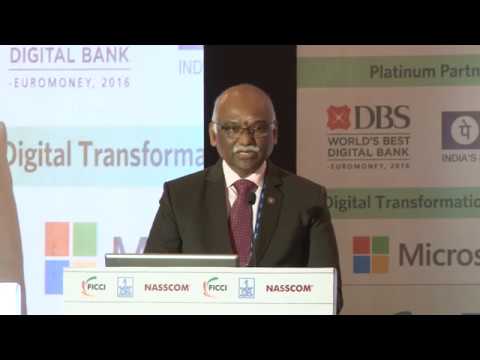


 For more infomation >> DG2 by Diane Gilman Striped Utility Shirt - Duration: 3:41.
  For more infomation >> What Is Happening With Reaction Videos .... / リアクションビデオについて。。。 - Duration: 3:29.


 For more infomation >> A PLACE OF MY OWN | 4k drone - Duration: 1:56.

 For more infomation >> A Duel Personality - Duration: 22:45.
 For more infomation >> How to draw a Asriel ( Undertale ) - Lessons video for kids - Duration: 5:21.


No comments:
Post a Comment