- He didn't think he was that great, but we did.
- He got that ill voice
and then you pay attention to what he's sayin'
it's like, you know he got some kind of
knowledge of self.
- Every time we see him he's dead fly.
Waves is spinnin',
he's pushing something crazy.
- You know I always felt like
he created a lane for himself.
He didn't want to go where anybody else,
where I went, where this guy went.
- And to still be standing now,
and to have not compromised his artistry
I think says it all.
♪ At times I window watch out the Mariott ♪
♪ Zoning on owning co-ops ♪
♪ Foreign drop top coupes and yachts ♪
- [Rakim] 20 years ago,
AZ made hip hop history with his
revolutionary debut album, Doe Or Die.
The album was an instant classic
and quickly soared to number one.
Each track showcased its signature tone
and verses so potent,
the blazed new trails into the new millennium.
Turn your speakers up as we go on
a nostalgic journey back to where it all began.
Brooklyn.
I'm Rakim.
And this is 20 years later
Doe Or Die.
♪ Rock the house. ♪
("Rather Unique" by AZ)
♪ East New York, East New York ♪
♪ I'm rather unique ♪
(soulful music)
- [Sheila] Climate in East New York
we moved there, Anthony was nine.
He had a few challenges, 'cause the kids out there
was a little rougher than the kids in Crown Heights.
- [AZ] My aunt lived out here and I guess
that what made my moms want to come out here.
My moms was a single mother
so you know, she wanted to come somewhere affordable.
- Growing up without a father was tough.
It was a given.
You're the boy of the house, you're the man of the house,
so you have to take charge.
- [AZ] Makin' sure my moms is alright.
I'm the only male in the house,
it was my Mom and my sister and just
makin' sure they was good was like
the biggest thing in my life.
- When he turned nine he had to learn how to
ride the train to school,
'cause I left him in school in Crown Heights.
It was a better school, so he had to ride the train
by himself at nine.
(hip hop music)
- You know, I had to still travel to the schools.
My Mom sent me out to school,
I was fairly new over here, you know what I mean?
It was different energy.
It was like survival of the fittest.
I'm really young, but I'm hearin' the noise,
I'm seein' the actions,
that was the beginning of everything.
- Growing up in East New York was no
skip in a park.
So, it wasn't fancy or glamorous at all.
- What up, God?
Oh, okay!
Okay!
I ain't goin' nowhere!
Guaranteed, that's my word!
- [Man] Word!
- Yes sir!
(laughs)
Yeah, yeah!
- That time when he turned 12,
he started writing music.
He started writing, he had this book
and he was writing all these things.
- I always was attracted to
poetry from school with Langston Hughes
and things like that.
And I used to always write,
I wrote, you know, little raps.
- [Precious] Me and my brother shared had a room.
For the majority of our life.
So, our room was his lab.
- You know, she used to see,
hear me spit some of the poetry
and she'd be like
I can see she was amazed and just like, okay!
You sound pretty fair,
to compare to what's on TV
or what you hear on the radio, you know?
- I would see him writing and rhyming
and I didn't really understand at first,
I was like, oh, so,
you're aspiring to be a rapper.
Okay.
- I think I had the soul.
Since then I acquired the interest
and wanted to rap then.
From there, I just started
writing rhymes and saying rhymes to myself.
You know.
Nobody really knew, I kept it to myself.
(hip hop music)
- [Rakim] But before the fame,
he was just a regular kid writin' verses
and spittin' rhymes.
The neighborhood was his stage
and could be a safe haven during the day,
but deadly by sundown.
This was always the case in Dead Man's Park.
- You know, we always had block parties.
Everybody had block parties.
The park jam was something different.
Usually at a block party
the people from the block participate.
But when you have a park jam,
everybody in the community come in.
That's when you know,
we had our 40's and private stock and
pina colada, mixin' 'em.
You know, I'm young!
Everybody was just in they zone, like
the real gangsters, the fake gangsters,
baby gangsters, everybody was just there
the ladies was out.
Just me lookin' right now is like I can
see the picture in my brain how it was.
You know there would be nobody at the park.
And like, once you turn the music on,
it starts with 100.
But, we might end up with 500 people
out there in the next two or three hours.
- [AZ] It's called called Dead Man Park.
There was always a body in here.
Which is not a good thing, but that's what it was,
you know what I mean?
But, I remember when Stetsasonic and them
was out here,
and we had a park jam here
and they tore the shit down.
They tore it down.
- AZ's interaction with us was always amazement.
And just noticing that it was us
doing it.
And it wasn't somebody from another neighborhood.
It wasn't somebody from the Bronx.
It was that these dudes are actually doin' it!
- Daddy O
is one of my homies.
And I saw them get busy
and I was like, wow.
I seen the reaction from the crowd,
and I was like, I can do that.
You know what I mean?
In my mind, I can do that.
I like that, I like the reaction,
I like what they was doin', crowd control.
That's when the music hit me.
(hip hop music)
- [Man] The beginning of your documentary
you gonna sell us.
You gonna sell us to the world
when you become multi-platinum.
- [AZ] In the '80s, everybody had radios.
And they walked the streets with the radios
and you hear it,
and that's when it first connect to me.
I'm like, wow.
The beats, the lyrics, and they talkin' that language
that I can relate to.
- I can remember when
we used to have sessions, ciphers in the house.
After we do
we finish recording a demo or whatever,
and then we will critically analyze
who had the hottest verse
who verse was wack or
could use a little tightening up.
And we'll check in again and
this is how we kept our swords sharp.
- I met him in Brooklyn, East New York,
at the corner.
I was getting ready to use the phone booth
to call him, but before I got there, I remember him sayin'
Yo, son, there's a phone booth at the corner.
Don't use that phone booth,
they be snipin' dudes.
So, you gotta go around the corner to
somewhere, I guess it was a supermarket or something.
Call me from there and I'll meet you outside
in seven minutes.
So, we did that.
When I got in the car,
the first rhyme I ever heard him say was
♪ Get this no one can get with this ♪
♪ So don't dis this ♪
♪ Just witness this lyricist ♪
♪ With realer skills of steel ♪
♪ It's definitely ill ♪
♪ Makin' MCs feel the fire like Stephanie Mills ♪
- And he just kept goin' on and on
and I was like, yo this kid is crazy!
With Pete Rock and AZ
was a five year process before you even
heard him on Life's A Bitch.
- [Rakim] Park jams, boomboxes,
ciphers on the street corners defined the era.
While developing his craft with his man Pete Rock,
Yammy, a mutual friend from Queens,
he brought Nas and AZ together because
he knew the unique perspective on they life
would entertain and elevate the music as well.
You know what song I'm talkin' about!
Life's A Bitch and then ya die!
Here's what Nas recounts.
- Life's A Bitch came about
because I had my eyes on up and coming
rap dudes and that's what I wanted on my record.
I didn't want anybody famous on it.
He kept coming up in my head,
he kept coming up in my head.
I liked his style.
And a friend of mine got locked up.
And he was the one I wanted on my record
and I'm like, man.
What do I do?
And, A.
I remember A, so I called A to the studio.
I just had him say rhymes for me.
They were crazy!
But none of 'em were just that right fit
for the song.
I was startin' to think,
man this ain't gonna happen.
Then he finally said this one rhyme.
It was like the skies just opened up.
("Life's A Bitch" by Nas and AZ)
- As soon as I heard
♪ Visualizin' the realism of life in actuality ♪
♪ Who's the baddest ♪
♪ a person's status depends on salary ♪
Oh my
(screams)
Crazy.
Crack.
Nas had to go back rewrite his verse.
Facts.
- You know, when we heard that record
it got that ill voice and then you
payin' attention to what he's sayin',
it's like you know he got some kinda
knowledge of self.
So automatically, for all the
street cats and the brothers that had
knowledge of self was able to
cheer him on and root for him
and say, yo that's
you hear what he's sayin'?!
("Life's A Bitch" by Nas and AZ)
- In regards of forecasting the future of an artist,
after just hearing that one record,
you're already like, he's getting a record deal.
- I'm invited to a record release party
for a guy named Nas
who I knew very little about.
And I'm there,
and I hear this song.
And I say, wow.
That guy's really talented.
And the guy next to me says,
"That's not Nas."
I said, "Well who did that line?"
And they said, "That was a guy named AZ."
So I said to the guy next to me,
"I want to meet AZ."
Something about the verse got me.
To me, I always wanted to run the best record company.
With artists that were authentic.
He was a real artist.
So, I got very excited when I got to know him.
- For him to get the best shot
at having his own identity,
he needed to be that rapper.
Like Nas is at Sony, so
we decided to go with EMI.
They gave us the most promise
with the money.
- [AZ] In the spring of 1995,
we started recording Doe Or Die
in Electric Lady Studios.
It just had a nice energy in there.
Once I went in that studio I was like,
"This is where I'm doing this album at right here."
Electric Lady was my home.
- [Rakim] Newly signed and hot off the Illmatic Tour,
AZ stepped off the stage and into
Jimmy Hendrix's Electric Lady Studio.
The birthplace of Doe Or Die.
Icons like Run-DMC, Bowie and Prince left their mark.
And permission for genius to thrive.
If their permissions was an inch,
AZ took a mile.
- My whole direction once I got the record deal was,
I gotta represent now.
You know?
My calling is here, the time is here,
that window of opportunity is open.
I have to represent for Brooklyn.
- I was pretty hands off in the making of the records,
and I think what I told the team,
I remember this pretty well,
is let's stay out of the artists' way,
just be a facilitator.
Just get him who he needs and who he wants.
And I think, I know we wanted Pete Rock.
Premier, I know the L.E.S. name had come up.
And I said, let's make him happy.
- [AZ] First song that set the album off
was Rather Unique.
Pete played a couple of beats
and that particular song was in the mode
and the vibration of
the way, sound of hip hop was going at the time.
And my whole thing is how I got on was unique,
you know?
With no expectations, just being at the right place,
right time.
("Rather Unique" by AZ)
(record scratch)
- I have a funny story about Rather Unique.
I had just made the beat, it was done.
Ready to lay it down in the studio with A.
And there's an assistant engineer
who was pretty busy runnin' around the room,
doin' things and he was by the patch board
where I kept my drum machine and
he made a mistake.
Was pluggin' stuff in and pluggin' my drum machine out.
With the beat.
And I'm like, ahh man.
So I had to do it all over again.
("Mo Money, Mo Murder (Homicide)" by AZ)
- When the album started coming in surfacing
it was time to submit beats.
So A came down to the studio.
What was crazy was that
every joint I was playing,
he'll be like, "Yo that's too hard.
"Do something a little softer."
And I'm like, oh man.
Because mind you, I'm bangin' out M.O.P. all day!
So, I'm in straight hardcore mode,
rugged mode, but as the track started playing,
I said, hold on, let me try these joints.
'Cause these joints I ain't never really played for no one.
And A heard the joints, he just started grabbin' 'em.
I was like, oh this is the sound you want!
And when he got on that Mo Money, Mo Murder joint,
that's the one where he stopped and said,
yeah I'm 'a take this back and see what my peoples think.
And he say, I'm 'a play this for Nas.
- You know, D/R Period.
He had that street sound.
And he played the Mo Money, Mo Murder track.
And I think it was a sample from the O'Jays.
Man.
And you know, Life's A Bitch was from
Yearnin' For My Love and it was just
oldies but goodies that touch the soul.
That soul music.
Ah man, we just
that just captivated everything.
We just got into a zone with that.
- I just wanted to make something hard.
The chorus gotta be hard, like how some of the verses are.
♪ More money, more murder ♪
♪ Mo' homicide ♪
- Catch that body, you better have that alibi.
You know, you better have something like,
it was like,
if you're gonna be out here and you livin' that life,
you better know how to live that life.
AZ knew how to spit it,
and talk about that life from
like a book author, you know, like
he was that well written.
("Ho Happy Jackie" by AZ)
- Even working with him, it's like,
he's picky as hell and it's like
just lookin' and sifting through maybe about
a good eight, nine beat tapes.
When he found that one he was like, yo
alright, I got one, this is the one right here.
This is the craziest song.
Yo, I got the craziest story to your record.
He penned it, we went into Electric Lady
we did a couple of sessions and
we knocked it out.
- To make an album,
you gotta have cohesiveness and
that was a melodic track within itself too
but it also was giving me a chance to
get my storytelling on
from a different perspective.
Instead of just, you know, the streets and
just being braggadocious on certain songs.
It was direction with the female perspective,
or how I seen it.
That was a good look.
Buck came through with that.
(crowd cheering)
♪ Put your hands up ♪
♪ Put your hands up ♪
- Sugar Hill was one of those songs that
smoothed out the gentlemen,
and made the ladies pop their hips.
("Sugar Hill" by AZ)
- My DJ at the time was L.E.S.,
and he told me that he had this new guy coming up
and they had this hot song and they needed
a girl to sing the hook.
And they actually had someone singing already,
Monifah.
And they I guess, didn't like it.
So I came in, and then L.E.S. brought me to Nas,
and Nas and L.E.S. sat me down
I remember it was three nights.
The record company sent a car for me to go,
and I didn't get in the car.
And the last night I was like,
what do I have to lose?
And it wound up being the biggest song
of my career.
- We went through a lot of females came and auditioned
and sung on the track.
But Miss Jones came to the studio and
she did it, it was like, ah that's it.
That's, that's the track.
That's the one that set the album off.
(hip hop music)
It was just crazy.
I remember my dressing room was on the top.
Watch your step watch your step watch your step.
The dressing room right here
had about 20, 20 homies up in here, chillin'.
Getting ready for the show.
Damn, 20 years ago, that's crazy, man.
20.
A lot of legendary things went on,
a lot of my idols.
A lot of generation of music.
Historic, man, Apollo.
I wasn't the first.
I don't remember the lineup totally,
but just hearing the screams and all that
and when it was my turn to perform it was just
just ballgame.
Now mind you,
my album was not out.
So, when I performed,
my first song was Rather Unique.
The reception was good, it was fair.
Secondly I did Gimme Yours and then
that's when Nas came out, he did the hook.
So I seen the crowd kinda get up.
I seen the love, it was growing.
(rapping, crowd cheering)
♪ Say make money money, make money money money ♪
- I got to Sugar Hill it was like a tsunami.
'Cause everybody from the front and the back
they rushed, and it threw me back for a minute!
It caught me off guard but the love was immense.
It was crazy.
It's that log right here.
This log been touched so many times
by so many people.
It's legendary within itself.
(hip hop music)
As an artist, what I took from experience
after the Apollo show was that
the bar was raised and I was able to meet that bar.
Like now it's time for me to go to the next level
and do bigger venues and now, I feel like I made it.
You know, I got the love from my hometown.
You know, it was early.
The album wasn't even out yet!
So, the album is comin'.
I was like, okay, we gonna sell some albums,
you know what I'm saying?
We gonna get on tour,
and that's exactly what happened.
- [Rakim] Doe Or Die was released on October 10, 1995.
The album stands alongside of the
two biggest historical events of the 20th century.
The O.J. Simpson acquittal,
and the Million Man March.
Was it a coincidence?
- That was a coincidence, man.
A week before O.J. was acquitted,
the day of the Million Man March,
my album was released.
It just felt like I made history
regardless of what, you know what I mean?
I just felt like I was a part of history.
That I was here for a reason.
I mean, I'm documented in time forever.
(laughs)
- So 1995, the album comes out.
The reviews are incredible.
I remember our press department calling me
hour after hour, we got another one,
we got another one.
We never thought,
are we gonna sell 10 thousand,
we gonna sell 500 thousand, two million?
We were so proud that he got to make his own record,
and the credible people I cared about.
The real writers, the real
today we call 'em bloggers.
They all thought it was great.
- When I premiered AZ's album, Doe Or Die
on the radio and stuff,
the fans took to it immediately.
You know, as much as they did Illmatic.
There were lots of good records coming out
at that time and era so
I made sure that this one was especially heard.
Told people, hey, look man,
trust me, this guy is it.
And they went with it.
- When I heard Doe Or Die,
it was gutter, you know, which is what we like.
Especially Mo' Money, Mo' Murder, Mo' Homicide.
Like that, that's the stuff that you
that DJ's like me dig for.
- For him to have records like Gimme Yours,
even records like Ho Happy Jackie,
Sugar Hill, Mo Money, Mo Murder
it told the stories of what was going on in New York.
What we go through.
And it's like, it's just painted through
through lyrics.
So it's like, if you wasn't from New York,
a lot of cats I know from around the world,
they look at AZ like, yo, he's one of the
coldest rappers ever.
- You know, hip hop, you can make a hit,
and it bang, but
it gets to a point where
you need a joint that goes beyond just
that bang, you know?
That, when a person hear it,
it's like I remember when I was doin' this at school
or I remember when I was walkin' down the street
and this joint came on the radio.
And that Doe Or Die album,
I knew it gonna be classic because
everybody was like fiendin' for AZ album.
- When it came with Sugar Hill,
we knew then that he was able to make
huge records that transcended into Soundscan, Billboard,
million sales, you know what I mean?
Like, it's a difference when
you're just able to spit and rhyme.
But to be able to translate that into
Billboard number one
global charts, charting
that's just, that's another
another thing.
So when he was able to do that,
we was like oh
oh (laughs)
like, okay!
He knew that he knew the game plan,
and he knew the blueprint.
And he followed it.
- To me, Doe Or Die
was important because it was the link in the chain.
I brought a certain sophistication to the table,
a certain mindset.
So I just added on
that whole mystique to the game.
It was needed, it was mandatory.
- [Rakim] At that time, technology demanded
a change in a music industry that labels couldn't support.
While his labels folded, AZ didn't.
He re-routed hisself to independence
and stood squarely in his purpose.
And although being underrated was a perception,
prosperity and respect was his reality.
- The reason why A is probably underrated
is because, especially back then,
a lot of artists had a big machine behind them
to get them out there and get them out there the right way.
The way they pushed him,
they pushed him on the single on the Sugar Hill
and so they only really pushed what
they wanted A to do
and what A needed to do to sell records.
Those street records that we all love
because those are the records that we cling to,
those are the B side records,
those are the records that's not singles that
y'all don't hear.
Those B sides that A had was crazy.
- The rap game has high expectations from all of us
and they want to see us do phenomenal things that just
(laughs)
impossible things, there's never enough.
They want to see him just go and do things that
he might feel like he's already good.
I feel like he created a lane for himself.
- The reason why Doe Or Die is still relevant today,
20 years later is because
the revolution not be televised.
So, I don't care how much internet you have.
When you have real true substance,
it's the actual content that pierces you.
- I think looking at all these years,
I would say his life
it still exemplifies someone who's been successful.
Someone who has just left a legacy.
- What you leave is what people will appreciate.
And 20 years down the line
for people to appreciate Doe Or Die,
that's a milestone.
You might not say Biggie, Jay-Z, or Nas
and it's like you left AZ off that Mount Rushmore,
when you go back with the internet
and you start listenin' to AZ you'll be like,
yo, this kid is nice!
Why isn't he on the Mount Rushmore?
- [Rakim] 20 years later,
the heartbeat of a classic man continues.
His inspiration doesn't waver.
Whether he's performing at a sold out show,
or he's at home being a son, father and friend.
- There's just plenty of times where
I would call
and just say, I can't do this anymore.
And, he'd be like,
where you at?
I'm on my way.
- He has taught me, if there's something you want,
if there's something you're after,
just go for it because he's still going,
and he's still doin' it.
What he's speaking is the truth,
what he's saying is knowledge
and it's what we went through
and it can relate 'cause it's probably what
thousands of people went through
and it's probably what people are still going through today.
- My hopes for him going forward is that
he reaches whatever plateau he has in his heart to reach.
I want him to reach the goal that he set for himself.
I just want him to be happy.
- When I think of the evolution of AZ,
from 1993, 1994, the era of Brooklyn and New York,
and I think of now, I'm almost envious and jealous
that he's that real.
And his integrity is so intact, he's his own man.
It's wine.
When you drink a great wine,
you're drinking it through the soil.
You taste the cork, you taste the spice,
you taste things through the soil.
And the best wine is an amalgamation of all that.
So today's big, big records that you hear,
whatever it is, Kendrick Lamar,
there might be something from his parents in there,
who gave him, and played subconsciously,
a little bit of AZ.
- Talking about his evolution as a man
and as an artist,
I would say that he was destined to do that.
It's very difficult for me to see him any other way.
He was bred to be a king.
- [Rakim] AZ's life has always been a delicate dichotomy.
He was called 'man', when he was merely a kid.
He had a major label deal, but chose independent.
He's one of the greatest MC's in the game,
but still underrated.
But this tender balance never kept him
from creating timeless classics that set
and raised the standards for hip hop.
Today, AZ is experiencing a new golden era.
In the studio, recording a long awaited
Doe Or Die 2.
- Dubbin' a Doe Or Die right now, the sequel.
I feel no pressure, I just feel good to get through it
20 years later.
I'm kinda excited, honestly.
For this Doe Or Die 2, I think
those that contribute as far as producers,
they understood AZ.
So they're bringing the right music to the table.
And it's enabling me to put the flow
that's missing in the game.
What made me reflect from this whole journey is
that I'm still on the journey.
You know, it's not the ending.
It's really like a whole brand new beginning.
My mind has opened up more from learning the business,
knowing that I perfected my craft and
I'm looking forward to it.
(hip hop music)
 For more infomation >> 4ª Semana da Alimentação Extraordinária • Os 7 Fundamentos da Saúde (aula 01) - Duration: 28:49.
  For more infomation >> ELA PERDEU 20KG EM 1 MÊS E FICOU COM UM CORPO MARAVILHOSO!! VEJA COMO!! - Duration: 2:17.
  For more infomation >> Gleici diz que Breno deve voltar do Paredão e ser o vencedor do BBB18 - Duration: 3:30.
  For more infomation >> Belen Rodriguez sbarca a Uomini e Donne? Ecco cosha fatto - Duration: 4:02.
 For more infomation >> Tio de Kaysar elogia Breno e fala sobre sobrinho: "Gosta de fazer o bem" - Duration: 1:52.
 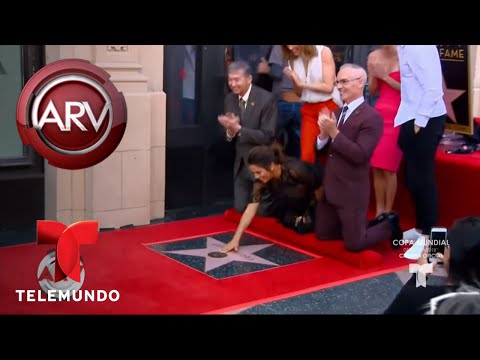 For more infomation >> Eva Longoria recibió estrella en el Paseo de la Fama | Al Rojo Vivo | Telemundo - Duration: 0:43.
  For more infomation >> Mercedes-Benz E-Klasse 200d Business Solotion Avantgarde Automaat - Duration: 1:14.
  For more infomation >> Come rassodare gambe e braccia flaccide - Duration: 6:58.
  For more infomation >> Mercedes-Benz E-Klasse 220d Ambition AMG Line Nightpakket Designo Widescreen COMAND Panoramadak Burm - Duration: 1:14.
  For more infomation >> Citroën C1 1.0 e-VTi Selection - Airco - Bluetooth - Reservewiel - Duration: 1:11.
  For more infomation >> Mercedes-Benz E-Klasse 300 BLUETEC HYBRID Distronic / Memory / Pano / Leder / LED - Duration: 1:12.
  For more infomation >> Choosing a security question and answer on PS4 - Duration: 0:45.
  For more infomation >> Opel Mokka 1.6 115PK EDITION - E.CC-NAVIGATIE - TREKHAAK - STOELVERWARMING-18 INCH LMV - Duration: 1:12.
  For more infomation >> DSの電動コンセプトカー、X E-TENSE…ティザーイメージ - Duration: 2:14.
  For more infomation >> Pensante - Aonde Que Existe Paz (Videoclip Oficial) - Duration: 3:40.
  For more infomation >> Volvo XC60 2.4 D4 190PK AWD 5-Cil. R-Design - Duration: 1:14.
  For more infomation >> Renault Captur TCe 120pk Dynamique EDC (CAMERA!!!/R-link/Climate/Cruise/Lichtm. velg.) - Duration: 0:54.
  For more infomation >> Viking Age Coins, Jewelry Unearthed on German Island - Duration: 0:57.
  For more infomation >> 大谷翔平の3度目先発登板、悪天候で中止 18日Rソックス戦にスライド登板へ - Duration: 1:55.
  For more infomation >> Kia Sportage 1.6 GDi 132pk ECOdynamics First Edition - Duration: 1:13.
  For more infomation >> Peugeot 208 1.2 VTI Envy 5drs Nav/Ecc/16inch - Duration: 1:12.
  For more infomation >> Ford Fiesta 1.0 Ecoboost 100pk Titanium 5drs Navi/Ecc/Pdc - Duration: 1:13.
  For more infomation >> Peugeot 107 SPORTIUM 1.0 5DRS AIRCO LICHTMETALEN VELGEN - Duration: 1:12.
  For more infomation >> Ford Fiesta 1.1 85pk Trend 5drs - Duration: 1:12.
  For more infomation >> Ford Fiesta 1.0 EcoBoost 100pk 5drs Titanium - Duration: 1:13.
  For more infomation >> Ford Fiesta 1.0 EcoBoost 100pk 5drs ST-Line - Duration: 1:13.
  For more infomation >> Ford Focus 1.5 EcoBoost 150pk 5drs Black Edition - Duration: 1:12.
  For more infomation >> Ford Fiesta 1.0 EcoBoost 100pk 5drs ST-Line - Duration: 1:13.
  For more infomation >> Ford Fiesta 1.25 82pk 5drs Titanium - Duration: 1:07.
  For more infomation >> Opel Corsa 1.0 90PK 5drs. TURBO EDITION - Duration: 1:11.
  For more infomation >> Пубг епта - Duration: 2:02:51.
  For more infomation >> How I Make Money Online
 For more infomation >> Opel Corsa 1.0T 90PK COLOR EDITION - INT.LINK - APPLE CARPLAY - PARKEERHULP - Duration: 1:12.
  For more infomation >> Kia cee'd 1.0 T-GDi Eco Dynamics 120PK GT-Line - Duration: 1:09.
  For more infomation >> Opel Mokka 1.4 T COSMO - HALF LEDER - NAVIGATIE - CLIMATE - CAMERA - AGR STOEL! - Duration: 1:13.
  For more infomation >> Hyundai i30 1.0 T-GDi 120pk First Edition - Duration: 1:12.
  For more infomation >> Opel Mokka 1.4 T INNOVATION - LEDER - SCHUIFDAK - ONSTAR - AIRCO - CAMERA - Duration: 1:13.
 For more infomation >> Why Democrats shouldn't criticize work bonuses from tax cuts - Duration: 2:25.


 For more infomation >> What you need to know if you plan to file a tax extension - Duration: 1:54.


No comments:
Post a Comment