Barcelona, 2014.
After six years of financial crisis, budget cuts, and profound alienation from the political class,
a group of people from social and grassroots movements
created the citizen platform 'Barcelona en Comú'.
They lacked experience in institutional politics but their goal was clear:
to win the 2015 municipal elections and bring politics closer to the real needs of people.
Many of us from my generation hadn't voted for many years.
When we reached voting age
we found the whole thing insipid and unconvincing.
So to find myself at age 30
excited for the first time about something political and institutional
was a real high.
At night we'd go and put up posters. It was almost like partying with friends.
We'd be putting up posters and people would clap.
People cheered us on the streets: "Go for it! Yes we can!"
There was something in the air,
something magical…
On election day I was an agent at my local polling station,
so I wasn't getting much info, only from Telegram and Twitter.
The pile of ballot papers with Ada's face on them kept shrinking…
When I arrived at our headquarters that night
they were just announcing that we had won.
And that was… Unbelievable.
I remember there was a big party.
Afterwards, when we were leaving,
something beautiful happened:
Joaquim
came up and hugged me, he was crying,
and he said: "I've never won before".
I get goose bumps because it's true.
Many people felt that way.
Yes we can!
Yes we can!
This presidency proclaims Ada Colau Mayor-elect of Barcelona.
TWO YEARS LATER
It's like being in a big castle.
It's archaic.
You feel like you're somewhere that's not of this world.
Spaces affect us, and you feel kind of restricted here.
The space is too huge to be welcoming or intimate.
1. THE INSTITUTION
It has been strange to find myself in spaces
where I'm always one of the few women and one of the youngest people.
In the middle of a meeting they call you "darling", "love"…
Even though I didn't like the title "Councillor" at first, now I defend it.
I prefer Councillor to darling or sweetheart, love, honey…
When we came into government,
during those very stressful first few weeks,
with so many staged public acts,
I started to speak in a very deep voice, and I ended up hoarse
because I deepened my voice so much,
trying to be like: "Hello, good morning."
I was trying to sound older or more masculine.
You put yourself on a different level so they'll listen,
but it's their level and you don't feel comfortable.
My roots are important to me, but what really matters is why I'm here.
Sometimes I need to focus and think: "Why am I here?
What did I come here to do?
All those demands and questions I had,
how can I tackle them?
Will this institution let me?"
PLENARY SESSION BARCELONA CITY COUNCIL
Good morning from the Plenary Hall at the Barcelona City Council
and hello to viewers watching live on Barcelona TV.
Things have changed:
issues that had been ignored are now on the table.
The subject of pollution was non-existent on the city's agenda.
The regulation of tourism...
We've opened a debate on the kind of tourism we want,
how it affects locals, gentrification…
This was not being discussed.
18 months ago nobody acknowledged the problem of tourism.
We're now starting to see it and this means we can fight it.
And now the Committee for Ecology, Urbanism, and Mobility.
Janet Sanz has the floor.
We've said it many times before: the city clearly has a pollution problem.
And we can only solve it by stimulating and promoting public transport.
Our role is to be at the helm,
to set the direction.
And it's important to consolidate every step of the way.
Several things can ensure that we're not simply managers.
Good public policy should take into account
the kind of city you want 15 years down the line.
If you think on that scale you stop managing and start transforming.
It's not just about what we do when we're here,
but also about what we safeguard so it remains when we're gone.
We made a commitment to do everything within our means
to put an end to human rights black holes.
We cannot allow any more deaths in this Migrant Detention Centre.
The press conference must not exceed 30 minutes, with the two speakers.
Two items: one, this morning we issued an order to shut it down.
Two,
the City Council intends to sue the Migrant Detention Centre.
Getting used to the timing and codes of institutional politics has been tough.
This morning we issued an order to shut down
the Migrant Detention Centre at Zona Franca.
They now have two months to bring it into effect.
Do you know how long the process can drag on?
An ordinary administrative appeal
can take up to 18 months before the first sentence is passed.
From the moment you make a decision to its materialisation,
the inner workings of the machine take a long time.
We took office thinking we could do lots of things
and that hasn't changed, but it's much slower than we thought.
And that's not easy to understand from the outside.
2. THE STRUGGLES
Social movements are a space of engagement.
Institutional politics is about finding solutions,
accepting complexity and achieving results.
This means accepting contradictions, navigating them,
leaving your comfort zone so you don't get stuck.
A few years ago some of us thought that the most useful tool
was to stand for election.
Not that the other tools were not useful.
On the contrary: the other tools are absolutely essential.
Institutional politics and social movements have different limits.
Just as you cannot underestimate the importance of the street,
you cannot underestimate the importance of the ballot box
or the institution's power to change things.
5 EVICTIONS WERE SCHEDULED FOR TOMORROW.
IN SPITE OF OUR EFFORTS WE NEED HELP TO STOP ONE:
9:30 AM, ARC DEL TEATRE ST.
I know it's unusual for a city councillor to send tweets alerting to evictions...
But although we set up a new service to stop forced evictions
that stopped over 200 in Ciutat Vella in the last two months,
no matter how much of an effort the City Council makes
the law is so unfair that some people end up on the street
and we have to use all possible means.
PUBLIC AUDIENCE CIUTAT VELLA DISTRICT
What are you planning to do about the tourist flats in Barceloneta?
It's really out of hand.
Those people will never rent the apartments
to regular people at an affordable price.
About the measures to control empty flats...
In my building, for example, several flats have been sold to investment groups.
Why don't you do something about those who are making a killing?
Journalists often ask: "How does it look from the other side?"
We're not on the other side.
We're defending the general interest, the good of the city,
in a much more complex scenario, with lots of responsibility.
We're working hard to fix the issue of illegal tourist flats,
with inspections and also financial penalties
of € 600,000 to platforms like Airbnb
and we're also working with the Catalan government.
We do everything we can.
Even so, illegal tourist flats are a serious problem
and residents have been warning us for a long time.
On one hand you feel you have the power to change things,
but it's a limited power.
The media insists on pitting the City Council
against economic powers.
But my experience has been the opposite: it has been a positive learning process.
The City Council has to collaborate with many economic actors
because these actors know that the city needs to be doing well,
which means that its residents are also doing well.
But some other economic actors are enemies of the city.
Moving on to a controversial and worrying issue:
the tenants of several buildings in Barcelona
are being pressured by property developers who want to evict them.
When we entered government, the people in the housing department
told us about the existence of companies
that engage in malpractice and are totally predatory.
Some tenants have received letters terminating their lease,
without the option to renew or buy.
This building was bought by a company that refurbishes and sells luxury flats
or rents them to tourists.
This gives you an idea of what the law will protect if it doesn't change soon
and of the insolence...
...and absolute arrogance of those who have no regard whatsoever
for human life, at all.
The law needs to change to protect tenants.
Our role, and our work as a public administration
is to be on the side of citizens and guarantee their right to housing.
Hello, José Ramón?
-I'll come down. -Ok, thank you.
They told us they'd come and clean. We're still waiting.
At least 60 buyers have come in the last three months.
One of them told us that the building is for sale.
I'm in favour of explaining the problems that arise,
as a matter of honesty, of being consistent with my beliefs.
We'll organise a talk
so that people know their rights and not get ripped off.
We can't always keep up with reality.
That puts us in a weak position,
thinking "I wish I was out there",
because I would love to be fighting for this issue
instead of trying to find solutions that elude me.
Sometimes we have the sense that sharing weaknesses makes us weak.
This is harder than it looks.
In reality, sharing makes us stronger.
SANT ANTONI NEIGHBOURHOOD ASSEMBLY
Barcelona en Comú organises assemblies in all the city's districts.
They are a forum where activists, volunteers, and political representatives
discuss strategies to address specific local problems.
It's a tough topic, I think the talk on tenants' rights
will allow us to exert some institutional pressure. We'll see.
It worries me that we are the municipal government
which is most concerned about this matter
and we are overwhelmed by a lack of resources.
The Catalan Government could put a cap on rental prices.
This needs to be said. I don't know why it's not in the media.
Paradoxically, a government that is in favour of social movements,
that makes room for them and also listens,
is criticised more than most, precisely because it gives them a voice.
Activists –all of us–
have our movements, our comrades, our principles...
but we also have institutional limits.
Being between radical proactivity and pragmatic execution
can be very uncomfortable.
It's a clash of identities,
a confrontation between what we were and what we are now.
That's why our experience differs from that of professional politicians
who are probably more impervious and serene
because they generally haven't been on the other side.
3. THE NEIGHBOURHOODS
On the subject of accountability, we've been governing for two years
and it's our obligation, an election promise in itself,
to report on the process of change, on the advances we've made
and the difficulties we face.
The bulk of Barcelona en Comú activists are based in the neighbourhoods.
This means they've been crucial to the election campaigns
and to putting together the local election programmes.
Our roots are "neighbourhoods first". They're the most important thing.
People want to be heard and they want to hear the truth.
They want us to be honest.
And they want us to share the complexities.
I think people can tell there's a new way of doing things
and a new kind of narrative.
The fact that I'm councillor for my own neighbourhood matters to me.
It might be different otherwise.
ACCOUNTABILITY IN THE SANT ANTONI NEIGHBOURHOOD
Halfway through its mandate,
Barcelona en Comú reports directly to citizens
on the implementation of its electoral programme.
Accountability was fundamental for us.
Meetings like this are crucial for sharing what we're doing,
what you think we should do, and how we can keep moving forward.
I'll try to stick to the specific programme for Sant Antoni.
Even if you're in contact with citizens, you don't explain your whole programme.
People don't always notice all the little things that are being done,
although they outnumber the big ones.
Our job is to find out what people want –to be like tentacles or ears–
and transmit those demands and exercise our political power.
We decided to run for municipal government because it's closest to citizens
and because we believe that the city can be the basis for change.
DEPARTMENT FOR FEMINISMS AND LGTBI AFFAIRS
There has been a lot of talk about "feminising" politics,
incorporating a feminist approach, overcoming patriarchy in politics...
The City Council and Ada Colau have had a lot to do with this discourse
about different ways of doing politics.
At Barcelona en Comú, when we declare ourselves feminists,
we're not just talking about implementing feminist policies.
We don't just want one department
designing policies against gender-based violence, for example,
or specific policies and services for women.
The idea is to incorporate the feminist approach in all areas.
To provide local services and meet the demand coming in from the districts
we need 23 more vehicles.
These extra vehicles
are meant to fix the problems raised during the participatory process.
What about ongoing projects? Some things need smoothing over.
We receive many complaints about transport between health centres.
The links between a health clinic and a hospital, etc.
I get a lot of comments like:
"I can't understand why they moved the bus stop in front of the hospital".
And it's not just one hospital.
People say: "Why did you move the bus stop one street down?"
Is mobility a gender issue? Yes.
Women use more public transport and travel more on foot
because for the most part we are still the carers,
we do the reproductive work,
which means going to the grocery store, the school, the library,
and moving in a certain way.
Bus stops require careful planning.
Elderly people tell us the difficulties they face:
two streets can be a long way for them, and some streets are very steep.
We don't take that into account.
When we use this approach to design policies in sectors such as mobility,
bringing back local buses,
creating an orthogonal network
that takes things like bus stops near healthcare centres into account,
we reaffirm ourselves as a feminist government.
We govern to improve things, to change things for people.
That enormous physical distance between us and the people
sometimes seems to be there on purpose.
"First we'll isolate ourselves from external pressures and think rationally,
then we can govern." But it should be the opposite:
"First we'll connect with the outside world and receive constant feedback,
then we'll see how we can govern."
Otherwise you can end up trapped in this big castle without seeing anything.
MEETINGS WITH THE MAYOR
Every two weeks, in order to keep in touch with citizens,
mayor Ada Colau meets with locals in different parts of the city.
They are open gatherings where anybody can ask questions,
share opinions and criticise freely.
One thing we were sure of when we stood for election
is that we wanted to open the institution, make it more participatory,
bring it much closer to citizens.
Consequently, we knew that we had to stay in touch with the street,
with the neighbourhoods,
and that we had to talk to people because we are here to obey them.
This is a request on behalf of all elderly people:
the Senior Citizens card for all.
You want to axe bus route no. 66,
which stops near two hospitals, on the way there and back.
Please reconsider.
As you can see, young people don't live here any more.
We can't afford the rent, or the prices in the stores,
or the entertainment that's on offer.
When you're in government you need empathy.
You have to step into the other person's shoes.
That's not at odds with efficiency or good government. Just the opposite.
A feminist government has a different approach
to many other governments today.
There has been a bottom-up change
that has allowed us to emerge.
In other European countries
the extreme right has stepped in to fill that gap.
My philosophy is: "Get organised and fight in your neighbourhood, at work,
at university,
create a citizen counter-power
and if you get into the institutions
do all you can to fuel that counter-power so they don't let their guard down."
We won't be able to change anything at all
without grassroots mobilisation, obviously.
It's the great lesson we've learnt from the past.
We want to be under pressure, challenged by social movements,
and we need them beside us because otherwise our changes
will not become radical, substantial changes.
We are in politics to transform reality,
and that requires a good diagnosis and the capacity to imagine a different city.
 For more infomation >> Lin-Manuel Miranda visita Puerto Rico | Noticiero | Telemundo - Duration: 0:30.
  For more infomation >> Almacén de pólvora clandestino estalló como una bomba en México - Duration: 0:28.
  For more infomation >> JUST ONE ONION YOU CAN GET RID OF THE DIABETES IN ONE MONTH - Duration: 2:11.
 For more infomation >> Entrevista al director de Cinema Paradiso Giuseppe Tornatore - Duration: 34:25.
  For more infomation >> Tres o cuatro fichajes de invierno para el Barça - Duration: 3:33.
  For more infomation >> Nioh Complete Edition - Duration: 2:40.
  For more infomation >> VIDEO – Nicolas Duvauchelle a-t-il eu un contrôle fiscal à cause de Nicolas - Duration: 2:08.
  For more infomation >> 4 traitements pour faire disparaitre les boutons d'acné rapidement - France 365 - Duration: 5:33.
  For more infomation >> Guía Saint Seiya Zodiac Brave; Escorpion divino (双節棍) - Duration: 2:37.
  For more infomation >> EL TIEMPO EN CUBA 7 DE NOVIEMBRE - Duration: 2:21.
 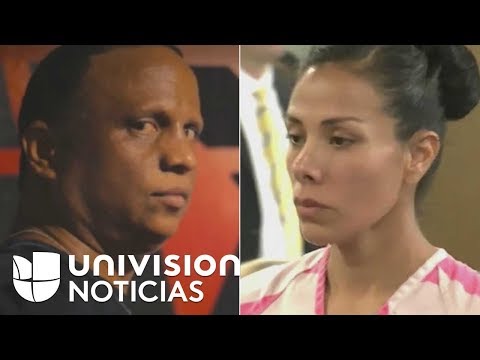 For more infomation >> Hispano fingió su propia muerte para probar que su esposa contrató a sicarios para asesinarlo - Duration: 2:08.
  For more infomation >> Grow the Zombie Plant

 For more infomation >> 듀크 김지훈 자살이유 아내 전부인 자살 암시 - Duration: 4:11.
 For more infomation >> 북한 잠수함 전력에 대한 미국의 평가는? - ☠ 24/7 밀리터리 ☠ - Duration: 6:04.
 For more infomation >> BMW X3 2.0I XDRIVE CHROME LINE EDITION AUTOMAAT8/NAVI/TREKHAAK - Duration: 0:56.
  For more infomation >> Toyota Verso 1.8 VVT-I Sol | Climate control | 7 Persoons | Trekhaak - Duration: 0:58.
 For more infomation >> When You Go Back On Tinder - Duration: 1:50.

 For more infomation >> Guy Falls Off Cliff In PUBG and Dies - Duration: 3:41.


 For more infomation >> a song for yo guys :) - Duration: 5:20.
 For more infomation >> Dressing up like a scary thot - Duration: 10:47.
  For more infomation >> Streaming - Dungeons & Dragons (tabletop) - Session 1:8 - Duration: 5:34:30.
 For more infomation >> Can female cat Komugi understand mom 's words? - Duration: 6:02.
  For more infomation >> World of Tanks Console - Otimizado para Xbox One X - Duration: 1:09.
  For more infomation >> Pilot Training Mission To North Korean Border Shows Preparation In Case Of War | NBC Nightly News - Duration: 2:10.

No comments:
Post a Comment