- NARRATOR: The Texas Parks & Wildlife television series
is funded in part by a grant from the
Wildlife and Sport Fish Restoration Program.
Through your purchases of hunting and fishing equipment,
and motorboat fuels, over 50 million dollars
in conservation efforts are funded in Texas each year.
Additional funding provided by Ram Trucks.
Guts.
Glory.
Ram.
- NARRATOR: Coming up on Texas Parks & Wildlife ...
- We call it living history because the whole point
is to make it as real as we possibly can.
- Fire! [cannon blasts]
- It's a reward to have people say, "Boy that's a great trail."
Because, "That trail sucks," that's not too good.
- The levels that we found in Lavaca Bay were the highest
we've seen anywhere within the state and certainly it was a
significant health risk.
[theme music]
♪ ♪
- NARRATOR: Texas Parks & Wildlife ,
a television series for all outdoors.
[flag flapping in the wind]
- Right, march!
[marching footsteps]
- On my command,
fire! [cannon blast]
- At its height, Fort Richardson was the
largest military post in the United States.
Had close to a thousand soldiers here.
Fort Richardson was established in 1867.
It was the northernmost of the frontier forts throughout
now what is the state of Texas to help protect the
western movement of the settlers coming out.
- The fort system was really integral in being able
to settle the state.
So without the fort system, we would not have had
a state of Texas.
We would not have been able to defend it and be able inhabit it
as we do now.
[acoustic music]
- ROBERT: This weekend we are hosting our annual
living history event, and today we had 26 school buses
roll in here.
- I would have a pot in the fire, and I would pour
a whole lot of bullets.
- There are some people that get everything
they need out of reading textbooks or in the classroom,
but I am not one of those people.
- MAN: You have got the basics down.
- ANNIE: We are giving visitors an opportunity to see what
life was like back when this fort was operational.
- SOLDIER: Shoulder arms.
- ANNIE: They get to see the soldiers in action
and to see what activities might be available
to the children who lived in the fort back in the day,
it makes that connection to their history.
- WOMAN: Still there, isn't it?
- We are out here on a field trip,
out here to learn about the 1800s and how they
lived and stuff.
They did not have much technology that we had today,
obviously, so they had to put in a little bit more work
to do simple tasks.
[groan]
- GIRL: Could you imagine having to do that every day?
- It is hard to get out stains.
- SOLDIER: Company, forward, march!
- KORVIN: We got to march across the field with guns.
- SOLDIER: Double quick time, march!
- KORVIN: It would be pretty scary to know that you are
basically about to go fight...
- SOLDIER: Company, charge!
- KORVIN: ...because I do not want to get shot.
[snare drums]
Like doctors and stuff, it was a bit harder for them to work.
- He took care of 50 to 80 troops using this surgical set.
- KORVIN: And it is just crazy how they got through it all
with just a little bit of medicine.
[music]
- ANNIE: Fort Richardson has some incredible historic
buildings here on site, and there are tours available
for people who are coming and want to learn a little bit
more about it.
- We still have seven of the original historic buildings
still standing, two reconstructed buildings,
a museum and an interpretive center.
The staff here at Fort Richardson take great pride
in protecting and maintaining the integrity of these
historic structures.
[soft acoustic music]
Fort Richardson has a ton to offer.
It not only has the historical aspect.
The park has 57 campsites, all of them have water
and electricity.
We do have limited use cabins, nature trails.
We have the historic rumbling springs here on Lost Creek.
[footsteps]
We also have a nine-mile multi-use trail that wraps
around both municipal lakes, comes out at what we call
our north park over there.
We have the historic side of it, lots of hiking, biking,
and equestrian.
We have a lot to offer here in Jacksboro,
an hour from Fort Worth.
- TIM: You just twirl it back and forth...
When kids come out here, they are stunned.
When I was cooking this morning, they were like,
"Is that a real fire?"
Well, yes indeed it is a real fire, and that is real smoke,
and that is really hurting your eyes.
Which war?
- KID: I dunno. - Okay.
They are kind of stunned because a lot of kids,
they do not smell bacon cooking on a fire,
they don't see horses,
they do not see gun smoke from a cannon.
[cannon blast]
If history is real from the distance you are
from me right now, then it is believable.
- ANNIE: Having that multi-sensory experience
just really helps connect people to that history
and see why it is valuable and important to conserve
that history.
- ROBERT: We were the closest defensive line to Oklahoma,
which was Indian Territory.
We were a major contributor in the Red River War campaign.
Fort Richardson was a training post for the World War II
campaign, and the battalion that trained here became known
as the Lost Battalion.
- TIM: Fort Richardson is really unique.
And to keep it alive just as long as we possibly can,
I think it is the best possible way to honor what has gone on
out here and all the diverse cultures that have come
through here and helped build this place.
- SOLDIER: About, face.
Dismissed.
[marching footsteps]
- This is a challenge up here!
- NARRATOR: Robert Newman looks after the Franklin Mountains
like no other.
His passion for this place is cultivated high up in the hills.
[sledgehammer busts rock]
- NARRATOR: A tool in hand...
- I just take it day by day, one rock at a time!
- NARRATOR: And a plan in his head...
he is the Trailblazer.
- ROBERT: Ah that's looking all right!
[clink]
- NARRATOR: Robert's about to turn 79.
[coffee trickles]
[coffee pouring]
[cup clanks]
A cup of joe and the El Paso Times
are his way to kick start the morning.
- But I do have a three-star day, the maximum is five stars,
so I have a three-star day today.
And I don't go out every day, I'm too old to go out
and do this every day.
[sighs]
- NARRATOR: You can sense a bit of morning aches and pains
for Robert, but the trail calls.
- I don't mind being out there by myself, I just love
sitting there and looking at the scenery out there.
[vehicle beeping]
Now this is going to be a pretty rough ride,
I'm going to go very slow.
[Jeep motors down trail]
Today we are at the Tom Mays unit of the Franklin Mountains
State Park, and we're going on up to where
I'm working on a new trail.
[Jeep continues over bumps]
There's existing trails, well actually old bulldozed
roads basically.
That are really tough, so I'm trying to put in one
that's more user friendly!
- NARRATOR: From four wheel to feet, Robert has another
half mile walk up through the rugged terrain
to get to his work site.
[Robert breathing heavy]
[sledgehammer smashes rock]
- Keep em on the upside.
[rocks crumble]
So this I'm going to leave cause I don't want to push
them away from the downside, but this I'm gonna take out
cause I want them to get closer to the upside.
- NARRATOR: Robert is a retired math teacher.
- You know they used to do all of this by hand,
they didn't have mechanized stuff.
- NARRATOR: He's been building trails up here all by himself
for 15 years.
- Agh!
I'm gonna rest a bit!
Oh I haven't gotten very far today.
[breathing heavy]
Like I say I'm in no hurry, it'll be here tomorrow too.
[breathing heavy then sighs]
[shovel clanking on rocks]
When I'm out here working on the trail I have
basically three settings, the first setting is very slow.
It's digging out nicely!
The second setting is even slower,
and the third setting is stopped.
And stopped eats up more time than the other two
put together.
Peanut butter and jelly, and a Coke.
[wind blows]
When I'm out here working most of the time I'm sitting
and I'll just sit and look in awe at what's out here.
[wind blows]
I've never built a trail across anything like that before.
- NARRATOR: Robert's big worry on this trail,
are rock slides dead ahead.
- This will be a brand new experience.
When they start moving the whole thing starts moving.
It scares the heck out of you.
We'll see how it goes I won't know until I get into it,
that's uh, something new for me!
All right this is about right where we are right now,
we are nearing this first rock slide right in here.
- NARRATOR: To calm his nerves Robert goes over the plan
with Park Superintendent Cesar Mendez.
- The idea is to get rid of this section over here
because it's too steep.
I don't think I have ever met somebody that is so unselfish,
so generous.
He's willing to spend hours and hours of his life,
I mean days, months of his life devoted to doing something
right for the mountains and for the people to enjoy!
[uplifting music]
His mathematician mind helps him to have this greater
comprehension that sometimes the average person doesn't have.
He understands slopes very well, uh, he understands drainage.
[inspirational music]
- ROBERT: It's not as bad as I thought it was going to be,
I can see a line through here now, uh, I think it will be
all right, have to come through here several more times.
Hahhhh.
[Canyon Wren calls]
When I'm at home and I can't get out here,
I'm frustrated I need to get out here I want to get out here.
I don't know I just love being out here.
- NARRATOR: Over the years, Robert's built more than
12 miles of trail all by these hands.
- Building these trails, it's a challenge
to see if I can put in a trail that's going to be hikable
and bikable and sustainable, one that's going to last
more than four, five or six years.
[wind]
You don't know what's here until you get out of your car
and get up in the mountains.
Just driving by on the freeway over there looking at these,
you don't realize how much depth there is.
How much variation there is here.
And you can get back here in some of these canyons
and feel like you are in a complete other world.
[music]
- NARRATOR: It took a good year for Robert to finish
the Agave Loop Trail and it's now open.
- ROBERT: They are still on the ridge going up,
I guess they are going to do the whole thing.
- CESAR: His reward is seeing people that are using the
trails and that's all.
- Can I hug you?
- Oh thank you very much!
- Thank you very much I love your trails,
out of seven days maybe we come four, five times a week.
- Oh well great, that's fantastic!
It does help relieve stresses, it just, when you are out here
you are not thinking about anything else except
you better concentrate on the trails.
Oh there they are, they are coming back!
Ah that's great!
[clapping]
Way to go, good job!
[clapping]
Fantastic, fantastic!
- Thank you!
- My pleasure, my pleasure!
Thanks for coming out and riding it, that's what makes
it all worthwhile to see y'all come out and ride em.
[inspirational music]
[shovel scraping rock]]
- NARRATOR: The next morning, there's that familiar sound
up on the mountain.
And it doesn't look like Robert's coming down
anytime soon!
- Right now I still feel good, as long as I'm still able,
I'm going to be out here doing this!
[waves lapping]
- NARRATOR: Back in the early 1990s, a series of events
took place that would lead to the largest clean-up
of hazardous waste in Texas history.
It was nothing short of a shotgun wedding between
Alcoa and five government agencies,
forced to work together to fix a serious problem.
And in the beginning, no one had any idea how
things would turn out.
Our story starts in Lavaca Bay.
The year is 1993.
[ominous music]
- TV VOICE: Port Lavaca, Texas has long been the home
of both fishing and chemical industries.
In the late 60s and early 70s, the Aluminum Company of America,
Alcoa, dumped as much as 67 pounds of mercury a day
into Lavaca Bay, contaminating what was once
a public food source.
- The Health Department closed portions
of the bay in 1988 for fin fishing and shell fishing.
And the information that we have from the Health Department
is that one heavy meal for a pregnant woman
could cause birth defects.
Oh, no.
They didn't know.
I don't think they knew.
- NARRATOR: Raenell Silcox is a Parks & Wildlife attorney.
She worked on the case throughout the 1990s.
- I don't think they knew that mercury bio-accumulates.
That it doesn't go away.
It never goes away.
It just keeps accumulating in your body.
- Yea, the levels that we found in Lavaca Bay
were the highest we've seen anywhere within the state,
even to this date.
- NARRATOR: Kirk Wiles is an investigator with the
Texas Department of State Health Services.
- In those early days, there really was not a lot
of information out on mercury contamination in seafood.
It was a hotly debated issue.
[ominous music]
- The Texas Department of Health has closed this area
because of mercury contamination from,
from Alcoa Aluminum Plant.
- I believe in good, sound scientific data
and the data tends to indicate there is a problem
and this is why the health department did close down
this area to fishing.
- KEVIN: Those yours?
- TV VOICE: The stakes are high in Port Lavaca
and throughout the state.
Texas residents face difficult dilemmas.
- JIM GREEN: I have three children and I have one boy
that's 13, I have one boy that's 11,
and I have a little girl that's seven.
It bothers me greatly that because I chose to live here
and the lifestyle that I have may be affecting
my children now.
And that bothers me a great deal.
- COMMERCIAL VO: ♪ Alcoa can't wait. ♪
We've got to conserve energy and natural resources today.
We can't wait for tomorrow.
- When I first began back in 1975, trying to deal
with the issue of fish contamination in Lavaca Bay,
industries in the area were in probably a state of denial.
- NARRATOR: But vast improvements in the field of
toxicology meant that industry could no longer ignore
how pollutants impacted the environment.
And increased public awareness created pressure on companies
to act more responsibly.
Meanwhile, nothing was being done to clean up the bay.
- We had a large portion of Lavaca Bay that was closed
to any consumption of fish.
And where do we start?
- NARRATOR: Ken Rice is the Natural Resource Damage
Coordinator for the U.S. Fish and Wildlife Service.
- We've been working on this project for over
15 years, and the turning point came about when this
particular site was declared a Superfund site in 1994.
- TV VOICE: Though many people believe the mercury has
stayed in the local area, the full extent of the pollution
is unclear.
Comprehensive and expensive studies are needed to determine
the scope of the problem.
- KEN: To determine how we will restore this area, or if we
restore this area, the cost to go in here to get contaminated
sediment and put the bay bottom back to what it originally was,
you're talking lots of money.
- BIOLOGIST: Total length nine seventeen,
species code six twenty five.
- KEN: The technology may not be there, right now.
But through these test studies and things,
we'll come up with it.
Nobody ever said this job would be easy, though.
We were very right in saying this was not going
to be an easy job.
It's been a long road.
It's been a difficult road.
- NARRATOR: The clean-up of Lavaca Bay was shaping up
to be complicated and expensive.
And the legal logistics overwhelming.
Three state agencies, two federal agencies, and Alcoa.
As many as 50 people at the negotiating table.
- Um, yes.
In the beginning, it was, pretty difficult.
- Arguing.
And hashing things out.
- Adversarial.
- Walking away from the table.
- Acrimonious.
- Coming back to the table.
- Well, something had to be done.
- I don't know what exactly happened to change that,
but, well, I think part of it was Ron Weddell.
- There were times when I wasn't sure it was going to work.
I was afraid that we were going to have to just walk away
and call it quits and turn it into a battle where the lawyers
could make a lot of money.
- NARRATOR: About the time Ron Weddell got involved,
the people at Alcoa did something unexpected.
They owned up to the problem and vowed to clean up the bay.
- COMMERCIAL: ♪ Alcoa can't wait! ♪
- RON: Because we're an old, old company, we have a
lot of legacy projects.
And what I mean by that is when these plants operated in the 40s
and the 50s and even the 60s, there were no regulatory
restrictions on what needed to be done.
And in fact, the whole art of toxicology was poorly,
poorly understood.
In the early 1990s, we'd come to the realization that we were
going to have a lot that we would need to do.
- NARRATOR: The negotiators used a new approach called
Habitat Equivalency Analysis, in which environmental damage
is compensated through habitat replacement projects.
- And it was a breakthrough, it was a huge breakthrough.
You know, when you start talking about money,
especially when you're dealing with corporations,
that's when everybody gets nervous and upset.
So if we leave it just discussing acreage and projects,
people get, they start to get excited.
- NARRATOR: In the Alcoa case, all sides agreed
on a course of action.
Nearly a million cubic yards of contaminated sediment was
dredged from the bay floor.
That's enough to fill up two-thirds of the Astrodome.
The sediment was contained within this 500-acre island
next to the Alcoa plant.
Further south, an 11-acre oyster reef
and a 70-acre marsh were constructed.
All paid for by Alcoa.
- 130 million dollars is probably a good estimate.
Nobody ever gave me a blank checkbook.
But they always gave me a big checkbook, as long as
I was doing the right thing with the money.
- RAENELL: When a corporation can put their name
on a beautiful project, like the marsh, or the piers and docks
that they built, and have their name connected with something
positive like that that's helped people, then I think that's
good for them and it's good for the community, and...
- Once there's buy-in by the company,
and they're involved in the restoration and they see
what we're trying to do, that's when they learn
to appreciate the environment.
Take Port Lavaca, for instance.
It is an industry town.
These people are dependent on jobs.
However, they want quality of life as well.
They want clean air, clean water.
And this is a model for any area that works with industry.
- RAENELL: Most people would probably say that today compared
to 20 or 30 years ago, our water is cleaner,
and our air is cleaner.
But that doesn't mean that you can stop.
I mean, that doesn't mean it's anywhere near clean enough,
or, I mean obviously it's not.
We still have problems.
- NARRATOR: But from now on, environmental negotiation may
get a lot less contentious.
What started out in 1993 as a shotgun wedding
between industry and government has slowly matured
into a bona fide marriage, for better or for worse,
through good times and bad.
[playful music]
♪ ♪
♪ ♪
[fire crackling]
[fire crackling]
[fire crackling]
[fire crackling]
[fire crackling]
[fire crackling]
[fire crackling]
[fire crackling]
[fire crackling]
[fire crackling]
[fire crackling]
[fire crackling]
- NARRATOR: This series is funded in part by a grant
from the Wildlife and Sport Fish Restoration Program.
Through your purchases of hunting and fishing equipment,
and motorboat fuels, over 50 million dollars
in conservation efforts are funded in Texas each year.
Additional funding provided by Ram Trucks.
Guts.
Glory.
Ram.
 For more infomation >> Mercedes-Benz E-Klasse E 200 Cabrio Businesspakket AMG Line Automaat - Duration: 0:54.
  For more infomation >> Mercedes-Benz E-Klasse Estate E 200 Business Solution AMG Automaat - Duration: 1:02.
  For more infomation >> Mercedes-Benz E-Klasse E 220d Estate AMG Line Automaat - Duration: 0:58.
  For more infomation >> Peugeot 108 Active 1.0 e-VTi 68 PK S&S 5-DEURS | NETTO DEAL - Duration: 0:49.
  For more infomation >> Smettere di LAVORARE - parodia Scienziati MAI - Duration: 3:01.
  For more infomation >> Grande Fratello Vip: Ignazio e Cecilia Rodriguez rapporto intimo nell'armadio - Duration: 3:37.
  For more infomation >> Eric descobre affair entre Sabine e Malagueta e planeja demitir o assessor - Duration: 1:10.
  For more infomation >> A Fazenda 9: Lutamos pelo grupo e a Monick nos deixou desprotegidos, acusa Marcelo - Duration: 1:42.
  For more infomation >> Salmos 103 - Libras - Duration: 5:03.
 For more infomation >> #FREELATEL | VIDEO - Duration: 2:23.
  For more infomation >> Série: Espanhol Geral - Episódio 4: ¿Cómo se dice? (O alfabeto) - Duration: 2:31.
  For more infomation >> Sessão Solene homenageia 15 anos da Igreja Batista Nacional Nova Vida - Duration: 3:44.
  For more infomation >> X Factor 2017: Scatenata Mara Maionchi contro tutti | M.C.G.S - Duration: 12:38.
  For more infomation >> Danse avec les stars : Anthony Colette sous le charme de Tatiana Silva - Duration: 2:02.

 For more infomation >> Simplify Your Grocery Shoppi...
 For more infomation >> Renault Clio TCE 90pk Intens (Camera/R-LINK/Climate/Cruise/PDC/16''LMV) - Duration: 0:57.
  For more infomation >> Renault Mégane Estate TCE 130 GT-LINE | R-link | CAMERA | CLIMATE CONTROL - Duration: 0:54.
  For more infomation >> Renault Captur TCE 120 DYNAMIQUE | AUTOMAAT | CAMERA | CLIMATE CONTROL | R-LINK - Duration: 1:01.
  For more infomation >> Renault Kangoo Express DCI 90 EXPRESS COMFORT | AIRCO | R-LINK | CRUISE CONTROL - Duration: 0:58.
  For more infomation >> Renault Captur TCE 120 DYNAMIQUE | AUTOMAAT | CLIMATE CONTROL | CAMERA | R-LINK - Duration: 0:57.
  For more infomation >> Renault Kadjar TCE 130 EDC INTENS | AUTOMAAT | R-LINK | CLIMATE | CRUISE CONTROL - Duration: 0:58.
  For more infomation >> Renault Clio Estate 0.9 TCe Dynamique ECC CAMERA R-LINK NAVI - Duration: 0:59.
  For more infomation >> Volvo XC60 2.0 T8 Twin Engine AWD R-Design ( te bestellen auto ) - Duration: 0:54.
  For more infomation >> Volkswagen Touareg 3.0 TDI Highline Aut. | R-Line | Leder | Navi | Luchtvering | Trekhaak Elektrisch - Duration: 1:00.
 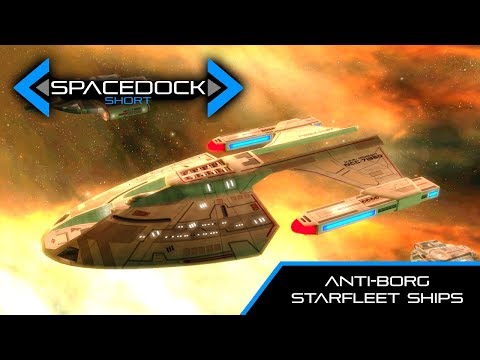 For more infomation >> Star Trek: Anti-Borg Starfleet Ships - Spacedock Short - Duration: 4:46.
  For more infomation >> Renault Clio TCE 120 EDC INTENS GT-LINE | AUTOMAAT | CLIMATE CONTROL| BOSE | R-LINK | CRUISE CONTROL - Duration: 0:54.
  For more infomation >> Cap for the girl crocheted. Two part. We knit the tie, sew the lining and make the pompon - Duration: 19:49.
  For more infomation >> Hack Freedoge.co.in mới nhất 💕 Auto 5000 doge 💕 Kiếm tiền trên mạng mới nhất 2017 - Duration: 3:55.
  For more infomation >> 【シビックタイプR試乗】まずはタイプRの通常販売に拍手を送りたい - Duration: 3:33.
  For more infomation >> Hack Freebitcoin.in | Roll Java Script 100% | Bitcoins Hack 3 BTC | Make money November 2017 - Duration: 4:52.

 For more infomation >> Mitsubishi Lancer Sportback 1.8 DOHC Invite airco, elektr pakket, LM16inch, bluetooth, dakspoiler, t - Duration: 1:00.




 For more infomation >> 에바 남편 이경구 결혼스토리 - Duration: 6:54.


No comments:
Post a Comment