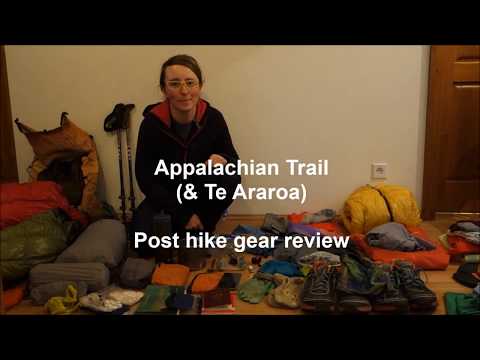
Hello, today I'm going to make a review of the gear I used on my 2017 AT thru-hike
Most of the gear I also used on my 2015/2016 Te Araroa thru-hike in New Zealand, so I will talk about that too
Lets start with the big three, thing that are usually the heaviest
My backpack is ZPacks Arc Blast, 2014 edition when I was planning Te Araroa
It still works, I hiked with it around 7000 km (4300 miles)
It didn't hold up very well in New Zealand, I had holes and rips in it after two months on the trail
Cuben fiber (now Dyneema Composite) is a laminate so it likes to delaminate...
You can see there threads of dyneema hanging loose
I send it back to ZPacks for repairing and got it back with a new layer of cuben fiber sticked in the inside of the pack
It was almost like new so I took it again on my AT thru-hike
It's my favourite backpack
Unfortunetely they don't make it like this anymore
Now the strays are not carbon fiber and they tend to stick out
The hipbelt is diffrent - now it's a full one, I had it in pieces
Shoulder straps are not made with cuben fiber
They are now made with this mesh (I also had them replaced), I have to say I liked cuben fiber more
Next thing is my tent
This is Mountain Laurel Designs SoloMid XL
A pyramid tent set up with one hiking pole
It's double wall, there is a separate inner netting which was very useful (in shelters against mosquitoes)
I also had it on Te Araroa, I got a hole in the floor, patched it and it's fine since then
On the AT a mouse chewed through the netting so there is a hole there
I made a new stuff sack for it, it's lighter then the one that it came with
Now I think there is no need for any stuff sacks
Next are the tent pegs, taken from a Hilleberg tent that I also have
Aluminum V pegs, used on both thru-hikes, they are in excellent condition, they have never bent
I hate these kind of tiny titanium shepherd hooks, they don't stay in the ground
I use a piece of polycryo as a groundsheet, also in the shelters
It weight 30 grams (1 ounce), so it's pretty light
It also survived both thru-hikes
My mattress is the NeoAir XLite Women's
I also replaced the stuff sack with a lighter one
There is also a pillow, my luxury item
I couldn't leave it at home... :-)
They don't make it anymore, it's a Thermarest NeoAir Seat
This mattress is a veteran, I've had it since 2013
This is the Women's version, 168 cm, I'm 160 so it's perfect
I punctured it in New Zealand
But I patched it and it's fine
It's really dirty, especially inside there is a huge collony of mould
It probably makes my mattress heavier... (356 g)
The last of the big three is my sleeping bag
A really important piece of kit
I put a lot of effort into finding the right one
There are two sleeping bags becouse I had a diffrent one for the beginning of AT
It was pretty cold, it was snowing in April so I was glad I had it
It's a custom bag
There is 600 grams of goose down 850 fill (950 american norm I think)
It's made by polish company Roberts
Box wall construction
There is a short double zipper, with insulation in between the two zippers
There is also attachment for the mattress so I can turn inside the bag and not with it
This way the loft stays as it should be and that's why it's warmer
I also took my down balaclava
I didn't really need it, it wasn't that cold, so I send it back later
When it got warmer in May I switched for a summer bag
It's also a custom bag with a similar construction
It's wider and more comfortable
Box wall construcion, 300 grams of down, mattress attachment, no hood off course
The kitchen... Sure you can go cold soaking, many people do that
I don't, I like to have a warm meal and evening tea
I was using MSR Micro Rocket gas stove
I've been using it for a couple years and this was the last
It broke right after I came home from USA
The thread was smoothed, lost
I liked it though, it was fast
Only this wind clip broke off and even after repairing broke off again
I don't use the storage box, which is heavy, I have a piece of bubble wrap instead
Mini Bic
Chinese titanium spoon
A spoon, not a spork, those are useless
You can't scratch your food from the pot with fork
No need for a long handle, no need to dig anything
My pot is 900 ml Evernew titanium pot
It keeps the contents warm for a long time (unlike aluminum)
I keep the lid, they are 100 g with the pot
I make my tea in a Nalgene bottle, 0,7 liters, its a OTF with a lid replaced for a classic one (OTF leaks)
Sometimes I take it inside my sleeping bag filled with hot water
There is no mould becouse boiling water kills everything
Aside from Nalgene I had some plastic water bottles
I took a milk bottle from Poland :-)
Later I was usually looking for new bottles in the trash
I never buy water so I don't buy bottles
Smartwater bottles are most popular, they are narrower and stiffer but anything will work
A little swiss knife, Victorinox Classic is all you need
There is a knife, scissors, file with a screw driver, tweezers (perfect for ticks) and tooth pic
A head lamp, sooner or later you'll need it for night hiking
I was night hiking quite a lot
I was always late out of towns
You don't need anything really strong if the trail is visible
A small head lamp like this Petzl e+lite is enough
It's an old version (better - works really long) 29 lumens at it's best, usually more like 5
There is a red light for shelter use
Other electronics: I have a Sony RX100 camera, I'm filming with it now
I bought it after I crashed my Nikon Coolpix on a rock in New Jersey
I thought I'd be keeping it in a ZPacks zip bag
But I used only a zip lock bag
My phone, Sony Xperia XA Dual, din't really use it, only for wifi
All the new phones are heavier and heavier...
This one is almost 150 g
I had two chargers becouse one didn't work with my power bank
My power bank is a simple chinese Miller 102
It works with one battery at a time and I can carry as many as I need (usually 2)
I have 3 USB cables, trying to charge averything and get out of town as quickly as possible
I have a stick pic, should use it more often
All of my electronic go into ZPacks zip bag
Headphones, pendrive, SC cards adapter, cleaning cloth for my glasses (hate contacts)
I had to carry my passport
My journal, I wrote in it every day; a pen and a pencil
I had a ZPacks wallet
And off course Awol's AT Guide
I started without it and bought it at Neel Gap
I thought I'd cut it in four but decided to keep it in one piece for sentimental reasons
Minimalist first aid kit
Sewing kit, frequently needed
Magnesium pills, band aids (never needed them), pills against diorhhea
I have some toilet paper but I try not to use it
Plastic bag for trash
My cosmetics zip bag here, I have a linen towel, dries fast and doesn't stink (made by Kwark, polish company)
Comb, a pice of soap, some shampoo
Prescribed antibiotcs that didn't fit in the first aid
I didn't need it this time, but carried all the way remembering how I didn't have it and New Zealand and needed it for bad throat infection
Tooth brush (shortened), tooth paste concentrate (Ajona, not available in USA)
Ear plugs, hair band, menstrual cup
And hair clips - if you keep your hair up your neck won't sweat
This actually belongs to the kitchen... My food bag
You should hang your food making it away from bears
Most hikers use ZPacks food bags, mine is an old version from 2014, it's narrower
It was too small, I usualy had also a plastic bag
Nobody could fit their food in a food bag when the hiker hunger hit... :-)
My bear bag rope was too thin, only 1 mm in diameter
It was hard to lift the bag on it, it could also hurt the tree
Definitely no need for 50 feet (15 metres), 40 would be enough (12 metres)
An old cuben fiber rock bag
You throw this bag with a rock inside over a branch and hang the food bag on it
Time for clothing
I'll begin with shoes
Always a bit of controversy here - trail runners
I think most thru-hikers use Altras
My favourites were Lone Peaks 2.5
In 2017 most hikers had 3.0 but I didn't like them so I managed to get two pairs of 2.5 for AT
They fit my feet better, are wider and breathe much better
I used 2 pairs
Thread is gone, there are huge holes in the upper
After 2000 kilometers in the Adirondacks I even started to have a negative drop (heel lower than forefoot)
so I had do put some toilet paper under the heel to make it zero drop again
What's so great about the Altras is zero drop and that they are naturally wide in the toe box
They are just the most comfortable, the most natural, that's why thru-hikers love them
The insoles suffered the most
You can see holes in them
I have a strange way of walking and both insoled and midsoles in my shoes fold so there are wrinkles
I use Dirty Girl Gaiters like almost everyone
The velcro on the back works with the velcro on the Altras
For socks I use liners - it helps preventing blisters
I sometimes get hot spots from friction but that's it
The liners are Injinji toe socks
Main socks are Smartwool PhD Outdoor Light
There are so many holes in them!
The clothing I was wearing was meant to work as layers
First layer I was wearing during the day, every day
Arcteryx Ossa shorts
and Icebreaker Sphere t-shirt made from wool and celulose mix
I had it also in New Zealand, it works great in hot and humid conditions
I had other Arcteryx shorts in New Zealand that I liked more
They had a softer rubber band, two pockets and were drying faster but these one were ok too
I'll show you my old t-shirt... More holes than fabric :-)
It's my thophy!
I used Icebreaked underwear made from the same fabric (2 pairs)
Underwear is the only piece of kit that doubles
I rinse them and hang on my pack to dry
Panache Sports bra
The hooks on the back went rusty and broke on the day I came home :-)
It happens becouse of sweat and salt
Second layer is my sleeping clothes that I wear also when it's colder
I've got Power Dry base layer for testing from polish company Kwark
It's synthetic, quite thin but enough for AT
Short zipper that I could zip up when it was colder and leave it open when it was hot
I had separate sleeping socks Smartwool Hike Ultralight Mini
In the cold evenings and mornings I was wearing my down jacket
It's also custom made by Roberts
What is the difference between this jacket and most jackets on the market is that this one is not stitched through
There are tiny H baffles
There is 80 g of down, the manufacturer says it should have 100 g then it would look better
But I'm happy with the performance
It was raining a lot on both Appalachian Trail and Te Araroa
I knew that I can be wet all day if I keep walking
So I decided to buy a lightweight jacket that would not necessarily be completely waterproof
But I was highly disappointed by Montane Minimus performance
It was not waterproof at all, I was always wet after a few minutes of light rain
It was more like a wind jacket then a hardshell
I made a silnylon rain skirt
I had a rain skirt made out of a trash bag in New Zealand
There is a rubber waist band, a little opening in the back
It was very comfortable and I only had to buy the fabric
This silnylon is very thin, next time I'd probably use a tougher becouse the silicone layer wears off quickly
Merino wool Arcteryx beanie, I like it a lot
Haglofs visor was originaly a hat but I trimmed it
It weighs only 10 grams and it's my favourite hat
The sun was very strong in New Zealand but also in the Appalachians I got burned at the beginning
I was using my towel to cover my neck in NZ
The one I had on the AT was narrower so I had to use a bandana that I found on the trail
The trail will provide :-)
Got confused here... I'm just explaining the need to switch for summer gear :-)
Like I said on the AT I expected some winter conditions
So I had other clothing first
I made rain mittens from the same silnylon as rain skirt
The design was not perfect but they worked well
The seams are sealed
They were not completely waterproof due to destrucion of the silicone layer
I had thin Polartec Power Dry Gloves (Arcteryx Rivet AR)
I had rain pants, ultralight at 78 grams
Good for snow and cold rain
The brand is As Tucas, spanish company
They are made from cuben fiber and Event membrane
I thought they will die soon but there are no holes so I'm hoping to use them in the future
At the beginning I had Polartec Power Strech base layers instead of Power Dry
The top also has a short zipper
It's Arcteryx base layer Rho AR
I had a wind jacket for cold weather
I got it from Roberts
It's made from ultralight Toray fabric
Most fabrics that are use to make sleeping bags don't breathe very well
I had the same issue with this one
But is was surprisingly waterproof, the DWR layer was great
But then I didn't really need two jackets so I send this one away
In New Zealand I didn't have any of those synthetic base layers
I had a merino wool set from Bergans (norwegian company)
It was a lightweight wool, 200g/m2
I liked it but I was always worried about getting it wet
My jacket was not waterproof so I preferred something that dries quickly
I also wanted a top with a zipper
I had hiking poles with me, Leki Corklite
I've been using them since NZ
I had to replace the tips after 6000 km (3700 miles)
The original ones were very durable
I replaced them in Damascus (for free)
But they broke again on the Long Trail
So I think the replacement tips are not so durable
I don't have any tips now...
But I think that Leki is the best choice especially if you are going to hike in USA
Customer service is great there, not that great with Black Diamond (it's the other way in Poland)
Oh, and I had a rain cover for my pack
Arc Blast was waterproof for some time
But it started to leak a bit on Te Araroa
I was going to ignore it but I found this rain cover in a hiker box at Neel Gap
My pack is 60 liters and the rain cover fits perfectly
There are a couple things that keep me from injuries
There are Cho Pat knee braces
I wear them every time I'm hiking, I have to wear them
They are made from neoprene so they don't dry very fast
I have a golf ball for massaging (mostly for IT band)
I'm always wearing bike gloves with my hiking poles
They prevent me from getting blisters on my hands
They work as sun gloves too
I think that's everything
Thank you for watching
I hope you learned something interesting
Thanks and see you!


 For more infomation >> Conoce las cinco noticias más importantes del día 06-03-18 - Duration: 2:43.
  For more infomation >> How to Sing with a DISTORTED VOICE Safely | #DrDan 🎤 - Duration: 6:24.
  For more infomation >> ¿El pensamiento negativo está afectando tu vida? - Duration: 6:43.
  For more infomation >> Héritage de Johnny Hallyday : Laura Smet "a beaucoup souffert" selon Sylvie Vartan - Duration: 3:31.
  For more infomation >> Entonces que somos - Cover Piano Solo Renzo Arce - Duration: 2:58.
  For more infomation >> RUACTION! Die Queens von Season 10 - RuPaul's Drag Race - Duration: 6:42.
  For more infomation >> La brutal falta de respeto de Telecinco a Mercedes Milá empuja a esta a Antena 3 - Duration: 3:01.
  For more infomation >> Aka Samir ft. Victor Negg - Sexy Baby - Duration: 3:13.
  For more infomation >> Óculos esportivos com grau - Duration: 1:42.

 For more infomation >> Círculos de Coaches II / Coaching Circles II - Duration: 22:36.
  For more infomation >> AIDS: BOŽJA OSUDA | Dokumentarni film (hrvatski titlovi) - Duration: 54:36.
  For more infomation >> Audi A4 Limousine Lease Edition 1.4TFSI 150PK S-Tronic - Duration: 0:56.
 For more infomation >> Audi A4 2.0 TDI 150pk Automaat Business Edition Xenon Sportstoel - Duration: 1:00.
  For more infomation >> Seat Ibiza 1.2 TSI 77KW ST - Duration: 0:57.
  For more infomation >> Peugeot 2008 1.2i AUTOMAAT ETG5 Crossway - Duration: 0:57.
  For more infomation >> Summertime





 For more infomation >> Mafini sa sirom i španatom - Duration: 2:21.

 For more infomation >> Hyundai i30 CW 1.6i i-Motion + NAVIGATIE RIJKLAAR - Duration: 0:47.
  For more infomation >> Hyundai ix20 1.4i Go! / NAVIGATIE / CAMERA - Duration: 0:44.
  For more infomation >> Peugeot 107 1.0i 5-DRS Deluxe LEDER|AIRCO - Duration: 1:01.
  For more infomation >> Mazda MX-5 1.8i NISEKO LEER 1e EIG 75dkm! - Duration: 1:00.
 For more infomation >> Hyundai ix35 1.6I GDI BUSINESS EDITION Navi Ecc Cruise Trekhaak - Duration: 0:45.
  For more infomation >> Toyota Aygo Comfort 5dr Airco/Lichtmetaal 1.0 VVT-I - Duration: 0:58.
  For more infomation >> Hyundai Tucson 2.0I DYNAMIC ZEER NETJES MET TREKHAAK - Duration: 0:48.
 For more infomation >> JHOPE AIRPLANE MV REACTION - Duration: 5:23.
  For more infomation >> O QUE NÃO DIZER PARA PAIS DE CRIANÇAS COM AUTISMO - Duration: 9:49.
  For more infomation >> DESCUBRA O QUE É RENDA RESIDUAL | MARCO LAFICO | THE NEW YORK PROJECT - Duration: 5:41.
  For more infomation >> CATARATA: ZENILDO MEGIATTO ESTÁ PARANDO DE USAR ÓCULOS, APÓS 38 ANOS DE USO - Duration: 3:58.
  For more infomation >> BENEFÍCIOS DO PIMENTÃO QUE VOCÊ DESCONHECIA | EU NUNCA IMAGINEI QUE ERAM TANTOS... - Duration: 4:06.
  For more infomation >> VLOG 23: Legendarny Trip | Kino rowerowe | Maro - Duration: 11:00.
  For more infomation >> Santa Receita | Aprenda a fazer um delicioso bolo de sorvete com Walter Queiroz - - Duration: 13:22.
  For more infomation >> Santa Receita | Prestação de serviço: direito previdenciário - 06 de março de 2018 - Duration: 28:28.
  For more infomation >> MARSZ WESELNY - zespół/teksty/lyrics/songtexte/info.Konin sala Żak Smak Edu - Duration: 2:41.

No comments:
Post a Comment