Broadcast of HIKI NŌ are made possible by the support of viewers like you!
Mahalo!
And by, Bank of Hawaii Foundation, Investing in Hawai'i's future by promoting
collaboration, critical thinking, and other 21st-Century skills though HIKI NŌ
[INTRO MUSIC]
Aloha.
I'm Crystal Cebedo, a former HIKI NŌ student from Wai'anae High School, on the west side
of O'ahu.
Welcome to our final episode of four HIKI NŌ specials focusing on compassion.
When we looked back at all the stories HIKI NŌ students
have produced, we saw that there were some common
themes among them, topics that clearly showcased students' compassion, three topics highlighted
thus far: kupuna, the parent and child relationship,
and self-identity.
Our fourth topic, and the theme of this episode, is a little different from the rest.
This time, our subjects aren't people.
They're animals.
Whether they're house pets, working pets, exotic animals or endangered
species, it is evident that HIKI NŌ students show concern and care for our furry companions
and wildlife.
Without further ado, let's take a look at how animals have impacted Hawai'i's young
people in HIKI NŌ, Focus on Compassion: Animals.
In our first story, the Kaua'i Humane Society goes the extra mile to promote dog adoptions.
Taking these shelter dogs out for a walk is turning into
a real treat for humans and dogs alike.
From Kapa'a High School, this is "Dog Adoption."
[MUSIC]
Here on the Island of Kaua'i, the Humane Society offers a special treat for locals and visitors.
They allow them to take a dog out on a field trip.
This unique idea came about unexpectedly from an employee's
suggestion.
The field trips started about two and a half years ago, kind of on a lark, if you will.
Somebody made an offhand comment about taking a dog out for
a day, and it just expanded from there.
And over the first six months, we just put a lot of thought into
how can we make this work as a program, rather than just
something somebody does on a whim.
After months of planning, they launched the Doggie Field Trips, the first of its kind
in the United States.
And it was a success.
I'd never been in a humane society before 'til we came on vacation here.
And we took about four field trips.
We took her out in the morning, and we took her to Māhā'ulepū Beach and she wore an
Adopt Me vest.
A lot of people paid attention to her, and she enjoyed her day out.
And when we left her, it was a little emotional, wondering whether or not
she was going to be adopted.
And she did get adopted.
And in that time while we were here on our field
trip that day, we met another dog here who had been
surrendered.
She was seven years old.
And we adopted her last week.
Visitors arrive in the morning, pick up a dog, and take them to a variety of places
suggested by the Humane Society, including dog-friendly beaches,
bike paths and hikes.
So, they get to go out for the day, whether it's to the beach, whether it's a hike.
They get to get exposed by other visitors, as well as themselves.
They may be somebody that has a home or that is looking for a
dog that has a home that will allow a dog, and they end up getting adopted because they
found a home.
The doggie field trips have led to an increase in adoptions with an average of two to four
more dogs a week finding a forever home.
I think it's amazing.
I think it's a great thing that they've done.
I think it's allowed for so many dogs to be adopted.
Visitors are the most frequent users of the field trips, and some find themselves with
a furry souvenir from their trip to Kaua'i.
Funny, a lot of people that already have dogs, two or three dogs back to the Mainland, they
come over here, do the doggie field trip, and all of
a sudden they're bringing a fourth dog home, kind of thing.
So, it's a great program.
With a total of over two hundred dogs having been adopted so far, the field trip program
is still going strong.
This is Samantha Gilbert from Kapa'a High School, for HIKI NŌ.
[DOG BARK]
With the homeless cat population on the rise, the Maui Humane Society comes up with a solution
that benefits the whole community.
Let's see how this compassionate group of people is making a difference
in "Towards No More Homeless Pets," by Lahaina Intermediate School on Maui.
According to MauiGoodness.com, there are anywhere from one hundred thousand to five hundred
thousand homeless cats on Maui.
The SPCA Maui organization has come together to make an attempt at
ending the pain and suffering of this population on Maui.
Our total focus is spay and neuter.
And we feel with the overpopulation of animals throughout the
country, on Maui, what we want to focus on is prevention.
[MEW]
On January 8th, a spay and neuter clinic was held at the Maui Humane Society.
We've been in the planning stages for about three months at this point, from the time
that we scheduled Dr. Hatt, who's our veterinarian.
About four weeks ago is when we really started making reservations for
the cats that are here today.
When the cat owner and collectors got to the clinic, they had to check in.
[INDISTINCT]
Okay.
Okay, that's fine.
Okay, I'm gonna put three ...
[INDISTINCT CONVERSATION]
After they organize the cats, they sedated and shaved the females in the surgery room.
[BUZZING]
A lot of these cats live outside, and these females can get pregnant six times a year,
and have six kittens every litter.
So, it's really important to try to control the population here on Maui by having these
female cats spayed.
[BUZZING]
After the tattooing in the room, they will be placed outside in a cage.
[INDISTINCT CONVERSATION]
Here, they will recover.
So, we're here on the recovery section of the surgical part of it.
We have over twenty-five additional volunteers here today.
And then, when they're more alert, we'll call their families to come pick them up.
I think we have a hundred and eighty cats today that we're doing.
[MEWING]
We're terrifically pleased today.
Of course, we're always happy to have as many cats as we can.
Our goal was eighty, and it looks like we've doubled
our goal, so I think we've done a really good job.
The volunteers and coordinators feel a spay and neuter clinic has made a positive impact
on the community.
Local residents know the overpopulation of homeless cats on Maui is a problem.
This event will prevent the birth of hundreds, if not
thousands, of unwanted cats in the future.
This is Kaylee Harmon, Anis Bel, and Calen Matsuda from Lahaina
Intermediate for HIKI NŌ.
[MEWING]
These exotic residents of the Big Island are under the care of a passionate owner with
a special place in her heart for surrendered, captured and injured
species not indigenous to Hawai'i.
From Kealakehe High School on the island of Hawai'i, this is Three
Ring Ranch.
You don't usually associate bison, monkeys or zebras with the Big Island of Hawai'i.
But these animals are all residents of Kona's Three Ring Ranch
Exotic Animal Sanctuary.
The owner and curator of this unique place is Ann Goody.
So, animals have always been my life.
They've been my hobby.
I've worked with them ever since I was a kid, whether they were sick and injured
in the neighborhood and brought to me to fix up, or just pets.
The Three Ring Ranch opened in 1998, and its mission is to positively impact the environment
while educating Hawai'i's youth about their place
in the world.
This guy is the perfect alpaca as far as like show and quality of hair.
He was wild-caught in the jungles of Indonesia forty-eight years ago, when it was still legal
to seize these birds from the wild.
Don't make that mistake, though.
Don't judge an animal's intelligence against your own.
Don't do it.
'Cause when you do that, you miss out on the amazing things that an animal can do.
This was seized coming into the United States.
Investigate science, get your hands into it, pick it up, touch it, learn about it and then
share it with the next generation.
That is a huge part of who we are.
The ranch is the only fully accredited exotic animal sanctuary in Hawai'i.
All profits and donations go towards educating the community, and caring
for the 151 animals currently living in the sanctuary.
These animals are not pets.
They're exotic animals who, for one reason or another, were either owner-
surrendered, sent to us by the state, or seized.
Her natural comfort and skill with the animals makes you wonder how she came to this line
of work.
So, I was living the American Dream, working hard, buying things.
It was my goal, you know, like everyone's.
You work hard, you buy things.
And then I got married, and the day after our wedding
reception, I was struck on the head by lightning.
I had to learn all over again.
Everything.
Ann's road to recovery was long and difficult.
Her challenges trying to communicate and function left
her very frustrated, but are the reason the ranch came about.
I redirected, and the animals became not just what I used to help learn to walk and talk,
but who I am.
I changed my whole perspective from the ambitious
person trying for the monetary goals, to the person
who was more concerned with what I left for those creatures with two legs and four.
It became my life.
Thanks to many kind volunteers, generous donations and the relentless efforts of Ann, Three Ring
Ranch continues to expand educational programs while
caring for the animals in need.
This is Esaiah Bajo from Kealakehe High, for HIKI NŌ.
Our next story features a pooch that makes friends and a fashion statement wherever she
goes.
From Mid-Pacific on O'ahu, this is our friend Hokulani.
She's just like the little Ambassador of Aloha.
She always brings a smile.
You know, she's just bringing joy to the world, one appearance at a time.
She, is Hokulani, a nine-year-old Pomeranian.
Her owners, Norman and Debbie Dung, never expected
Hokulani to become such a hit when they first adopted her.
We always say, if she brings joy or laughter, makes someone smile, it's a good thing.
And she does that in spades.
I think it's really actually generous of Norman to take Hokulani out, and he visits people.
You know, elderly and children, just to bring a smile.
She definitely makes people smile.
Her owners are so creative, especially during Halloween, we know
that Hoku is the dog to beat.
You know, one year, she was Lady Gaga.
It was crazy.
Crazy, it is, having to choose from the 125 sets of clothes, eight different pairs of
doggles, and the countless other accessories, some of which
are gifts from smiling friends.
She has a nice coat, nice fur.
It's a very neutral color, so she matches basically anything you put on her.
She's one of the few dogs that will let you leave stuff on her head, so she has a collection
of hats.
She also has accessories.
She has little handbags, purses, hats, hakus.
She wears a lot of leis with her Hawaiian attire, and a lot of jewelry.
And we think she's the best-dressed dog on the island.
Most of her social media friends agree, having accumulated over 1,360 likes on her Facebook
page, which is littered with albums of her new friends.
What we do is, when we go out on outings during the course of the day, we'll come when we're
shopping, once we stop and somebody wants to take a picture, we'll oblige them.
But once somebody's looking and says, What are they taking a picture
of?, then they'll look and they say, Oh, look at that cute
dog.
And if they like, we'll let people hold her and take a picture of her, and be on her Facebook
page.
We call it Hokulani's Friends.
Currently, she has forty-three albums of pictures with friends on it.
Those forty-three albums contain over two thousand photos, some of which have Hokulani
in the arms of Hawaiian celebrities, but the rest are just
smiling people.
Which is a good thing.
For HIKI NŌ, this is Nathaniel Kaneshige from Mid-Pacific Institute.
Training your puppy to sit and roll over is part of what makes being a dog owner fun.
But when you train a dog whose tricks serve a purpose to someone
in need, the reward is much greater.
From the island of Maui, Seabury Hall Middle School introduces
us to a young dog trainer with a passion for service.
Hi!
[INDISTINCT]
Kate Petersen loves animals.
She grew up on the family ranch in upcountry Maui, where she learned
patience working with dogs and horses.
Kate volunteers at Assistance Dogs of Hawai'i, a nonprofit
organization that trains dogs to assist people who have disabilities and other special needs.
Well, I was around ten years old when I started working here, volunteering.
And I started because my mom's really good friends with Mo Maurer,
who founded this organization on Maui.
And I started as a really young kid, just watching her train
the dogs, and watching graduations and seeing dogs get matched
with people.
And as I grew up and got to the age where I could finally volunteer and work here, I
took that opportunity.
[INDISTINCT CONVERSATIONS]
Despite the demands of finishing her senior year at Seabury Hall School, Kate continues
being an enthusiastic volunteer.
[INDISTINCT] Good boy!
Dog-training certification requires a four-year college degree and a two-year apprenticeship.
As a volunteer, Kate has assisted in training and
in the process of matching a dog with a client.
We normally look at traits of the dog first.
And through the one to two years of training the dog before
they're matched, we look at the dog's personality and how they act, and what qualities they're
really good at with the human.
So, we're not necessarily matching the human with the dog, we're matching the dog
with the human.
And that kinda sounds similar, but it definitely has a really great success rate.
The joy Kate experiences when she sees the clients interacting with their dogs fires
her passion for this community service.
Kate will never forget assisting with one very special match.
For my eighth-grade project, I helped in the process of training a dog for a woman named
Kammy.
She used to be a beautiful hula dancer, and soon
was paralyzed to where she was in a wheelchair.
And the dog Murphy, he changed her life drastically.
And I'm getting goose bumps because of it, because it was
such an amazing experience to be able to see how happy she was with him.
Just having a service dog, even if you are capable of opening a door
even when you're in a wheelchair, or little things like that,
having a dog just makes it so much better and easier for you to get through your day.
And knowing that they're there supporting you all along the
way definitely is one thing that has helped a lot of people all
over the world.
This is Lucas DiMartino from Seabury Hall Middle School, for HIKI NŌ.
Good girl.
Our next story has a similar take on how dogs can serve a greater purpose.
We see how soldiers with physical and mental scars can benefit from
the company of Man's Best Friend.
From Waialua High and Intermediate School on O'ahu, this is Wounded
Warriors.
The poet Vern Williams once said: There is no psychiatrist in the world like a puppy
licking your face.
Marine Lance Corporal Daniel Carter was stationed in Afghanistan in February of 2010.
Carter was severely wounded in combat, and almost two
years later, he still has medical complications, which also
include symptoms of post-traumatic stress disorder which is commonly called PTSD.
PTSD is a mental health condition triggered by a terrifying experience.
Some of the symptoms associated with it are nightmares, severe anxiety, flashbacks.
And these can also be accompanied by thoughts of the
actual event itself that are uncontrollable.
Carter is one of the few Hawai'i-based Marines who received one hundred percent disability
due to his injuries.
I was shot once in the chest, and I was blown up three different times.
Some of his physical injuries include a gunshot and shrapnel wounds, nerve damage, broken
ribs and internal bleeding.
When I came back, I was forced to go into the Wounded Warrior Program.
And once there, the docs never released me.
Susan Luehrs of Hawaii Fi-Do trains puppies to become certified companion service dogs
for the soldiers in the Wounded Warriors Program.
Oftentimes, they need a dog that does more than calm them down and help with the anxiety.
The Wounded Warrior dogs are trained just like
the regular service dogs.
It's a two-year training program.
They do lot of training skills, and then they're matched with an individual who also gets trained.
Finn is a unique dog.
He takes care of me when I'm in a lot of pain and I can't get out of bed.
He'll get my medication for me, he'll get on the bed
and comfort me.
When I'm having bad dreams at night, he'll wake me up so I don't have to experience it.
We have found the results of this program that definitely reduces anxiety, helps with
the night dreams, night terrors, gets them out of their homes,
interacting with society, and overall just kinda keeps them
calmed down.
Yeah, I see the difference.
I'm a lot more active, I talk to people a lot more.
I'm doing this interview right now.
With Finn in my life, I've quit drinking, I've quit smoking, not as angry.
I feel a lot more happy as a person.
Carter, along with Finn, has recently left to California to pursue his dreams of attending
college and becoming a counselor in the Wounded Warriors
Program.
This is Waialua High School reporting for HIKI NŌ.
Next up, a safety issue at a Kaua'i airport has officials on a wild goose chase.
From Chiefess Kamakahelei Middle School on Kaua'i comes
a story about the efforts to protect Līhu'e airline
passengers and our state bird, the nene.
[GEESE]
The nene is like the Bird of Hawai'i.
It's one of the few remaining.
There were only thirty birds left up in the mountains, only that were wild in the
entire state.
Although the nene's population has grown steadily, there are still only about two thousand in
the world.
However, on Kaua'i, one population of nene are thriving, growing from five pairs of birds
to over four hundred and counting since 1999.
This one location alone represents a whopping twenty percent of the
nene population in the world.
However, there is just one problem.
The concern is that there's a large number of birds that are nesting and breeding, and
it's a growing population on Kaua'i Lagoons Resort, but it
happens right next to the Līhu'e Airport, right in between the
two runways.
Luckily, there is a solution to this problem, which involves the Hawai'i Department of Transportation
and the Department of Land and Natural Resources.
It's a public safety issue.
So, our job is to move the birds away from the Kaua'i Lagoons so that they're
not a risk to the airplanes.
But moving the nene isn't as easy as putting them in a box and sending them to an outer
island.
And it's not cheap, either.
It involves capturing the birds, putting them on an airplane or helicopter, flying them
off, putting them in a pen, and taking care of them and tracking
their movements, and then making sure they survive and
reproduce at their new site.
Total cost over the entire five-year period is gonna be about a million and a
half dollars in the first year, then it'll be about eight hundred thousand dollars each
year after that.
It turns out that moving them is not all that easy.
It's an enormous number of birds, four hundred, eight hundred,
or a thousand birds possibly.
They've got to be moved in a safe manner so that they're not harmed.
We want to make sure that the birds don't just
fly out of that site, and fly right back to Kaua'i.
And so, what we can do in order to get them acclimated
to that new site is to clip their wings so that they can't leave the
site.
Initially, the cost of this project will be funded by the Department of Transportation.
However, after the fifth year, the Department of Land and Natural
Resources will have to find a way to keep the project
funded if it's still a problem.
Both agencies are working hard with the state to not only protect and safely
move the birds, but to also protect the airlines passengers coming in and out of the Līhu'e
Airport.
It's a big job, but it can be done, and we're looking forward to doing it.
For HIKI NŌ, this has been Sharae Cua reporting from Chiefess Kamakahelei Middle School.
Our final story is about one of the most endangered species in the world, and they're found exclusively
in Hawai'i's waters.
HIKI NŌ students from Āliamanu Middle School on O'ahu show their concern for our
Hawaiian monk seal in their story, Mālama NOAA.
Under the Marine Mammal Protection Act and the Endangered Species Act, NOAA Fisheries
plays a key role in the protection and stewardship of
marine mammals.
A top priority of NOAA is the protection of the Hawaiian monk seal, one of the most endangered
mammals in the world.
The latest records show that only about twelve hundred exist in the world
today.
Unless everyone does their part, the monk seal will
not be around for future generations.
It would be a shame if the Hawaiian monk seal went extinct on our watch.
Future generations wouldn't be able to witness them in the wild and enjoy
their beauty and their presence.
Just this morning, I assisted with transferring two Hawaiian monk seals
that were brought to our facility here on Ford Island last night
on an airplane from Midway up on the Northwest Islands, to transfer them to the Coast Guard
station here at Barbers Point so they could be flown to
a hospital over in Kona.
And the goal is to, within about two to three months, put about a hundred-and-fifty
to two hundred pounds on them, and then send them back
up to the Northwest Islands.
Assisting the Protected Resources Division is the Office of Law Enforcement.
They are the ones out in the field making sure that the rules are followed.
So, when people intervene with the local marine wildlife, it's normally tourists and people
who are trying to get close and take pictures.
Which is most times not a problem, but we have to remember that they're
wild animals.
And just like you wouldn't want a wild animal coming into your house, we gotta remember
that we're going into their house, which is the ocean or the beach, and we need to remember
to stay away and give them their space.
There's a lot of ground to cover, and the responsibility of protecting marine life doesn't
rest on the scientists and officers alone.
We have volunteers who are out every day looking at the seals, setting up seal protection zones
or little outreach barrier areas that have signs that
alert the public to the fact that there's a resting monk seal.
Volunteers are trained by NOAA on what to do when they get the call to monitor a monk
seal.
We need to know what to do when we see a seal, because prior to this program, I would not
have known.
I would not have known that you need to stay a certain distance away from the seal.
I would not have known that seals come onshore to rest during
the day.
You know, I wouldn't have known any of that.
Members of the community can show their care by contributing in different ways.
The best thing you can do is volunteer in different programs, whether it be part of
the Marine Mammal Response Program where you're on the beach
every day helping to protect the monk seals, or getting
involved with invasive species removal, or any of the other programs that we offer here
at NOAA.
Through these efforts, there is still hope that the Hawaiian monk seal will thrive once
again.
From Āliamanu Middle School, this is Mei-Lynne
Anne Mendoza for HIKI NŌ.
Well, we have come to the end of our HIKI NŌ series, Focus on Compassion.
I hope you've enjoyed watching these stories as much as I've enjoyed
presenting them to you.
We have seen how HIKI NŌ students cherish our kupuna, appreciate the
parent and child relationship, value people's differences, and
care for our planet's animals.
With mindful, inquisitive and compassionate young people of today, I'd
say we're headed into a bright future.
Be sure to tune in next week for more proof that Hawai'i's young
people HIKI NŌ, can do.
[END]
Focus on Compassion: Animals Page 10 of 10
 For more infomation >> Vietsub - Sản xuất nước cam ép - Duration: 6:40.
  For more infomation >> Injustice 2: Cual es mi opinión del Fighter Pack 2 // Como pelearan Hellboy, Black Manta y Raiden? - Duration: 6:13.
  For more infomation >> 《鬥陣特攻》研發更新 — 英雄平衡性更新 - Duration: 10:23.
  For more infomation >> O que é a CIA? - Duration: 6:29.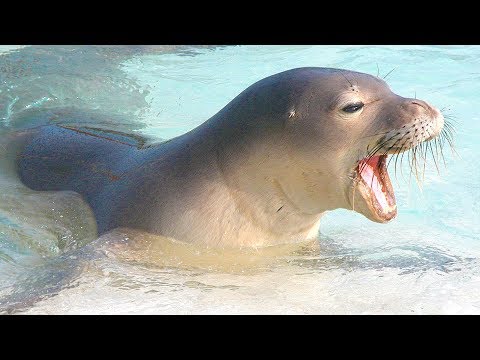
 For more infomation >> Eco Clean Kup - Single Brew...
 For more infomation >> Volvo XC60 D4 190pk AUT(8) R-Design XENON BJ2017! - Duration: 0:58.
  For more infomation >> Zinke won't eliminate any national monuments - Duration: 0:33.


 For more infomation >> BubbleGum - Duration: 4:43.
  For more infomation >> 968 - Les Feldick Bible Study - Lesson 2 Part 4 Book 81 - The Four Great Empires Interpreted - 4 - Duration: 28:31.


No comments:
Post a Comment