How's it going everyone, this is Chris from Spoon Graphics.
Welcome back to another video tutorial.
Today I'm going to share some tips and techniques for creating texture resources in Photoshop
and Illustrator.
Rather than being a tutorial with a particular final result, this video will instead show
you how to make custom assets that you can use as tools to produce awesome artwork, or
even sell them as premium design resources on sites such as Creative Market.
Textures form an integral part of a design.
They can be used as backgrounds upon which your other elements are laid.
They can be overlaid over photos and artwork to apply grungy effects, or they can be used
to distress your artwork to give it an aged and weathered look.
Basically they take your clean digital designs and make them more tangible to simulate how
things look and feel in real life.
You can find texture resources everywhere.
You just need to photograph or scan materials with interesting surfaces.
You can process them in a range of different ways for different uses in your design software,
which is what I'll be showing you today.
So I went on a quick texture hunting session around my house to find some interesting textures
to use as examples.
Proper cameras will give you a good resolution that will be perfect for print designs, but
even your phone camera will suffice, especially if you're going to be converting the textures
in vector resources, where the detail and resolution doesn't matter as much.
One of my favourite places to grab a texture is skylight windows.
They naturally collect all kinds of dirt, grime and bird poop that can be transformed
into subtle grunge textures.
Take photos on a misty morning or an overcast day so avoid getting the sky and clouds in
the background.
The first thing I like to do with all my texture shots is equalize the image.
You'll always find that textures sourced via a camera, rather than a scanner, always have
a light side and a darker side.
To fix this, duplicate the background layer twice with the CMD+J shortcut.
Select the first duplicate and go to Filter > Blur > Average.
This will fill the layer with a single colour.
Select the top layer and go to Filter > Other > High Pass.
Enter 200px, then change this layer's blending mode to Linear Light.
It might be necessary to turn down the opacity to tone down the sharpness and contrast so
it better matches the original texture image.
Shift and click to select both duplicate layers, then use the CMD+E shortcut to merge them
into one layer.
Toggle the visibility of this layer to see the difference this equalisation makes.
This new version is much flatter, which will give you better results when it's used within
your artwork.
Open up the Image > Adjustments > Levels menu to bring out the grainy details of the photo.
Increase the shadows slightly to darken the texturey bits, but completely blow out the
highlights to remove the background.
Move the midtones slider towards the shadows handle to increase the contrast to give clear
definition between the texture bits and the white background.
Desaturate the image under the Image > Adjustments > Desaturate menu to remove any colour information.
It's useful to save variations of your textures as both black on white and white on black
for use against dark and light designs.
Go to Image > Adjustments > Invert to flip the colours around.
It's also handy to have a version of the texture with a transparent background, open up the
Channels panel and hold the CMD key while clicking on the thumbnail of the RGB channel.
Switch back to the Layers panel and add a new layer.
Use the ALT+Backspace shortcut to fill this selection with black.
Toggle off the visibility of the other layers and deselect to see the texture against transparency.
You can test how it looks by adding a layer underneath and filling it with a random colour.
If you see any haloing around your texture, use the Layer > Matting > Defringe command
at 1px to trim it slightly.
To preserve the transparency, you need save the file as a PNG image.
Doing this via the Save-As command, rather than Save for Web will retain the 300ppi resolution.
Another useful way to process your textures is to create a seamless pattern that will
infinitely repeat over a large area.
This doesn't work with all texture types, but it's ideal for subtle textures with even
distribution and contrast.
Begin by equalizing your image, otherwise the texture will never repeat because of the
lighting difference from one side to the other.
Duplicate the image twice, then apply the Average blur to the first layer.
Add a 200px High Pass to the top layer and change its blending mode to Linear Light.
In this example the High Pass layer opacity needs reducing quite a lot to tone down the
sharpness and contrast to better match the original image.
Merge these two duplicate layers with the CMD+E shortcut, then toggle the layer on and
off to see the difference it makes.
Crop the image into a square by holding the Shift key while dragging across the image
with the crop tool.
It's sometimes worth scaling this crop towards the centre to eliminate the blurry pixels
from around the edge of the photograph.
Go to Image > Adjustments > Image Size.
Round up the figures and make a mental note of the value.
Next go to Filter > Other > Offset and enter half the image size value in the fields, so
in my example half of 2400px is 1200pixels.
The Offset command ensures the edges of the texture will repeat when this image is placed
side by side and top to bottom, but there's some hard lines running through the middle.
Select the Patch tool and draw a rough selection around the line, then drag the selection to
a clean portion of the texture.
Photoshop will automatically fill and blend the new selection.
Those patches should blend in nicely when you zoom back out.
Go to Edit > Define Pattern to make a pattern swatch of this texture.
You can test the pattern out in a new document.
Change the settings of the Fill tool to Pattern and choose your texture from the dropdown
list.
If your original photo had an even distribution of texturing, the pattern should repeat nicely
with no obvious repetition.
Vector textures are also useful tools to have in your arsenal.
The great thing about creating vector textures is you can often get away with lower quality
images or resolutions since any fuzzy pixels are converted to crisp vector shapes anyway.
I'm using a rust texture for this example.
A lot of the surrounding pixels have some lens distortion, so I'm cropping a portion
from the centre.
After all, the size doesn't really matter because the vectorized texture can be scaled
up or down later.
Equalize the texture using the same technique showed earlier in this video, then desaturate
and adjust the levels to boost the contrast and leave the black and white details of the
texture.
Select All with the CMD+A shortcut, then press CMD+C to Copy.
Open up Adobe Illustrator and create a new document at any size.
Paste in the image with the CMD+V shortcut, then scale it down in size.
To convert the image to vectors, we need to vectorize it with the Image Trace panel.
Open it up from under the Window menu.
Expand the Advanced settings and begin by checking the Preview option to see how the
default settings convert the image.
The result doesn't look bad, but you can fine tune it by adjusting the settings and sliders.
Begin by selecting Ignore White, which will erase the background, leaving just the texture
grain.
Deselect Snap Curves to Lines to avoid any curves being converted straight edges.
I also like to reduce the Corners slider to zero so the grain has more of a round appearance
than jaggy shapes.
The Paths slider can be adjusted to better match the vector outlines to the shapes of
the texture grains if necessary.
Since vector textures are made up of thousands of tiny paths, they can quickly bog down your
CPU.
It's worth increasing the Noise slider a pixel at a time to remove the tiniest pieces from
the texture.
Moving the Threshold slider back and forth will generate more or less shapes from the
original texture image.
When you're happy with the settings, go to Object > Expand to convert the Image Tracing
into a series of vector paths.
If you move the texture off the artboard you'll see the background colour shows through.
Being vector shapes means you can also change the colour of the texture by applying a different
fill.
One of the best ways to use vector textures is to punch it out of other shapes.
Place the texture over another element, then make sure the texture sits on top using the
Arrange > Bring to Front command.
With both objects selected, click the Minus Front button in the Pathfinder panel.
The underlying shape now has the texturing applied, so any background will show through
the bits that have been erased.
So I hope you find these tips useful when creating your own tools and resources to use
in your projects.
If you want to see how textures can be incorporated into your designs, I often show different
techniques in my usual video tutorial so look back through my channel for some ideas.
Thank you very much for watching, and I'll see you in the next one!
 For more infomation >> Los horóscopos de Mizada | Martes 17 de Octubre - Duration: 4:00.
  For more infomation >> ¿Puedes adivinar todas las Películas? | Especial Halloween 🎃 (Emoji Challenge) - Duration: 2:14.
 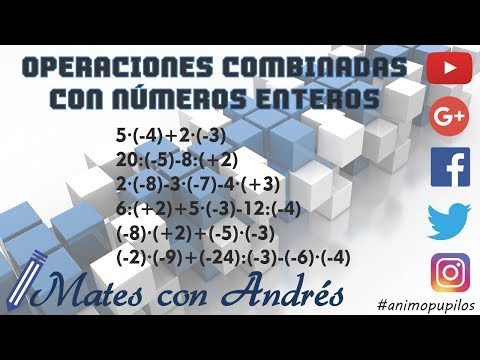 For more infomation >> Operaciones combinadas con números enteros 01 - Duration: 8:13.
  For more infomation >> HOY | Galilea Montijo le dio de comer a Paul Stanley en la boquita - Duration: 5:52.
  For more infomation >> Al Aire/Dejando Huella: Tapas en Madrid - Duration: 4:03.
  For more infomation >> DISCOVER HOW TO MAKE THE LAW OF THE ATTRACTION CORRECTLY WORK - Duration: 9:21.
  For more infomation >> En ESPAÑA hay "comunistas de salón"/испанские коммунисты - Duration: 1:45.
 For more infomation >> ¿Cómo lidiar con un ex que puede arruinarnos nuestra actual relación? - Duration: 3:59.
 For more infomation >> Tout le monde pensait que cette femme était enceinte, mais ce qu'il y avait - Duration: 6:24.
  For more infomation >> Reconciliándote con quién eras, lo qué te sucedió y lo qué hiciste. Codependencia y coraje - Duration: 12:22.
  For more infomation >> ¿ES VERDAD? - Duration: 0:19.
  For more infomation >> What is being "In the Zone"
 For more infomation >> Peugeot 3008 SUV Allure Grip Control 1.2 PureTech 130 pk |ZEER COMPLEET| - Duration: 0:56.
  For more infomation >> Entertainment News 247 - リヴァプールのDFロヴレン、ルカクのプレーを非難「わざとやった」 - Duration: 2:55.
 For more infomation >> I was looking for the sports channel - Duration: 0:15.
  For more infomation >> Citroën C3 1.4I AARDGAS PRESTIGE AARDGAS - Duration: 1:01.
  For more infomation >> Citroën C2 1.4I VTR CRUISE/LMV - Duration: 1:01.
  For more infomation >> Hyundai Atos 1.1i Active First Edition - Duration: 0:58.
  For more infomation >> Volvo V50 1.6D DRIVe Edition I - Duration: 1:00.
  For more infomation >> Hyundai Tucson 2.0i Style,Airco,NAP,Leerbekl,inc Apk - Duration: 1:02.
  For more infomation >> MAGICAL OSTRO O MAŁYSZU I jego STREAMACH! 😱 | Daniel Magical - Duration: 3:22.
  For more infomation >> Toyota Prius 1.5 VVT-I COMFORT Airco | Cruise | 100% TOYOTA OH | - Duration: 1:02.
  For more infomation >> Citroën Saxo 1.1I FURIO 98.000 km ! incl NAP ! 1e EIGENAAR ELEKTR. RAMEN '01 - Duration: 0:54.
  For more infomation >> Hyundai Tucson 2.0i Active Joy - Duration: 0:54.
  For more infomation >> Suzuki Swift 1.0i 6v 53pk, SENSATION uitv., Stuurbekrachtiging,Elek pakket,cpv,Spoiler, - Duration: 0:58.
  For more infomation >> BMW X6 3.5I *!*LUCHTVERING/HEADUP/KEYLESS/CAMERA/ACTIVE-STEER*!* - Duration: 0:54.
  For more infomation >> Fedez bacia la pancia di Chiara Ferragni, i fan: "Allora è davvero incinta - Duration: 1:45.
  For more infomation >> Program Pierwszy (Jedynka) - 2 bloki reklamowe i zapowiedzi z 17 sierpnia 2017 roku - Duration: 10:20.


 For more infomation >> IDEOLOGIA DE GÊNERO - O Que Pode Causar em Nossas Crianças - Duration: 3:52.
  For more infomation >> Gay Couple Morning Routine - Duration: 9:21.
  For more infomation >> GTS a Lewis Hamilton | Trailer | PS4 - Duration: 1:53.
  For more infomation >> Queda Livre - Duration: 6:51.
 For more infomation >> Floresta Revigorada - Duration: 5:51.
 For more infomation >> EL PASADO EN FRANCÉS: LE PASSÉ COMPOSÉ / Curso de francés fácil - Duration: 9:04.
  For more infomation >> El TC tumba por unanimidad la ley del referéndum - Duration: 3:30.
  For more infomation >> Hatsune Miku | Post-Rain Sweet*Drops - Duration: 3:03.
No comments:
Post a Comment