In 1722, the Safavid empire was teetering on the brink of total collapse.
Their empire was not a small one, it ranged from Georgia to Oman. From Syria to China.
Within their borders they contained dozens of powerful ethnic groups,
religions both East and West, and millions of subjects.
But that world was about to change.
As the great beast came crashing down,
vultures in the form of partisan opportunists began to pick whatever meat
they could from the bones that were left behind. Any region, any ethnicity, any
religion that couldn't defend itself was doomed to be swallowed whole.
But this is not the story of that collapse. This is a story of betrayal.
This video, if nothing else, serves to solidify the theme of our Armenia series.
Unite, or die. As a Canadian, it's a concept almost impossible to understand.
The idea that if you don't change your plowshares back to swords fast enough,
your world is over. The moment you let your guard down, even
for a second, somebody is coming to kill you.
But in 1722, here in the Syunik region of Southern Armenia, that was precisely the situation.
And their neighbours were changing faster.
For Armenians,
the collapse of the Safavid Empire was more than just the loss of a benevolent overlord.
It meant the death of pluralism. Surrounding their Orthodox outpost in
the region that bears their name, Sunni and Shia muslim warriors under the
banner of Tatari, Iranian, Turkic and Kurdish leaders began their attempts to
carve out their own pieces of the imperial corpse. They'd spent their whole
lives united by empire. But now, that empire was dead. Neighbours who had for
generations lived side by side peacefully suddenly felt a reason to
murder one another. And murder they did.
It'd be incorrect to call it a holy war,
although religion certainly played a part. This was the natural stratification
of a society splitting apart at the seams. The old idea of empire could no
longer sustain the ties that bind, and in the chaos, people began to search for new
bands of unity. Religion, ethnicity, history or just a common enemy, anything
to try to form new states out of the chaos. And for the relatively small
populations of Christians surrounded almost entirely by Muslims, this was an
incredibly dangerous time. Armenian leaders who had ruled their region as
vassal governors for hundreds of years suddenly found themselves faced with a
difficult choice: fight for independence, or be conquered by an unpredictable new master.
But just because conflict arrives on
your doorstep doesn't mean you're ready to take part in. If you'd lived your
whole life in a pluralistic society, chances are a sudden shift to ethnic
cleansing wouldn't have felt natural. It doesn't matter what time period you
lived in, it's hard to murder old friends.
Neighbours would have been forced to fight each other or face the wrath of
their own communities. Families would have been split apart by ideology.
In a few short years, this region would have gone from having citizens of a
self-governing ethnic mix to divided groups willing to cut each other's throats.
But the problem was more than just internal. Periods of unrest are
always a good time to invade. And none of the warring separatists saw the writing
just behind the wall. You stay united, or die. Outside their increasingly nebulous
borders, a giant loomed. The Ottomans took note of their collapsing rival and began
gobbling up any lands that couldn't defend themselves. With their empire at
nearly its highest point, there was little on Earth that could stand in
their way. With the Iranian army spread thin across their imploding empire, any
citizens who wanted to remain free from Ottoman control would have to face the
invaders themselves. But that would take agreeing to fight together.
So if you were a villager here in 1722, what would you do? Would you stand up and fight back
against the aggressor you knew you couldn't beat? Or would you attempt to
convince your neighbours to stop the infighting and band together? Or would
you accept your fate, and hope they didn't kill you when they took your land?
For the Armenians here in the South, there was no clear answer.
Different regions, families, and people each came to different conclusions. Then, as now,
as ever, society found that uniting is easier said than done. Many felt it would
simply lead to a more wholesale slaughter. But for those who chose to
fight, they knew they'd need help. They couldn't win this alone. If they were
unable to convince their neighbours to fight together, they'd have to find
someone else who would. The local governors begged the King of Georgia,
then their closest Christian neighbour, to send them a miracle. And in the eyes of
many, he delivered. An Armenian soldier by the name of Davit Bek was sent down
with two thousand men, ready to die for freedom. For unity.
Despite their small number,
their zealotry drove them to feats nearly unimaginable. First, they stopped
the Iranians who had returned to take back control. Sending them limping away
in defeat, they turned their attention to the Turkish advance. The Ottomans had
sent more troops to this region than it had civilians, and in spite of all odds
for a few years Bek's soldiers held them back.
With each battle, more men would die, and with each small victory, more men would unite
behind his banner. But they were just the appetizer. The true force had yet to come.
In 1727, an unthinkably large army arrived in the Zangezir. 70,000 Turkish
troops amassed around what is now the modern city of Kapan. Bek and his 300
soldiers awaited their death in the fortress at Halidzor. But they refused to surrender.
After seven days, they began to starve. Caught off guard, they hadn't
prepared to defend the fort against a siege. It was clear to them that they
were all going to die. They were outnumbered 230 to one. But if they were
going to die, they were going to die fighting. Nobody would say they didn't give
everything to the cause. Bek's second in command, the tactician Mkhitar,
gave one final speech: "Don't be afraid. Follow us to the end, and die bravely.
It's better to die with courage outside these gates, than stay and witness the
death of our family and friends within."
And with that, they opened the gates and
rushed the Turkish lines. Three hundred men crashing into seventy thousand. And again, a miracle.
The Turks couldn't understand their plan. They surely must have thought the
Armenians had a trick up their sleeve. Why else would they commit such a clear
act of suicide so early in the siege? The feeling of surprise quickly gave way to
fear. And as the fear spread through the lines, men began to turn and run.
As pockets opened, more joined. Soon all seventy thousand trained troops began fleeing for their lives,
running through the forest from a starving group of civilian soldiers.
And when it was all said and done, twelve thousand Ottomans lay dead. Less than a handful of
Bek's men would join them.
But this battle, no matter how incredible,
isn't the story I'm trying to tell. Like I said, this is a story of betrayal. In 1928, Bek
died unexpectedly. Local Armenians say he was poisoned, while many historians claim disease.
But despite the reasons for his demise, it was a death knell to Armenian
independence. With their rival now in the ground, the Turks returned to make up for
their historic loss a year before. Now, the entire
weight of Armenian independence rested on the shoulders of his
second in command, Mkhitar.
Mkhitar worked his way through the mountains,
rebuilding defenses and preparing for the next miracle at the gates. In the town of
Khndzoresk, he set up a new outpost and began building up defenses around their
ancient caves. As ever, he spread the message, unite or die. But for all his
victories, the people of Khndzoresk didn't hear his words. They couldn't see
how a battle could be won. Bek died, and he was a legendary warrior. What hope did they have?
We can't defeat them, so why try?
And it's hard to blame them for their position.
Courage isn't an easy thing to achieve when you're staring
down the barrel of a gun. Just because conflict arrives in your
doorstep doesn't mean you're ready to take part.
So they hatched a plan to save themselves. To save their families.
One night, while preparing for yet another lopsided battle of independence, Mkhitar
was stabbed in the back by his own people. They carved off his head and
traveled to Tabriz to present the Ottoman Pasha with his prize.
The last hope of an independent Armenia, dead on a platter, served up by Armenians.
But the response was not what they expected. What type of people were these who had killed
their own hero to save their skin? What type of king would trust subjects
who would trade their one chance at independence for a lifetime of oppression?
Certainly not the Pasha.
None were spared. In front of the rotting
symbol of their betrayal, each and every man was killed by the Ottoman guards.
Unite, or die. Even if you don't want to fight, sometimes, you have no choice.
This is Rare Earth.
The region of Syunik is so cool, it is so beautiful. There's not a lot here,
but I really recommend you come and see it. Do not go to the town of Davit Bek,
it's not really worth it. But you should see Syunik province, it's gorgeous here.
Unbelievable. If you saw the drone shots, they're pretty much all from here.
Enjoy guys!


 For more infomation >> Alone Remix Lagu Barat👉👉👉DJ Marshmello Terbaru 2018 || HBD ~ (( ( Putrie Anggie ) )) @K26 - Duration: 31:34.
  For more infomation >> The Happytime Murders | No Sesame. All Street.
 For more infomation >> Vantaggi e impieghi dell'acqua ossigenata - Duration: 8:11.
  For more infomation >> Meghan Markle, Kate Middleton e il mistero del Royal Wedding, la verità è stato esposto - Duration: 4:08.
  For more infomation >> Cuca explica não a Ruben e pedido por Blandi; técnico indicou seis ao Santos - Duration: 3:12.
  For more infomation >> 'Grandão' e fã de Taffarel: Hugo, do Sub-20 do Fla, é chamado por Tite - Duration: 3:23.
  For more infomation >> NO DIET AND NO EXERCISE ➜ How to Lose 4 Pounds in a week with the lemon diet - Duration: 3:20.
  For more infomation >> Peugeot 208 1.4 e-HDi 2Tronic 68PK 5D Blue Lease - Duration: 1:11.
  For more infomation >> Ashtar - (Três Pontos Importantes para Saberem de Imediato) - Duration: 6:28.
  For more infomation >> 14 trucchi per prendervi cura dei vostri capelli - Duration: 10:44.
  For more infomation >> MC Hariel - O Diabo Chega Como um Bom Sócio (DJ Nene MPC) Áudio Oficial 2018 - Duration: 2:54.
  For more infomation >> Monster Hunter 3 Ultimate | Wii U | Village #12 (Comentado) - Farmando Great Wroggi - Duration: 26:04.
 For more infomation >> Chrysler Pacifica - Duration: 1:06.
  For more infomation >> Ford Mustang - Duration: 1:11.
 For more infomation >> Persoonlijke aandacht blijven geven, zonder uren-plafond? Gebruik het HYBRIDE-model - Duration: 6:32.
  For more infomation >> 1 JAAR LATER - Zelf huis gekocht in Spanje om te verhuren + IPB - Duration: 6:45.
  For more infomation >> Preliminari di deposizione discus pigeon blood red\blu - Duration: 6:01.
  For more infomation >> Modelo teve a perna amputada por causa de um absorvente interno - Duration: 9:21.
  For more infomation >> Into The Wild: la felicità secondo Alexander Supertramp - Duration: 3:48.
  For more infomation >> Come fare investimenti immobiliari con capitale di terzi - Duration: 3:38.
 For more infomation >> Nissan Micra 0.9 IG-T BOSE® PERSONAL® EDITION *FULL OPTIONS + LED + AVM + Ultimate Pack* - Duration: 1:14.
 For more infomation >> Renault Twingo SCE 70 EDC Automaat Parisienne Garantie t/m januari 2022 - Duration: 1:12.
  For more infomation >> Opel Zafira tourer 1.4t COSMO / 7-PERSOONS / NAVI / LM VELGEN - Duration: 1:13.
  For more infomation >> Renault Twingo SCE 70 EDC Automaat Parisienne Garantie t/m januari 2022 - Duration: 1:12.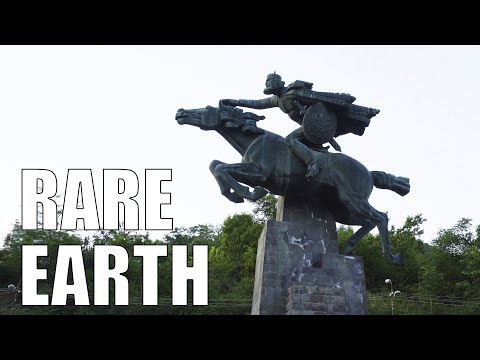







No comments:
Post a Comment