-Hello. -Hi.
You are a graduate architect, so I'm going to ask you this for a start:
Do you have any professional experience from the time
before you became the mayor of Dolní Morava?
Of course, I was practising from university onwards. I have a few projects…
After I became mayor, there was less time I could dedicate to my profession.
Now I do it more as a sideline, to keep in touch
with architecture because I like it.
So are you planning to return to your profession in the future?
Definitely.
In your position as a mayor, when you're, say,
walking through the village or when you're solving individual things,
are you aware of the contradiction, when you look at the issue as an architect at one time,
as a mayor at another time and as a resident at another?
That you have three roles here?
Surely. But I'm trying to approach this
in a way it should be approached – right to the bottom of the issue.
Of course, I had some tendencies earlier… From architect's point of view,
I didn't like things, they were terrible, no no no,
and now I'm more experienced and a bit more compromising, so I'm able to say:
Yeah, this is needed for the community etc.
It needs to be this way; one has to go a little easier with his architect's principles.
Of course, when it comes to buildings, I'm negotiating
– mostly not with architects, but with the investors,
who bring forward their plans.
And because I'm an architect, they view me a little bit differently
than if I were – I don't know – some other random profession.
Or when they invite an architect along, they treat me differently…
But oftentimes, it happens that it's not me
who's actually setting the conditions for them as an architect,
but the municipal council.
Because the council feels this way, that it has at least some influence on what is built.
They don't trust me enough to say:
You're an architect, tell the people what you want the building to look like, and we'll fully respect that.
and we'll fully respect that. It's not like that.
It works in the way that the people come and I tell them some idea
– I already know how the council members think –
and I direct the investors to the way the building design should develop.
They often don't like it, and then it's maybe presented in the way
that they think it's my opinion. But it's not like that.
They have to realise, that I don't stand in the position of the architect at that moment,
criticising their building with respect to the built-up area in the village.
I'm judging things as a mayor,
from the point of view that I know how the people who represent the public are reacting.
And though I could bear far more modern buildings, and maybe also bolder,
I know that the representatives don't like that
and that's why I'm straight with the investors, like:
Look, I don't mind this design of yours, sometimes I even like it,
but I know that most of those who represent the community
have a different opinion, and you won't get yours through the council.
So it actually works in a way that anytime someone wants to get a statement considering the building,
the council has the last word, and not me, even though they first consult it with me.
Not me. So that's it.
What do you think about The Sky Walk?
From the architect's point of view, there are more ways how to look at it.
Of course, the building is unique.
When someone stands next to the hotel Vista and looks up,
it has an interesting effect on the view of the landscape.
But from certain points of view, it's controversial.
Here, from Vista, it makes a rather organic impression, it's interesting…
It's growing out of the hill.
Exactly. But if you look, say, from the road from Hanušovice,
it feels rather stern, it looks more like a scaffolding on the hill.
Concerning the landscape character, which I was also studying a little at the university, it's not quite right.
But on the other hand, from some long distance views,
it's overshadowed by the horizon of the higher hills.
The new ski slope on Slamník looks much worse considering the landscape character.
It's just a linear building, there's a lot of sunlight there…
It's really the point of view that matters.
So, from the residents' point of view,
it's an organic part of the village, it's continuing and it's…?
But also from the village…
The village is long, and the views are differing.
It can't be said…
Everyone has a little bit different opinion, naturally.
Now I'm getting to the citizen's point of view…
And from this view – someone likes it, someone doesn't,
I as a citizen have more of neutral opinion.
It is 2018; the path is there three years already.
Is it still a topic among the community?
Are there any debates among the people?
-No. -So it just isn't…
It's part of the village now, and that's it.
Right. Paradoxically the issue wasn't the building itself.
It was being built for almost a year, and it gradually grew,
and the people were seeing it, and they got used to it.
But the issue was what it has brought to the village…
Suddenly, there was an extreme turnout, because it was new and everyone was interested in it,
because, it was unique in the world and everyone wanted to see it.
Of course, nobody including the investor expected the interest it attracts to be so enormous.
They all expected that there would be more people coming, new things are always interesting,
but nobody expected what was to come and there were many debates among the locals.
There are two different groups of people, really:
Those who are actually interested in fostering tourism here because they are making a living of it,
and then there are naturally those who have never benefited out of it and don't want to;
they tolerate it to a certain extent,
but when it's exaggerated, then they obviously have an issue with it,
especially since it doesn't bring them any profit.
So paradoxically…
Of course, there are some strict opponents,
who don't like how it looks in the landscape etc.,
but most people don't mind, and if they do,
they rather object to what the tower brings, not to it being there on the hill.
Yeah, I understand.
They mind the waves of the tourists coming to see it.
Exactly.
Because the village – the ski slopes have been working here for some time,
so the people were at least used to the winter tourist season…
Exactly. They were used to it,
and the summer turnout was much more significant than winter turnout. Much greater…
-So the things turned around. -Exactly.
The turnout was much more significant.
Mostly these were one day visitors. That's actually the worst thing.
It's really the worst thing for the village too,
because if someone comes here just for a while and yet makes the most noise in the village
by coming and leaving by car within like one day or half a day,
and doesn't spend here much money,
it means that there's no economic profit for the municipality – whether direct or indirect.
The more long-term visitors are the exact opposite, it creates more jobs,
some locals already offer a private accommodation here
– they are putting people up in part of their family home,
or they have another house next to their home, which they can rent and profit from.
How about skiers? They come in winter for an extended week, find a lodging, spend some money…
Exactly. Also visitors who come to see The Sky Walk stay longer.
The Sky Walk is one of the attractive things here.
But the number of one-day stays is far above the number of long-term visits.
There are about 1500 beds in the municipality,
and at the highest peak in 2015 and 2016, the first time there was a summer season,
the turnout was extreme, there were 8 000 people.
-In one day? -In one day.
I've found out that in an interview from 2017,
the investor of The Sky Walk said that the interest would decrease…
-Has that happened? -It's really happening.
-Really? -Really.
This year it's definitely not like two years ago.
There was a noticeable decrease in the turnout in last year too – of the one-day turnout.
Meantime, the long-term turnout is starting to stabilise more and more,
which is a favourable development for the municipality.
Because when the long-term stays increase,
the economic growth and the potential for all who live here is better.
Having these experiences now, if you could go back in time, what would you do differently?
Knowing this and counting with it?
I think I would prefer more the local activities,
those of a little bit softer character, not the spectacular ones.
Because once you make something splendorous, it's naturally amazing for a lot of people.
On one side, it's nice, that the village is renowned far and wide and mentioned in the media.
You hear people saying: Yeah, Dolní Morava is famous now…
Before, nobody knew about it.
But on the other side, what it causes in the village,
is not exactly what we would wish for.
Which means that, like the fun parks right behind us for example,
these things aren't mass attractions.
People are coming here to see it, though a few people are coming here just for a day,
it still broadens the offer. So, these are the attractions I'd prefer.
Your situation is specific
because there is one dominant investor in the village.
You are representing a municipality that has many times smaller budget
than he has for the development of his projects.
What's the position of mayor or council towards someone so powerful?
We're always an important partner of the investor,
even though the value of investing capabilities can hardly be compared,
ours is tiny compared to his…
Because our budget is puny.
It's like their operating cost for… I don't know, a very short time…
So it can't be compared. But we have the public mandate and the public interest.
That gives us immense strength. We're simply making decisions about our area,
and even though the investor had (even according to the old zoning plan)
the right to build what he has built here, and to refine it in some way…
Even then, he'll need to cooperate with the municipality in the future.
Maybe he'll get some other idea about what to do here,
it won't be included in the zoning plan, which he'll need to change somehow
and he'll have to cooperate with the municipality.
Our position is rather respected, I think.
Though of course, we're not as financially strong as the investor.
The idea that the investor should give the municipality something
in return for being able to build here… That is a tricky question.
Of course, nowadays we are more aware of the development,
but back then when the investments started,
it was rather perceived as something was finally happening here
and we should be glad for that because otherwise, it would be a God-forsaken place.
-To put it simply. -The investor would otherwise go somewhere else.
He'd go somewhere else.
Of course, from today's perspective, everyone would see it wholly differently.
The investor had a blank cheque
to build what he needed for his business plan,
without any extra conditions.
The question is, whether it was a mistake or not.
On the other hand, many locals are saying: How does the municipality profit from it,
why doesn't he give us some money from those lots of people who are coming to visit The Sky Walk.
The investor says: I'm just doing what the state tells me to do. I'm paying taxes and VAT;
I'm doing all I should, it's not my fault that the state can't redistribute it,
I can't be punished by giving you my money. Which is true.
Because the VAT amassed here – today, it's quite a large sum of money…
We get only some shared part of it,
which is derived from the number of our population,
so it doesn't reflect the local business…
So it's more of a bad system than forcing the investor to give us another tithe,
compared with the business he could do in some city, where he could open a shopping mall.
He doesn't pay the city anything extra because people are coming to shop there either.
It's quite similar.
But the attitude is a little different today of course,
and it's essentially set in the conditions nowadays,
like the obligation to build parking lots, if he intends to build something there, for example.
The infrastructure is a condition today, at least a little.
Now, there's a plan to build another bobsledding tracks, and we,
as a municipality, had a requirement that they have to build other parking lots,
so there won't be any problem with parking.
So the contracts are being done nowadays in some ways, but in the past, they weren't used much.
So how was it or how is it now with the plots which are now built on?
The municipality owns them, did it get rid of them or do they still belong to it?
No, no, a lot of plots, or most of them, which can be built on, are private.
Yeah. When did they become private? In the 1990s?
Exactly, in the 1990s…
We are a typical borderland, that is,
some got some of their property back in restitution
– those who got property from the displaced Germans after the World War II,
which was then taken from them and then gave back again.
But, because borderlands weren't 100% inhabited,
relatively big and significant portion of land
belonged to the state even after the restitution.
So there was a lot of so-called substitute restitutions – meaning,
if anyone in the country had some claim for compensation, he could get them here.
So certain people knew or assumed that there is a potential,
these were buying in more plots than a random person would,
and therefore they acquired a lot of lands, also in which now invested.
But surely some of the lands had to belong to the municipality.
Of course, it did. I'm not saying that the municipality doesn't own anything.
But most of the building sites are privately owned.
Yeah, from the 1990s on, roughly. It isn't like…
So, you aren't in a situation that the municipality would own,
let's say, a third of the land around here, having it as…
No, no, not at all. We have about 10% of the estates in the village, and that's it.
Maybe not even that.
If I get this right, then the estate prices are so high, that an ordinary family of employees,
e.g. employed in the holiday resort or something like that,
probably can't afford to buy an estate and to build a house, because it's too expensive.
That's true.
You can't force the owners of the estates where only family houses can be built not to financialise it.
When you say that there should be boarding houses and then there should be family houses, the character…
Well, both houses have beds, toilets and kitchens, so they're practically the same.
And that's what's raising the prices.
If it were legally possible
and if it were clear that there and there you can build only a family house, in which you have to live,
then the family house prices wouldn't be raised like this.
Because it is actually a contradiction
when many municipalities face de facto extinction because there are no job opportunities,
the young ones are leaving and not coming back, that's the end…
Then there is the possibility of tourism which could lead to a similar result
when people would want to come back, but it is not possible
because it is not affordable or them anymore.
The best model – before the arrival of investors and village development
– is to secure the land for public ownership.
Because if some village has a lot of plots and almost nowhere to build on,
and development is considered, then they should direct it towards the publicly owned land.
Because then we can either rent it, we can sell it the investor, who will build something
developing the village and at the same time, there will be profit for municipal treasury,
that can be used on infrastructure needed.
On the other hand, if we will have some spot for family houses,
then the municipality doesn't have to sell it for market prices,
provided that there will be some conditions.
Of course, a municipality should treat its property with proper care
– and the Supreme Audit Office controls it, too…
We can't just sell things for few bucks, but if we can set appropriate conditions,
which are important for us from the sociological perspective,
then we can also sell it for a lower price, which happens here too.
Basically, we're offering substantially underpriced estates for the citizens
who already live here – it mustn't be anyone who's not local.
What we're lacking now are, of course, municipal flats.
The municipality owns six flats, which is woefully little,
regardless that they are rented long-term, so we don't have anything to offer.
Especially considering, that there are 300 employees,
we don't have the strength to build a large-scale apartment house.
On the other hand, the employer realises,
that even now, in times of great demand for employees,
the employees have to be offered something that they can't get elsewhere.
And that's the employee housing.
So, last week, 65 employee flats were approved.
That's why I'm asking…
You have huge investments here, lots of hotels,
but the number of inhabitants also limits your municipal profits.
Exactly. Now, with the 65 flats,
the investor claimed that he'd make the people – that he'll give them an ultimatum,
that he'll rent them the apartments, provided that they'll report it as their permanent residence
so that they would be connected more tightly to the village.
The investor himself is aware that
the municipality needs to build an infrastructure and that it needs money,
predominantly from tax revenue of permanent residents.
-Alright, thank you. -I thank you too.
 For more infomation >> Rung thất - Duration: 6:21.
 For more infomation >> Resultados En Vivo Sorteo Dominical Domingo 20 Enero 2019 Loteria Nacional de Panama Numeros - Duration: 1:16.
 For more infomation >> Vox se fundó con un millón de euros del exilio iraní!!! - Duration: 7:40.
  For more infomation >> Территория сердца / Territory of the heart - Duration: 3:10.
 For more infomation >> Remedios caseros con aguacate que tal vez no conocías - Duration: 10:43.
  For more infomation >> Beneficios del aloe vera para el estómago - Duration: 10:22.
  For more infomation >> İNSTAGRAMDAKİ EN KOMİK VİDEOLAR - Duration: 13:19.
  For more infomation >> El Mundo de Craig [♫] - Créditos de "La Maldición" [Español de España HD + Letra] - Duration: 0:18.
  For more infomation >> Cambiar Binéfar: Nuevo Colegio - Duration: 0:56.
  For more infomation >> TOP 5 Nejkrásnější JEDNOBAREVNÁ města - Duration: 5:31.


 For more infomation >> Volkswagen up! 1.0 44KW/60PK 5-DRS Move Up! Airco - Duration: 1:11.

 For more infomation >> フォルクスワーゲンのEVスーパーカー「I.D. R」が遂にニュルブルクリンクに挑む。もしかするとポルシェのあのモデルに勝てるかも? - Duration: 3:43.
 For more infomation >> Uomini e Donne, puntata di oggi 21 gennaio: Gemma fa la sua scelta | Wind Zuiden - Duration: 3:05.
  For more infomation >> Jak efektywnie sprzedawać - Biznes Przy Kawie #38 - Duration: 4:01.
  For more infomation >> Az Utolsó Vadak - Néhány szép szó - Duration: 2:33.
 For more infomation >> Prince Philip 'left crash scene in minutes while I waited TWO HOURS for pain relief' - Duration: 8:27.
  For more infomation >> Тренер I Love Swimming Антон Саначев - Duration: 1:44.
 For more infomation >> grown-ish | Season 2, Episode 5 | Sneak Peek: What That Mouth Do | Freeform - Duration: 0:55.

 For more infomation >> I AM TRANSGENDER | Camio Sesso MtF - Duration: 5:55.


 For more infomation >> Crash on I-90 between exits 46 and 47 - Duration: 0:32.
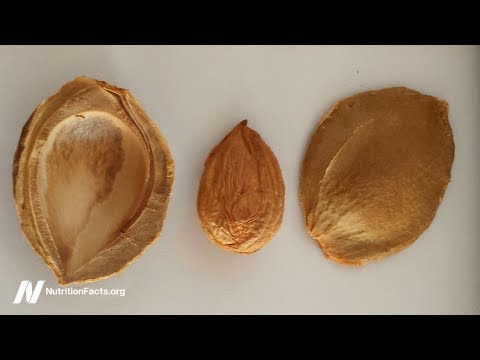 For more infomation >> Do Apricot Seeds Work as an Alternative Cancer Cure? - Duration: 4:51.


 For more infomation >> MOSCAS VOLANTES: ELA ESTÁ REDUZINDO ELAS DRASTICAMENTE COM OS EXERCÍCIOS - Duration: 3:54.
  For more infomation >> Jogo Marvel Spider-Man para PS4 - Duration: 0:41.
  For more infomation >> Passe de Batalha Temporada 1 | Fortnite - Duration: 2:51.
 For more infomation >> 「魔方陣」のボーラ、メラクで解明するスーパーカーの魅力 - Duration: 8:23.
  For more infomation >> Cần tìm thầy phong thủy ? Đừng lo đã có Huỳnh Lập - Duration: 8:05.
  For more infomation >> Tronkarp азартная игра. Какой результат потратив 100 trx Tronkarp? - Duration: 3:42.

 For more infomation >> Ford Fiesta 100 pk Business | P.Hulp | Sync 3 | Carplay / Androidauto | - Duration: 0:54.
 For more infomation >> So bekommst du Presse für deine Veranstaltung - Duration: 5:30.
  For more infomation >> Další finalistka SuperStar, která je na starší: Celeste Buckingham si našla pořádného - Duration: 2:07.

No comments:
Post a Comment