So, moreover, I'm a lawyer, so everything goes against me.
So I'll be talking about the major regulatory challenges that relate to robotics regulation
and, of course, this is just a sample we could speak at length about them.
But these are really depressing issues and also the issues that the
European Parliament has directly addressed in its recommendations to the
European Commission and we're all awaiting the official statement of
the European Commission coming up later this month. So I will be discussing
why we need a European approach to robotics regulation. And I will point out
some of the reasons why European legal system not completely adequate or
largely inadequate and I will refer to some specific bodies of regulation.
I will propose an alternative approach which I like to call the risk management approach.
I'll briefly touch upon Robot testing which is a topical issue due to Fabio.
And, as more, insurance and the use of standartization and the purpose of
a potential European robotics agency.
So, first of all, why do we need to regulate robotics?
We need to regulate robotics because regulation is anyway, anyway there.
If we invented today the time machine that would already be regulated.
The only question is: "Is it good regulation or not for a time machine?".
If somebody used the time machine for attempt travel and got injured over his travel
and his family or himself wanted to sue the manufacturer
of the time machine in the court, the judge would simply have to find the solution.
And what he would do is apply existing regulation because it would not
be able to say: "There is no detailed regulation of time travel and, therefore,
I'm allowed not to judge the case".
So, this is a really important point
that I always try to make clear to engineers in particular,
because regulating doesn't mean necessarily limiting. Actually, it could
entail unleashing the full potential of innovation.
Why does that need to happen in EU level?
Because EU is one market, EU is one not only economic,
but also cultural area. And that's very important, because we value consumer
protection, we value human rights and we also want those principles that are very
dear to us to be deeply embedded in technological innovation.
And by regulating you make sure that it happens. So, you can conceive good regulation,
you can conceive that EU level to avoid fragmentation.
And this is a very important point both for businesses and for consumers.
But at the same time, you also want to regulate because you want to be sure that
you're embedding those fundamental values and principles into the technology you get.
And all my research shows that even very distant rules, such as liability rules,
have a very important bearing on the kind of technology that ultimately will emerge.
And, therefore, also on the incentives that are provided to manufacturers
and a kind of technology we get on our market. If we do not regulate,
if we let robotics emerge elsewhere outside of Europe,
it will embed those principles and those values and we might not like them.
And we'll still buy those devices and those products.
So, this is a really strategic issue for the EU not only on pure economic terms that are very relevant still,
but also on social and policy aspects and, in particular,
in the perspective of ensuring we get the technology we want.
We shall avoid fragmentation. So, what is happening, some member states are talking about
adopting their own rules on robotics and AI.
I'm thinking of Estonia I was...
There are some initiatives in Germany and one that is coming up in the UK with respect to driverless cars...
That may not be the best approach.
If we have... If the legal system deeply influences the way technology evolves,
we will get driveless cars that functions are slightly different in Germany and in the UK.
Is that acceptable? Most likely, not.
That's gonna harm our economy, that's gonna harm our industry.
So, we don't want fragmentation. We want legislation to occur at EU level.
The speaker just before me mentioned that
it will be very hard to spot where AI is. And this is the problem we already witness with the Internet.
So, fragmentation is really going in the opposite direction shall we
like member states should have that idea very clear in their mind.
How do you want to regulate robotics and technology in general?
You could say: "We have to stress, to identify those profile technical differences that
differentiate specific classes of application one from the other.
It makes no sense to attempt to regulate robotics as the whole
or to make the code of robotics to make the new ... of laws.
Driveless cars give rise to specific issues that are very different from those
that are triggered by drones, robot companions, softbots and surgical robots. Just to name a few.
So, you need to have a class by class application approach.
And also because similar technological trades may give rise to different legal, ethical and social issues.
So, you have to identify the specific societal impact of a single classes of applications.
Just the Rumba vacuum cleaner is an autonomous system,
but for sure it does not trigger the same issues that a driverless car or a drone does.
You know, so, it's not just autonomy or the ability to learn
that makes the difference is autonomy in the specific context
considering a specific kind of application in the specific setting.
At the same time, the same issue may require different solutions.
And we have to devise the right incentives
that we want to provide manufacturers, researchers, users of a specific technology.
So, the same solution may help you working for a robotic prostheses and a driverless car.
Just to keep with that one example.
Within this framework (this is like a methodological framework), how to address technology regulation.
Then we shall make one point very clear: robots are products.
They are no philosophical, no legal grounds to deem
or not even technological grants to deem that existing or reasonably foreseeable technologies.
They are subjects in an ontological sense, they are not beings - they are things.
And if they are things, they're given framework,
legislative framework applies to them. And that's the setting of product liability rules
and all the rules about standardization and CE Marking that EU level.
There's a number of European directives on those,
on the second aspect, plus the European product liability directive.
Now... So, this goes back to the story of the time travel.
Do these... Are these rules fit for purpose? This is a really relevant question.
And, well, this is a very long story, but, probably, the product liability regulation is not really fit for purpose.
Why is so? It's currently under revision.
And we will find out about the conclusions of the European Commission in a few days.
And very curious about that.
I was involved in the debate around product liability directive and I have to say that
there are two studies, they are very relevant studies, that were carried out
and found very little litigation with respect to product liability rules in Europe.
And that can be explained in different ways, but I will get back to that in a moment.
At the same time, for liability is an exposed solution.
When an accident occurs, it tells us who is going to be held liable
and, basically, holds the producer liable for all damages deriving from the use of their product.
Now except that there is an entirely different body of regulation
that is out of certification like so the different directives of the machinery directive, the medical device directive
and so on and so far, according to that kinds of products that we are considering.
And those high requirements at least that is the intention to make sure the products are safe.
And this should ... , but they do not exclude liability.
Now these... So, these two things work in parallel. But why is the product liability regulation, probably,
inadequate for the task of regulating emerging technologies?
Well, we have some impartial data about how it performed until today.
And we can slow litigation level which we see clearly that the causal nexus
between the fact and the damage is very hard to establish
for a claimant, somebody's seeking compensation.
We also see that the development risk defense is quite ineffective in its application.
Now I don't want to get too much into the legal details of them.
The reports will tell us more about it.
The data can be interpreted in different ways,
but if you speak to consumers' associations and if you look into
litigation involving medical products,
you see that it's very very hard for a claimant to get any sort of compensation.
And you can witness high level of randomness of career decisions and very little consumer protection.
Today in the morning I was reading an article in Financial Times and it was talking about
the intentionally EU of ensuring we reach better consumer protection in reality
and the importance of that. I think that we could take the example of
the product liability regulation into account as a very
good example of a body of regulation that is very well conceived theoretically.
But when it is applied it's very difficult to implement and to use it to successfully protect consumers.
And what are the inadequacies of the product liability directly with respect to emerging technology?
Well, originally, that body of regulation was understood
as a safety net intended to be applied and very exceptional circumstances.
Because safety is provided exactly through standardization.
However, close machine to human interaction and the case of the action
that involves the Uber driveless car just a few days back is a good example of that.
'cause these are two different bodies of regulations
to overlap traditional tort law and product liability regulation.
And so, basically, the product liability is going to serve purposes
for which it wasn't originally conceived.
And this will, you know, show even more its weaknesses and the uncertainties it gives rise to.
And at the same time, it really stresses the disproportion in the power
between businesses and consumer in undergoing a litigation.
So, this is a body of legislation that most likely needs to be profoundly revised.
And how could we do that? One way is (the one I propose) is through a risk management approach.
A risk management approach tries to burden
the party that is best positioned to minimize costs and acquire insurance.
Rather than the one that can be blamed for failing to comply with a specific standard.
It's basically grounded on absolute liability rules that are even
more than objective liability rules and does not always require establishing
a specific causal nexus which means pinpointing the one party that is liable up in the given accident.
And it should ensure prompt compensation to the victim
with very little, if any litigation at all.
Rather than a complex system that leading requires relevant litigation
to provide some compensation to the victim.
I'll provide you with one specific example.
That's of driveless cars again. We may decide to hold the producer liable
based on a risk management kind of consideration.
If we hold the producer liable based on a risk management approach,
we hold the producer liable in all cases: an autonomous or
semi-autonomous vehicle is involved in a crash.
What the producer will do is that he will acquire and insurance
and, most likely, because he won't purchase insurance for just one vehicle,
but for all the cars that he puts in production.
He will manage to explore economies of scale
that could be bad story for insurance companies, maybe.
But what he will do is that he will factor that cost into the cost function of his car
and then he will transfer that cost or a part of that cost onto the final user that purchases the vehicle.
So, it's not even the producer that ultimately bears the entire economic cost in such a scenario.
What happens when an accident occurs?
There is no need to show through complex litigation
that it was a defective design in the vehicle, that something went wrong,
that it's the fault of the manufacturer or of the internet service provider
or any other person involved in the completion of the driving task.
Because litigation is unnecessary,
it's the manufacturer that gonna be hold responsible and he's gonna have to pay.
What he can do then? Is that at the end of the year through contractual agreements
he can distribute this cost along the value chain to all the suppliers
that he might identify as the best part in position to either avoid that kind of accident,
or, anyway, responsible for that kind of occurrence.
So, at the end of the year a large manufacturer will be better positioned to say
in a hundred percent of cases, in... like... considering a hundred cases, in sixty cases
it was a matter of the Internet connection.
So, while I negotiate my agreement with an Internet connection provider for my connected vehicle,
I will take that into account and I will force them to internalise a part of that cost.
But at the end of the year he will have managed that cost,
minimized that cost and managed to avoid all litigation.
What is the major problem with a risk management approach?
As well we have to identify emerging risk.
And there are many risks that technologies will bring about
that we can hardly foretell as of today.
There will be a lot of cyber security issues.
We had an event here at the European Parliament just few weeks back
still organized by Mady Delvaux, where a cyber security expert made very clear of
how vulnerable many technologies are.
And that is again a problem of risk identification and regulation,
but also of technical regulations, so, standardization.
And we get back to that in a moment.
And then we need to assess such risk...
Yes, I'm almost done. And then we need to assess such risk,
because we also need to determine how likely it is that given harmful event will occur.
And that is not that obvious.
Because... We'll still stick with the example of driveless cars.
There is a study about rent from 2016 that says that with the given data we have today
we cannot say that driveless cars are safer than traditional vehicles.
And if we wanted to be based... to base that assumption on data,
we would have to wait 4 hundred more years. That, of course, is not possible.
But we have to invent new ways of testing. Some will be traditional ways of testing,
some of the through similar simulation but we also need Robo testing which is
the other aspect we need to regulate roboo testing and
other your other countries such as Japan are doing that effectively they organize
Taku zones there are areas where existing regulation is temporarily
discipline in order to allow experimentation under conditions of
safety this doesn't happen in Europe well most European countries have now
passed legislation to allow the testing of driverless cars on the road even if
they did not legislate autonomous driving which is good but this is it
probably largely insufficient because many other kind of technologies are not
easily tested we could think of drone swarms according to Italian legislation
you cannot for each drone in the air you have to have a pilot so that also
entails that you cannot test drawn swarms but that is useful technology and
do we have to change legislation today most likely not we have to wait until we
get data about how drone swarms work but in order to get that data we have to let
the testing happen so we need to do supply probably momentarily exist in
relation to that end what we need is also smart insurance it and so a new
approach to insurance that will be based on free flow of data most likely and by
design approaches but also in time contracting I explained this is a bit
complex but the idea is that all the data generated by our tools will help
insurance companies change their business models and calculate
internalize better the kind of the kind of risk we give rise to of course once a
privacy by design approach is respected so our data is kept sufficiently safe
and protected which is a problem in itself and then I said standardization
is necessary standardization is useful we need more and narrow tailored
technological standards for many issues one above all for instance cyber
security that are not sufficiently regulated and in particular that are not
sufficiently regulated with respect to robotics a
and emerging technologies and this is one of the reasons why we might benefit
of a European robotics agency that performs this specific task
now all these builds are part of knowledge that merges law economics
ethics and engineering and therefore we also need to train European lawyers and
engineers of tomorrow in that way and this is what we're trying to do at
Santana with also with my summer school and this is the third edition and so I
hope you're interested and if you want to ask some questions please don't
hesitate thank you


 For more infomation >> Is Christianity Evidence Based? - Stephen Taylor vs. Karol Fjałkowski - Part 3 of 3 [PL SUB/NAPISY] - Duration: 47:32.
  For more infomation >> Готовим вместе с Иришкой - Minecraft - Duration: 2:42.
  For more infomation >> Toyota Yaris 1.3 16V VVT-I EXECUTIVE 5DRS AC/NAV/LMV/LEDER/31.000KM! - Duration: 1:12.
  For more infomation >> How to play piano for beginner
 For more infomation >> Al Bano e Romina Power insieme: tra loro il dramma di Ylenia Carrisi | K.N.B.T - Duration: 3:09.
 For more infomation >> Terra da Padroeira | Cantinho do Cata-Vento: Dany e Diego - 03 de junho de 2018 - Duration: 24:04.
  For more infomation >> Ex-goleiro Sérgio vê falhas de Walter e Sidão em jogos do final de semana|n123snow - Duration: 3:26.
  For more infomation >> Uomini e Donne, il mea culpa di Nilufar non è andato in onda per motivi tecnici - Duration: 4:10.
  For more infomation >> Últimas notícia de hoje : Ex-presidente da Câmara, Eduardo Cunha recebe nova condenação - Duration: 4:18.
  For more infomation >> VLOG# WE WENT TO BOSNIA FROM CROATIA BY A CAR! - Duration: 10:33.
  For more infomation >> Árbitro termina o jogo com bola dentro da área e revolta corintianos|x3and1baller - Duration: 2:28.
  For more infomation >> Dani Alves foi oferecido ao Sevilla e pode deixar o PSG, diz jornal|x3and1baller - Duration: 1:26.
  For more infomation >> Mercedes-Benz E-Klasse E 220 d Limousine Automaat Lease Edition | COMAND - Duration: 0:53.
  For more infomation >> Quais são as características principais do mundo contemporâneo? - Duration: 3:43.
  For more infomation >> BURAK MEMİŞ ' E BASKIN YAPTIK ! - Vlog - Duration: 10:19.
  For more infomation >> Mercedes-Benz E-Klasse E 200 Estate Automaat Avantgarde | Navi | LED | Camera - Duration: 1:07.
  For more infomation >> 8 segni che le tue arterie sono ostruite e come risolvere il problema - Italy 365 - Duration: 4:29.
 For more infomation >> Georgette Polizzi e la lettera a Davide Tresse: 'Non l'ho lasciato, era una dedica' - Duration: 2:53.
  For more infomation >> Fresh Skin Tutorial - TV Beauté | Vic Ceridono - Duration: 9:12.
  For more infomation >> RESPONDENDO HATERS: COPA DO MUNDO E SELEÇÃO BRASILEIRA - Duration: 3:47.
 For more infomation >> Spaghetti al pesto di peperoni e noci - ⏳ pronta in 15 min - Duration: 2:28.
  For more infomation >> Dacia Dokker 1.5 dCi Ambiance (Airco/R.schuifdeur) - Duration: 1:04.

 For more infomation >> Opel Astra Sports Tourer Online Edition 1.0T | Navi - Duration: 1:05.
  For more infomation >> Saab 9-3 Sport Estate 2.8 V6 T Aero Automaat 250 PK NL Auto NAP - Duration: 0:47.
 For more infomation >> SIMILAR KPOP MUSIC VIDEOS #2 - Duration: 16:14.

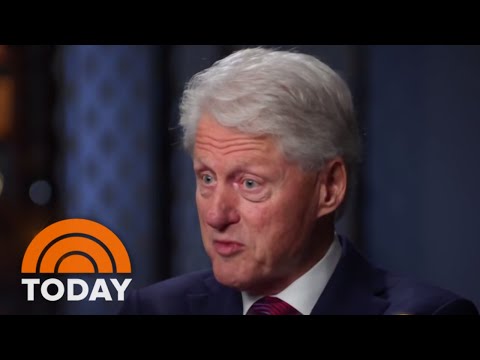 For more infomation >> Bill Clinton: 'I Did The Right Thing' During Monica Lewinsky Scandal | TODAY - Duration: 6:15.
 For more infomation >> Trezor T - обновленная версия популярного аппаратного крипто кошелька. Что нового? - Duration: 16:01.
  For more infomation >> how to get free v bucks-get free vbucks-free v bucks 2018-free v bucks giveaway - Duration: 3:39.
  For more infomation >> 7 Foods That Help You Build Lean Muscle - Duration: 3:50.


No comments:
Post a Comment