- Exciting times, you've got yourself a new bike.
And whether you've bought it from a shop,
or an online-direct company,
here are a few checks you need to do before
you take out your pride and joy onto
the trails for the first time.
As you can see, my bike needs a little bit of
assembling first, just the bars going into the stem,
the seat post in, and the front wheel on.
So I'll do that first.
So step one is just to put some
grease inside that seat tube.
This is an aluminium bike and aluminium post,
so grease is the way to do it.
If you had a carbon fibre post or frame
then use some of that carbon fibre grip.
Put it inside the seat tube rather than on the seat post,
because it's a little bit less messy.
As it slides down and in rather than,
sort of, scraping the grease up the seat post.
I'm gonna leave quite a bit showing,
so I'm gonna use a bike stand
to finish off building my bike.
Just whilst you are assembling any parts
on the bike make sure there is grease in any threads.
Luckily, there's some in there already.
So, literally, just need to wind these bolts in.
So for now, I'm just gonna instal the bars
and give them a bit of torque on there,
but I'm not gonna go too crazy,
because once I've got everything in place
I'm gonna take the bike off the stand
to double-check the bar roll
or my lever angles, that sort of thing.
So, I'm just gonna tighten up slightly, for now.
I'm not worried about it too much.
Okay, just to instal the front wheel.
Now this bike has come with the breaks reversed,
so not American and Euro-style,
so the rear brake is on the left.
So in the UK we run them the other way around.
Luckily, that's that dead-easy
to do with these SRAM guide brakes.
You literally flip them over,
and stick them on the other side.
Bikes always tend to come without pedals,
so pick your pedals of choice: flats or clips.
And make sure you also put a bit of grease
on those threads.
So your new bike is in one piece.
The first thing I'll now do is read
and then remove these warning notes all over the bike.
So the first one, this is the fork.
Before the first ride please check the suspension
for pressure, which we're gonna do in a second,
we'll do the fork and shock pressure.
There's one down on the axle,
so make sure you've got that in and it's vertical.
Get rid of that as well.
Coming in to the back of the bike,
there's one on that rear brake,
basically telling you that
they are self-adjusting brakes.
So what you need to do, when both the wheels are in
and the discs are inside the callipers,
just give those brakes a couple of pumps,
and now you're gonna sort of push the pistons
out to make sure they're working properly
the first time you ride the bike.
Once you've pumped the brakes,
you might need to then resend to your calliper,
we have done a whole video on that,
but basically undo your bolts and then,
I like to do it by sight,
so I can see down the disc and
I'm trying to equally space those pads,
so that I can see a little gap,
either side, between the pads and that disc.
If you've got a really nice quiet garage or workshop,
give it a spin and just listen out
and you shouldn't be able to hear
that disc touch those brake-pads.
The rear one is absolutely fine,
so I'm just going to make sure
those calliper bolts are nice and tight.
Hopefully, when your bike was built,
things have been checked already,
but the one thing I really will make sure
that is right, is the limit screws on the rear mack,
because it can do a lot of damage
if they're not set right.
So, first part of that is to make sure the mack
is nice and tight into the hanger.
And then go through and actually shift your gears,
to make sure the mack
doesn't move too far in either direction.
So brand new chains come with this really sticky lube
from the factory on there.
And that's down to personal preference,
a lot of people like that lube
and they'll leave it on there.
Personally, I actually degrease that brand-new
chain because it's really sticky,
I don't really like that,
where I ride,
all the mud sticks to that and the sand and it'll
really wear that chain out.
So, actually, I take the degreaser to a brand-new chain,
get rid of that sticky stuff,
and then reapply it with my favourite lube.
Tyres are such a personal preference,
saying that, often, new bikes don't come
with the tyres that you want on them.
So now's the time to switch to your favourite tyres,
and also, most new bikes don't come setup tubeless,
most of them come with tubes.
So, also, now converts tubeless if you want to,
that also gives you two spare tubes.
We've got a full video on how to convert
to tubeless if you don't know how to do that,
follow the link in the description down below.
On a full-suspension bike it's really worth
checking that all the pivot bearings
are greased up from new,
they really should be,
but an easy way of doing that is
just to remove one of those pivot bolts,
to wind out and just have
a quick look inside there,
as you can see, that is really nice and clean,
and also you can see signs of grease around there.
So, great, I'll put that back in and just make sure
it's torqued up to the correct torque settings,
which this bolt actually says on it 17 Newton metres.
That moves me on nicely to actually giving
the full bike a bolt check.
So, you will have to undo some of the bolts again,
set up your bars and levers and things like that,
but you definitely want to give your bike
a full bolt check before you take the bike
off the stand and start sitting on it.
Because if anything's loose,
like the seat-post,
you can do some damage to it.
So, if you've got a torque-meter, then great,
if not, just go around with your normal allen keys,
and just try to make sure that everything's tight.
Okay, so we're almost there.
I'm just going to go around the frame
and remove any little sort of protection film
that was on there to try and stop it
from getting damaged whilst it was in transport.
Now, I'm going to take the bike out the stand.
Okay, so now we move in more of the realms
of trying to get the bike set up for you to ride.
I'm just gonna get that saddle height set right,
so dropping my seat-post down and in,
popping it up.
Whilst I'm doing that,
I've got an internally roof-tiered,
drop-seat post here,
so I'm just trying to make sure that the cable
is not getting pinched around anything,
and I'm going to try to set my saddle height.
Alright, next step is to try and set the sag
on my suspension.
Again, we've done a full video on this,
if you don't know how to do it.
I'm looking for about a 30% sag on the rear,
and about 20, 25 on the front.
And, also, bear in mind,
that once you've sat in it initially,
your bike will bed-in a little bit
after a couple of rides,
so everything will loosen up slightly,
so it's definitely worth rechecking your sag after
the first and probably a third ride.
Right now I like to double-check that
my ankles are tight before I get on the bike,
everything's sorted and now I'm going to hop on
and now set up my bars and controls.
It's the first thing I do is actually
set my bars so I'm going to roll them.
I like it so the rise on these bars goes
directly up, so it looks about right to me.
And make sure they're centred in the stem.
Torque goes back up.
Make sure you do one bolt at a time.
Or sort of alternate the two,
so you don't get one over-tight.
There we go.
Now, I'm going to double-check
that my stem is nice and straight.
The way I like to do that is
actually look down the back of the handlebars
and try in line them up with the crown of the fork.
So I'm going to undo that first and then just
shimmy that stem around a little bit.
That's not far off actually,
but just a touch that way.
That looks good to me,
so torque that back up.
Next is the grips,
these are Asymmetric Ergon One,
so again I'm going to try in get that angle
so it's most comfortable and
then tighten that up.
Do that on both sides, obviously,
and make sure they're nice and torqued down
to the bar so they don't slide around.
Next to the brake-levers so I'll make sure
they're equally-spaced away from my grip on each side.
You can do that with a
tape measure if you'd wish,
I try in do that with sort of using my fingers,
space it out, it's about right.
Get the angle, so I try in look for that angle,
it's kind of relatively high on the bar,
but nice and comfortable when I'm stood up.
That looks about right to me.
So then I'll match my rear brake lever.
But also I'll do my reach,
so I like to run my levers quite close to the bar so,
just need to turn this little dial here.
Again, I've done five clicks on the right lever,
so I'll need to do five on the left.
Okay, just a couple more steps
then you're ready to ride.
I will now look at my brake-hoses and
shorten them if they need to.
Same with your gear cables to make sure
that's all very nice and clean.
I don't have to on this bike fortunately,
everything's nice and tidy.
And also try in protect your frame.
Here you've got some sort of clear stickers
on there just to stop any cable rub.
Also, you've got these little things just to
tie your cables together,
make it look really nice and neat.
Hopefully, you keep this frame looking nice and new.
One final thing to think about
is actually making a chain-stay protector for that bike.
I've already got one built-in
on this Canyon Spectral,
but a full wrap would just protect
the bottom of it, as well.
I'm a little bit paranoid as well,
so I would now give it one last full bolt check
to make sure everything's nice and tight
before I ride it on the trail.
If you want to see more videos from JNBN,
click on the logo to subscribe.
Click down there for how to make
a homemade chain-stay protector
and over there to make a homemade, front mudguard.
Give a thumbs up if you like this video.
 For more infomation >> Lindsay Graham Flipped and Said ONE Thing About Obama That'll Make Trump Cheer Like Crazy - Duration: 16:03.
  For more infomation >> Volvo V70 bjr 2013 2.0 D4 5-CIL 120kW/163pk 6-bak R-Design CLIMA + CRUISE + ADAPT.BI-XENON + NAVI SE - Duration: 0:59.
 For more infomation >> НУЖНО ДВИГАТЬ ГРУЗ - АНИМАЦИЯ OVERWATCH [RUS - CARTOON] - Duration: 1:24.
  For more infomation >> Terra da Padroeira | Ao Pé da Estrada - João Carlos e Bruno/Donizeti - 04 de junho de 2017 - Duration: 25:57.
  For more infomation >> Terra da Padroeira | Cantinho do Cata-Vento - Felipe e Falcão - 04 de junho de 2017 - Duration: 28:59.
  For more infomation >> Ovos Surpresas do Pocoyo e do Pato em Português Brasil de Massinha Play Doh - Duration: 11:12.
  For more infomation >> Peugeot 2008 1.6 E-HDI 92pk Aut. Allure/ Half leer/ Panoramadak/ Full map navi/ Climate control/ JBL - Duration: 0:59.
  For more infomation >> Loredana Lecciso risponde a Cristel e per un attimo perde il controllo| K.N.B.T - Duration: 2:52.
  For more infomation >> AUX Как сделать AUX в магнитоле Mercedes E class W211 от AEYTV - Duration: 9:56.
 For more infomation >> HEIMABLÍDNI: A TAVOLA CON I FAROENSI! 🍽️🐑 (vegetariani avvisati) - Duration: 14:04.
  For more infomation >> A capa do viajante- cifra de viola caipira - Duration: 5:30.
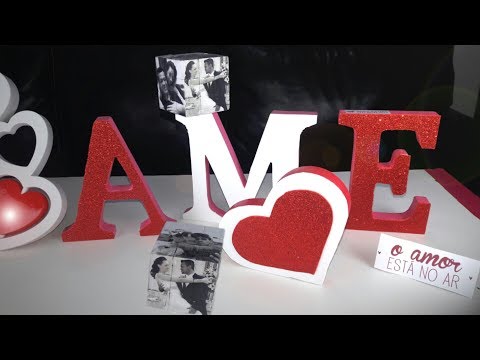 For more infomation >> Presentes criativos para namorado feitos a mão - Dia dos Namorados - Duration: 6:06.
 For more infomation >> Combat Arms | Gameplay - VIP ESCORT TROLL! Ep. #44 - Duration: 13:39.

 For more infomation >> Eletrofrigor - #SomosReais - Duration: 0:43.
  For more infomation >> Al Bano ha deciso, vende la sua casa: perché?| K.N.B.T - Duration: 2:34.
  For more infomation >> Anúncio do Canal - Duration: 1:05.
 For more infomation >> "Melody beads" - unpacking the parcel with beads. - Duration: 8:39.


 For more infomation >> Renault Grand Espace 2.0T 170pk Aut. Dynamique 6pers./ Full map navigatie/ Panoramadak/ Half leer/ P - Duration: 0:57.
  For more infomation >> Infiniti Q30 1.6T 156pk Aut. Premium Tech/ Leer/ Adaptive Cruise/ Full led/ Front+rear camera/ Stoel - Duration: 0:58.
  For more infomation >> Alfa Romeo Giulietta 1.4 T BUSINESS EXECUTIVE (Navigatie - 17" LM velgen - Half Leder/ Stof) - Duration: 0:41.
 For more infomation >> Volvo V60 1.6 D2 Aut. Summum/ Leder interieur/ Full map navigatie/ Stoelverwarming/ Pdc/ Trekhaak/ T - Duration: 0:58.
 For more infomation >> Sport Records that Will Probably Never Be Broken! - Duration: 15:27.







No comments:
Post a Comment