THE LARGEST MINORITY GROUP IN THE US IS….PEOPLE WITH DISABILITIES.
AND THE INDIVIDUALS WITHIN THIS GROUP ARE INCREDIBLY DIVERSE THEMSELVES COMPRISING OF
DIFFERENT RACES, CULTURES, RELIGIONS AND SOCIO-ECONOMIC CLASSES.
CONSIDERING THIS WHY DON'T WE HEAR MORE ABOUT DISABILITY ISSUES IN THE POLITICAL SPHERE
ASIDE FROM SO-CALLED CAMPAIGN PROMISES DURING ELECTION YEARS?
AND HOW WOULD MORE DISABILITY REPRESENTATION IN POLITICS AFFECT THE ISSUES THAT MATTER
MOST TO AMERICANS WITH DISABILITIES?
JOINING ME AT THE DESK TO ANSWER THESE QUESTIONS AND MORE IS TIMOTHY KNEELAND - PROFESSOR AND
CHAIRPERSON OF POLITICAL SCIENCE AND HISTORY AT NAZARETH COLLEGE.
TIMOTHY IS ALSO DIRECTOR OF THE CENTER FOR PUBLIC HISTORY AT NAZ.
ALSO JOINING US TODAY IS JUSTIN YOUNG - POOLED TRUST ADVOCATE FOR THE CENTER FOR DISABILITY
RIGHTS.
And it is great to have both of you back on the show.
Thank you for being here.
(Timothy Kneeland) Thank you.
(Helene) So we'll jump right in, and I want to start by getting your opinion on something,
and I want to give this to you first, Justin.
Do you think our political sphere thoroughly acknowledges the needs for individuals with
disabilities?
Are disability issues prioritized and acted upon in our political system.
(Justin Young) I would say no.
(Helene) Why?
(Young) Because unfortunately there's a disconnect somewhere.
There's good intentions of the political people who have these in their platforms.
Disability issues were both in the Democratic and Republican platforms for the Presidential
nominees in 2016, but however they have not committed to standing with the disability
community and ensuring our issues are being pushed forwards as quickly and as smoothly
as possible and the Congress specifically over the last year basically has not done
good things for not only for America but the disability community of America.
(Helene) What do you think?
Justin said good intentions but nothing has come through.
How would you respond – ?
(Kneeland) Right, and I think again you're talking about nearly 1 in 5 Americans have
a form of disability and in some ways that actually works against the ability for these
groups to come together, to form a specific pressure group that will get the action they
need from elective officials because as you said they are so diverse.
They're both diverse politically as well, Republicans and Democrats, on both sides,
and the needs of each population within the broader disability community are different.
So in some cases you actually have people competing for resources as opposed to combining
their efforts in order to get key legislation passed, and that helps the politicians express
sympathy but also then hold back on action.
And I think that's something that really needs to be addressed from a savvy political
point of view, but also for politicians to be more engaged with people in the disability
community.
(Helene) So before we move on, let's talk about, what would you both say are some of
the top issues for individuals with disabilities right now, issues that our political system
can directly influence or impact?
(Kneeland) I'd say consistent unemployment among people with disabilities and that's
that need that's addressed in terms of education, vocational opportunities, the story preceded
us about the ridesharing efforts—clearly the government can put pressure on Uber and
Lyft to comply with ADA requirements in order to make sure that people can facilitate trips
back and forth to their jobs.
So training, education, but also transportation.
I think if you look at what happened here in Rochester regarding the train station,
that's completely ADA compliant, but that's because people of the disability community
were able to influence Louise Slaughter, who was able to influence the design of that particular
facility.
So good things can happen when there is political pressure.
(Helene) Justin?
(Young) To add to that I would say some of the specific issues that the disability community
is fighting for is stuff like the disability integration act, which would allow people
with disabilities to live within a community, integrated community living setting as opposed
to being forced into institutions simply because they have a disability.
Representative Jim Sensibrenan from Wisconsin House version of that legislation and Democratic
leader Chuck Schumer introduced the Senate one for the last two years.
So he and his staff have been working very hard with the disability community, specifically
the Center for Disability Rights and adopt what is a National Disability Rights organization.
Also subminimum wage which we talked on this program previously about how people with disabilities
because they have a disability under the fair labor standards that can be paid pennies per
hour which is shameful and should be eliminated and can be eliminated if the Congress passes
the transitioning to the integrated and meaningful employment act, which has been introduced
year after year after year by representative Greg Harper from Mississippi.
Unfortunately the Senate has not always done, followed his lead.
The only time to my knowledge the Senate introduced a companion bill was Achille Aiot in 2015
which unfortunately only got 1 cosponsor.
So we are hopeful that other companion bills in the Senate can be introduced by other leaders
who have taken off the lead on that side of Congress.
Other pieces of legislation is related to insuring that you have affordable, accessible
integrated housing which there is a lack of locally, state, and national.
So those are some of the key issues making sure that we can live our lives the way we
want without losing our liberties or our freedoms and unfortunately that's, like I said before
not a priority of this Congress or the Federal Government or the Judiciary Branch either.
(Helene) So Justin, he laid out active bills.
Have we in recent history seen, I mean you mentioned this past year no movement, Justin,
have we seen anything in recent history to show that…
(Kneeland) Yeah, I would say the Able Act for example, which was an amendment of a law
that goes back to the 1980s, which allows individuals to set aside savings account for
people with disabilities in terms of education, health care, and limits on housing.
This one is important because it not taxed but it also doesn't count for things like
social security disability or other Medicaid or other means tests that the government has
and the states gets to implement that, that was passed in 2014, and New York State has
implemented the Able Act, and so there is I think it's my able.gov people can go to
to check out how they would set up one of these accounts.
That was 2014.
Probably the most important legislation before that was the ADA Amendments Act 2008.
Now that expanded the definition of what we mean by disabled after the supreme court had
narrowed the definition of the 1990 ADA act so it was an important amendment, but that
was nearly 10 years ago now.
So we haven't seen a number of things and as Justin was pointing out, the Disability
Integration Act, which Louise Slaughter is a co-sponsor of, is also something that would
really guarantee the rights of individuals to live in communities which they want to
live and prosper and contribute as opposed to the laws that exist now that rally give
preference to institutions, right?
Tax breaks and other things to help people with disabilities to go to nursing homes or
places like that.
That's really not what the disability community wants.
(Helene) So Justin, the Center for Disability Rights, you host candidate forums on Disability
Rights during election year.
This has been a consistent thing that you've done.
I had an opportunity to moderate one of those a couple years ago.
And you also in the process inviting candidates from major races to participate in a candidate
survey as well, so it's kind of like this two fold thing.
And the results are really intended to help voters make informed decisions before they
go to the polls.
And I want to know what type of response generally A) from the candidates to participate in the
surveys and B) to show in and be a part of the forum.
Are they responsive.
(Young) Unfortunately, from what I've seen, from my colleagues from what they've informed
me, those that have been coordinating these events for the past several years, we created
a survey which was a collaborative process between several staff members, myself included
with the past few years at least, and we send them out to all the candidates that are going
to be running county and city wide because that's where the majority of the people
what we serve live and we put out these surveys and we get them back and the number that we
get back as opposed to those we send out are not good numbers.
We get a handful back and then we get to our candidate forums which we hold every year,
which is usually a two hour event, we get maybe a handful of candidates which are actually
running, so to come speak to answer questions that the disability community wants to know
about issues that are pertinent to them and us of what we need to know and how we want
to make an informed choice of who we want to vote for.
(Helene) In terms of people, sorry to interrupt, in terms of candidates that do come, we're
talking both political parties are represented.
(Young) Both political parties are, we invite them, but unfortunately at times the Republicans,
we do have Republican candidates, like Joe Robok, he's shown.
But unfortunately when we invite other Republican candidates for the last two years at least,
not many have shown.
Usually it's Democrats and third party candidates.
(Helene) So Tim, under what circumstances would a politician not come, and how detrimental
can that be to not come to come to meet with your constituents, and hear about the concerns
and to educate themselves?
(Kneeland) I think there's a couple of things going here.
Number one, and I have not attended the forums, the center for Disability Rights has been
very good about putting transcripts up of the particular, these forums, and it's fascinating
the number of politicians that express empathy or sympathy for members of the disability
community but they seem so unaware.
Kudos to Ty Baxter showing up this year but his unawareness of the need of transportation
to advance, to get people from Monroe Country Jail, that we have wheelchair accessibility
and some other options.
Again, the problem among people who have communication disabilities that make it difficult for the
police to interact.
These are critical issues that we're supposed to have a council of people on disabilities
from Monroe county and the majors seems to be largely defunct, in informing elected officials
about these issues.
But I think part of the problem is this: there is a voting gap for people with disabilities.
Registration among the disabled community and the abled community are equal but voting
there's a gap with people with disabilities.
I think that some of that comes down to the way that our voting machines are set up, some
of the facilities that are not ADA compliant because they've got waivers.
In Monroe county, we don't really have early voting, you can have an absentee ballot and
if you are certified to be disabled permanently you can have an absentee ballot sent to your
place of residence.
But again these are not the kinds of things I think that the disabled community would
like to see.
They would like to see people go to the voting place, have grater accessibility, have equipment
that is designed for a lot more variety of people with disabilities and I think that's
one of the reasons why that politicians have been able to neglect these issues because
we're not seeing the same kind of voting drive among people with disabilities.
But at the same time if they don't address the voting system, then you're not going
to see the turnout you would expect from people who have a position of influence in the community.
(Helene) I want to ask this before I run – lose you two before we run out of time.
Talk to me about, this past fall on Need to Know, we asked the question why aren't more
women running for politics?
You know, running for political office.
Yes, we saw the numbers increase this past year in 2017, but those spikes happen and
then they drop according to researchers.
So I have to ask the question why do you think it is that we do not have more disability
representation when it comes to elected offices within government?
Justin?
(Young) Because the Board of Elections does not help people with disabilities try and
run.
A colleague of mine and a good friend of mine tried to run for City Council and there was
little to no direction of where to go get your what they call walking lessons where
you actually have a specific party roles of who you're supposed to target when you want
to get petitions to get on the ballots and because this person was a wheelchair user,
the Board of Elections assumed that they could not carry this box of names which is very
ableist and we do not feel it's fair to the disability community and that's one
of the many reasons why people with disabilities are not encouraged to run because something
of stuff like that.
Also, to echo what Tim was saying in regard to voting itself, it's not user friendly
for people with disabilities, particularly if you want a write-in candidate.
I've been told there's a market balloting system and to use a write-in candidate, you
have to scroll all the way down and then hit enter on your pad if you're using the specific
pad and then do letter by letter till you get to spell the candidate's name.
And if the person's name is long, you can't do that.
(Helene) And I'm sorry, I have to wrap.
I hate to do this, but I hope that you two will come back as obviously it's an important
conversation that we can spend much more time on.
A SPECIAL THANK YOU TO MY GUESTS: TIMOTHY KNEELAND AND JUSTIN YOUNG FOR JOINING ME TODAY.
 For more infomation >> ¿Qué hacer ante un ataque de pánico? - Duration: 7:02.
  For more infomation >> Curso SAS - Treinamento SAS - Duration: 2:13.
  For more infomation >> Feed The Forge: Air Freshen...
 For more infomation >> Homilia Diária.736: Sexta-feira antes da Epifania - Jesus, a escada de Jacó - Duration: 5:10.
  For more infomation >> Anticipazioni Uomini e donne,accuse choc contro Maria De Filippi: ecco perché | M.C.G.S - Duration: 3:33.
  For more infomation >> Mercedes-Benz E-Klasse E 220 d Limousine Automaat Avantgarde | Stoelverwarming - Duration: 0:57.
  For more infomation >> Peugeot 108 JUNIOR 1.0 E-VTi 68PK 3-DRS - Duration: 0:43.
  For more infomation >> El libro en el que Steve Bannon habla de Trump saldrá esta semana | Noticiero | Telemundo - Duration: 0:43.
  For more infomation >> Trump insiste en canjear el futuro de DACA por la construcción del muro fronterizo - Duration: 2:13.
  For more infomation >> La cadena Motel 6, en problemas por proveer a ICE información de sus huéspedes - Duration: 2:26.
  For more infomation >> Los abogados de Trump amenazan con demandar a Steve Bannon por "difamación, injurias y calumnias" - Duration: 2:09.
  For more infomation >> Crecen las voces en Estados Unidos que piden una extensión del TPS para salvadoreños - Duration: 2:13.
 For more infomation >> PUBG Shqip #20 - Squad me jaranat - - Duration: 1:42:04.
  For more infomation >> Ellen Page, l'attrice di 'Juno' ha sposato la ballerina di Justin Bieber - Duration: 2:01.
  For more infomation >> Nothing More - Don't Stop (Legendado pt-br) - Duration: 4:22.
  For more infomation >> La declaran muerta por error y pierde el cheque | Al Rojo Vivo | Telemundo - Duration: 2:23.
  For more infomation >> THE END OF THE FUCKING WORLD | TP01EP05 | LEGENDADO | 2017 - Duration: 20:05.
  For more infomation >> THE END OF THE FUCKING WORLD | TP01EP04 | LEGENDADO | 2017 - Duration: 20:46.
  For more infomation >> Aseguran que Cristo se les apareció en una silla | Al Rojo Vivo | Telemundo - Duration: 1:52.
  For more infomation >> '썰전' 박주민·장제원 등 출연에 종편 1위 사수..'도시어부' 맹추격 - Korean Hot News - Duration: 3:43.
  For more infomation >> Adiós a la irritación después del afeitado | Al Rojo Vivo | Telemundo - Duration: 2:53.
  For more infomation >> Tax cuts lead to corporate bonuses, growth - Duration: 7:29.
 For more infomation >> Alfa Romeo Stelvio 2.0 T AWD Super (Navigatie 8'8 - Adaptieve Cruise Control - Veloce Pack) - Duration: 0:54.
  For more infomation >> Alfa Romeo Giulia 2.0T Super (Navigatie 8,8 - Veloce Pack Actie - 18" Lusso Velgen) - Duration: 1:01.
 For more infomation >> Trump, Bannon spat doesn't deter RNC's support - Duration: 3:23.

 For more infomation >> わが母の教えたまいし歌 - Duration: 2:26.


 For more infomation >> Special Report With Bret Baier 01/04/18 6PM | January 04, 2018 Breaking News - Duration: 46:21.
  For more infomation >> Special Report With Bret Baier 01/04/18 6PM | January 04, 2018 Breaking News - Duration: 42:38.
  For more infomation >> Skiiers, Snowboarders Brave Slopes Despite Bitter Blast Of Cold - Duration: 0:38.
 For more infomation >> New Yorkers Make The Most Of Thursday's Winter Storm - Duration: 1:32.
 For more infomation >> Bellezza "Bee" Lira Coin Pendant with Chain - Duration: 7:03.
  For more infomation >> Mark's tiny house in Redmond, Washington | Lovely Tiny House - Duration: 2:10.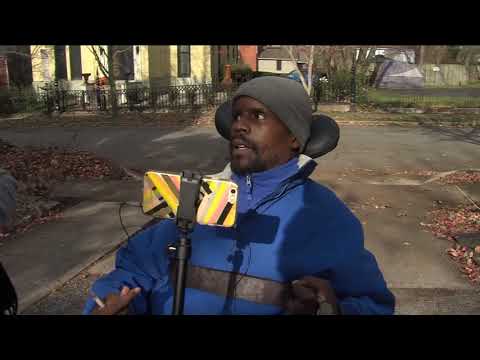

No comments:
Post a Comment