Robbert Dijkgraaf is Head of the US Institute for Advanced Study.
Once home to Albert Einstein.
Dijkgraaf lives on the campus of this sanctuary of science.
He introduces us to scientists who have dedicated their lives to the future.
Thinkers, dreamers, explorers, researchers.
Their knowledge is spreading across a global network.
What will happen when we connect all that knowledge?
Does it make us the thinking part of the universe?
The mind of the universe?
Dreams nourish our ideals. Our culture, our humanity, and science.
Einstein was 16 when he daydreamed about keeping up with a beam of light.
That question led to one of the most exceptional theories ever.
The theory of relativity.
A daydream that changed the world.
Dreams precede science.
The theory of relativity gave us important explanations...
...for gravity and black holes.
It teaches us about the universe's grandest structures.
But there's another special theory. That of quantum mechanics.
That explains the relationship between the smallest particles.
Together, they'd form a theory that explains everything.
That can answer the biggest questions.
Why is the universe the way it is?
And how did time, space and matter start to exist?
The dream that the world is knowable. That humans can understand reality.
Juan Maldacena does research at the Institute for Advanced Study, Princeton.
A sanctuary for fundamental research.
Scientists from all over the world come here...
...to study the big questions of our existence.
Following Einstein's lead...
...Maldacena tries to expand the famous theory of relativity.
Dreaming may be the basis of all science.
And the results are unlimited.
Much of what is now ordinary was once seen as impossible.
Flying. Landing on the moon.
In the late 19th century, the Russian Tsiolkovsky dreamed of a real rocket.
In his words: The Earth is the cradle of man.
But man can't stay in his cradle forever.
The rockets literally and figuratively took off.
But with the theory of everything that Maldacena dreams off...
...we might penetrate the universe much further.
Rick Tumlinson is from a real pioneer family.
His ancestors were among the first settlers of Texas.
He's founded companies aimed at the next step in mankind's expansion.
Leaving our cradle and colonizing space.
A genuine space cowboy.
Every year, the Battle of Gonzales, 1835, is re-enacted.
It was the start of the fight for independence of the state of Texas.
Historian Vicki Frenzel wrote a book about the battle.
She knows how important the Tumlinsons were to Texas' origins.
Dreaming we will one day know what our place in the universe is.
How it all began.
Perhaps dreaming is the only way to cross the boundaries of our thinking.
Imagination breaks through all barriers.
Look at Africa, for instance. A huge continent.
Torn by civil wars, corruption, ecological disasters.
But also with enormous possibilities. Dreaming is very much needed there.
And that's what Segenet Kelemu does.
Segenet Kelemu is the head of ICIPE in Kenya.
The world's largest insect institute.
With their knowledge, she dreams of the resurrection of the lost continent...
...as Africa is sometimes called.
With sustainable agriculture, new food and new medication.
Segenet discovered that many insects are full of natural antibiotics.
The pharmaceutical industry can develop new medicines with them.
Grasshoppers for instance are full of substances that lower cholesterol.
Finding the solution can take years of research. Or even centuries.
That's why the dreamer wants to start yesterday. That makes him impatient.
For how will we survive in space, for example?
Which dangers will we encounter, which diseases?
How can we get food on the moon?
All basic skills for survival have to be reinvented.
One of Tumlinson's enterprises is Deep Space Industries.
He studies whether the floating rocks between Mars and Jupiter are usable...
...and could provide space colonies with raw materials.
Imagination breaks through all barriers.
Albert Einstein put it nicely: Logic gets you from A to B...
...but imagination gets you everywhere.
But we can't dream too far ahead. We have to know what we're doing too.
Fortunately, Maldacena is working hard on his unifying theory.
The theory of everything.
When he's found it, space travel may even go further.
Between galaxies, or through time.
That all-encompassing theory, that explains how our universe began...
...where we come from, is the Holy Grail of Physics.
We know that Nature found the solution, because the universe works.
But can we wrest its secret from Nature?
The quantum theory and the theory of relativity are the best proven ones.
But there must be a truth behind them that unifies them.
A new theory of elementary particles, the building blocks of matter.
Countless books were written about it, and they all explain a small piece.
How can you put these puzzle pieces together to form a new image?
The theory of everything.
If Juan Maldacena finds it, he will be the new Einstein.
He surpasses by far what we are able to imagine.
In the string theory, all elementary particles we know...
...are different vibrations of the same, even smaller string.
Like the tones of a violin string.
If Maldacena can find his theory, it'll have consequences for all of us.
Then we'll know where we come from. And maybe even much more.
For that's also part of dreaming: You don't know where you'll end up.
Sometimes a theory is smarter than its creator.
Maybe we don't have to understand Maldacena's new theory.
He has to keep thinking and dreaming.
If that helps us and our children to understand the universe...
...and perhaps ourselves, the dream has been worth it.
Daring to dream.
If Maldacena's dream comes true, it will be the 21st century greatest discovery.
In a dream, anything is possible.
Living a dream takes courage and perseverance.
That's why Segenet Kelemu followed her own path, even as a child.
Fortunately, Segenet didn't marry young, and could go to college.
Her dreams can make the lost continent flourish at last.
Her institute found a remedy against the corn borer...
...that has threatened maize harvests for years.
This find leads to a new technology...
...that could make Africa self-sufficient in the long run.
While Kelemu is in a hurry to bring a whole continent to life...
...Tumlinson has worked for thirty years to do this in space.
Conviction and passion are needed to make dreams come true.
There are always barriers to overcome.
Because you are wrong until you prove you are right.
Or, as Steve Jobs once said:
Those who are crazy enough to think they can change the world, will.
Can symbols and formulas on paper ever describe the universe?
Maldacena thinks they can.
His formulas lead to a completely new insight.
The holographic principle.
The insight that our three-dimensional space is like a hologram...
...called up by the projection of a two-dimensional photograph.
This could mean that the space and matter we see around us isn't real...
...but a projection of another reality. One we can't perceive any other way.
Almost impossible to comprehend.
But with the theory of everything, that Maldacena dreams about...
...we may be able to penetrate the universe much further.
That may be true for Segenet Kelemu's dream as well.
This will be the century of Africa. With new knowledge driving progress.
The dreamer sketches panoramas, and sees what's beyond the horizon.
A new world, a better understanding, a different future.
Once, we could only dream of space travel.
In 1969 we stood on the moon.
The dreamers of today give us the science and technology of tomorrow.
Sociologist Harry Edwards said we must teach our children to dream...
...with their eyes open. Because in dreams, we see the future.
That too is the Mind of the Universe.
The complete interviews in The Mind of the Universe...
...can be downloaded from the website.
Discover unique excerpts that weren't broadcast...
...or create your own programme.


 For more infomation >> Mercedes-Benz E-Klasse E280 CDI Avantgarde Aut7 | Garantie | Nieuwstaat | Lage km | Full Opties - Duration: 0:54.
  For more infomation >> 🔴 3 ANIMES QUE FORAM BANIDOS DA TV ABERTA BRASILEIRA ‹ Vicio Nerd › - Duration: 3:36.
  For more infomation >> PALMERAS DE FRUTAS | POSTRES DIVERTIDOS # ADELGAZAR SIN HACER DIETAS - Duration: 1:31.


 For more infomation >> HOW TO CALCULATE YOUR BF AT HOME - Free Table Download - Duration: 9:00.
 For more infomation >> Моя ПЕРВАЯ сотня! - Duration: 6:34.
  For more infomation >> Forogtunk mint a dugóhúzó sétavitorlázás önállóan - Duration: 1:08.
  For more infomation >> Renault Captur 1.5 dCi Dynamique (R-link/Climate/Cruise/PDC/17''LMV) - Duration: 0:54.
 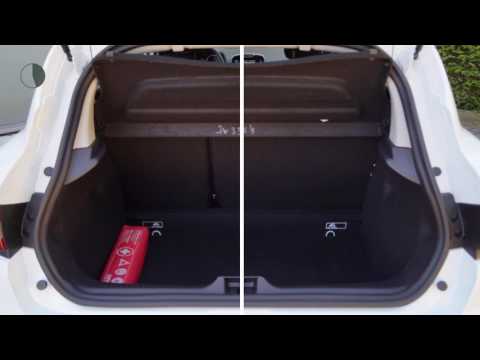 For more infomation >> Renault Clio TCE 90pk GT Line (CAMERA!!!/R-link/Climate/Cruise/PDC/16''LMV) - Duration: 0:59.

 For more infomation >> T-SKIEP : Début d'Soirée (beat by Serge Crown) - Duration: 2:21.


 For more infomation >> Brouwerij De Kromme Haring • Tasty Tales - Duration: 4:51.


No comments:
Post a Comment