In my last video, we explored how analog television works.
You can check out the whole video either through this card or through the link in the description,
but here's a brief overview.
At its core, analog television is just an amplitude modulated radio transmission where
the strength of the signal dictates brightness of a light source, with a strong signal producing
a bright light, and a weak signal producing little to no light.
The television set uses an electromagnet to deflect the source of the light, an electron
beam, in a pattern called a raster, which is really just a ton of horizontal lines.
This has the effect of producing a glowing series of lines on the face of a picture tube.
The electronics of the TV set line up the incoming signal with the movement of the beam
to create an image, with each part of the imaging being drawn brightly or darkly along
with the signal's instantaneous strength.
With everything in alignment, you get an image.
By far the most complicated part of making an image appear on the screen is making that
raster pattern.
The electronic components and other crucial parts such as the picture tube and deflection
yoke are primitive by today's standards, but still pretty complicated.
We really just need a way make a repeating pattern of lines from a light source, there's
got to be a simpler way to do it!
Enter: Mechanical Television.
The earliest televisions actually got some of their inspiration from fax machines, really?,
and relied on a couple of important developments.
So first a bit about the fax machines.
Facsimile transmission actually predates the telephone?
(what?), with images such as signatures being commercially reproduced over telegraph wires
as far back as 1865, and the earliest fax-like device being invented by Scottish inventor
Alexander Bain in 1846.
Now, I'm simplifying a great deal here, but the theory was that if you could synchronize
the movement of a scanning device with a drawing device, you could replicate an image.
If you scanned a piece of paper line by line and sent a signal over a wire to match the
darkness of the ink, you could reproduce the image by syncing up a drawing mechanism with
the scanning one.
These early fax machines worked, but they were very slow.
Nevertheless, they showed us that you could, via electro-mechanical means, reproduce an
image.
Fast forward to 1884, and 23-year old Paul Julius Gottlieb Nipkow created the Nipkow
disc.
This is the core of most mechanical television systems.
Nipkow realized that a spinning disc could methodically scan an image line-by-line simply
by placing evenly-spaced holes in a spiral pattern.
This is a home-made Nipkow disc.
I took a really awful vinyl record that I'd be happy to destroy, and marked 32 divisions
around the circumference, like 32 very skinny pie slices.
Then I methodically drilled a hole along these lines, with each hole being drilled a 32nd
of an inch (roughly .8 milimeters) closer to the center than the last.
The result is a spiral pattern of holes.
This might not seem like much, but it's actually extremely clever.
If you put a square-ish shaped mask in front of the holes, its height being slightly less
than the distance between the holes, you've made a device which mechanically creates a
raster scan using these physical holes.
John Logie Baird realized that with this Nipkow disc, you could in theory focus an image with
a lens onto the disc, and you could use a light sensor to give an instantaneous reading
of how bright each part of the image was, with the holes in the nipkow disc serving
as a way to divide the image into transmittable pieces.
Back in 1873, Willoughby Smith discovered the photoconductivity of selenium, and with
this knowledge Baird used some selenium to create the light sensor for his televisor.
I've mounted this Nipkow disc to an AC motor which will spin it at 1,800 RPM, giving a
complete revolution 30 times per second.
Before I turn it on, look through the mask.
I've put an extremely bright LED behind the disc so you can see the holes.
As I slowly turn the disc, you'll see that only one hole is visible at a time, and each
hole gets closer to the left than the next one.
When I switch the motor on, the holes blend into a moving line, and as it gets faster,
the line seems to widen into a square.
This square is very uneven because my homemade Nipkow disc was made hastily and with poor
precision.
But here's the key.
Only one of the holes is actually visible through the mask at any given moment.
It's just moving too fast to see.
Baird used the selenium light sensor to create a signal from an image being scanned by the
disc, and on the receiving end, another identical disc would spin at precisely the same speed,
and a light source such as a neon lamp would vary its brightness along with the signal
strength presented by the light sensor, and thus, you'd get an image.
I shall now attempt to show you how this worked.
Now before you get too excited, I'll admit that my mechanical television doesn't work
as well as I had hoped.
And that's all on my insistence in using crap I had laying around, rather than going
through the process to make a proper LED driver.
However, I hope you'll get an understanding of what's going on.
This 10W LED chip is what we'll use as a light source.
It's really bright and, importantly, it can react very quickly to changes in the voltage
it receives.
First, I'll simply power the LED continuously.
As the disc spins up, the lines start to blend into each other, and eventually the whole
"screen" is illuminated.
Now, I'm going to switch the LED on and off at a higher and higher frequency.
First, 5 hz.
The screen appears to just be flashing, nothing too extraordinary, but you might be able to
see some odd stuff happening as the light switches states.
Now I'll switch it on and off at 60 hz.
Something odd starts to be visible here.
See, the disc makes a complete revolution 30 times per second, and with the light flashing
at twice that frequency, only some of the holes are lit up as the disc passes over the
LED.
Now let's move to 1,800 hz.
Frequencies that are a multiple of 30 will appear stable as an even number of pulses
fit within each revolution.
If you mess with that, though, things get weird.
Bumping the frequency up just a tad makes the pattern move in relation to the disc.
The holes in the disc are directly responsible for creating the patterns you see.
Without the disc, the LED appears to just be continuously illuminated.
But, it's not.
It's flashing really quickly.
The disc allows for that flashing to be visible because it physically obscures different parts
of the light source over time.
This is just like the electron beam in the CRT television, except instead of electromagnets
moving a beam across the surface of a picture tube, the light source is physically moved
via the location of these holes.
It's a pretty crafty way of producing a raster scan, and it actually works.
This is the best imagery I could get my televisor to produce.
This pattern was generated through manipulating audio samples in Audacity.
To give you an idea of how poorly this mechanical TV works, well the image I intended to make
was not a map of the world as this vaguely suggests, but that of a circle.
Here's a look at true video.
What you're seeing here is a very low contrast, very low resolution image of Seth Meyers.
I mean obviously, how could you not recognize him?
Yeah OK, it's garbage, but you can see that there is certainly something there and it's
moving slightly.
Like a talk show host's head might when said talk show host is talking.
On his show.
To make this image, I simply placed my phone behind the televisor with the screen brightness
all the way up, and I placed this solar panel with an audio cord patched into it into one
of my trusty Tascam DR-05 audio recorders, which I use all the time.
In fact there's one in my pocket right now.
And yes, that's directly from a solar garden light.
The solar panel would produce a high current whenever it saw bright light, and it would
produce low current with less light.
Duh.
As the disc spun, it would only allow the tiniest bit of the image through to the solar
panel at any given time.
This would produce a quickly varying signal with amplitude corresponding to image brightness.
The TASCAM would just encode these relative brightnesses as sound samples, at a sample
rate of 48 kilohertz, and then because I'm really lazy, I just hooked my LED into an
audio amplifier and played that sound back.
The LED would become brighter with a stronger signal from the amplifier, though as it's
a diode it would filter out any AC components of the signal.
Quite honestly I'm amazed it produces anything at all.
I opened the file in Audacity just to see what it looked like, and it's pretty intriguing.
Here's what it sounds like, for those interested.
Now, in case it's not obvious, let's go over the reasons mechanical television didn't
catch on.
First, up until now, I've not let you hear what this sounds like.
Here's what a 12 inch vinyl disc sounds like at 1,800 RPM.
I'm sure that would never get old.
But aside from that, there are just so many practical concerns with mechanical TV.
First of all, the image is tiny.
And it's a horribly low resolution--only 32 lines.
That's the only reason a signal can be recorded as an audio file.
Not a lot of bandwidth is needed.
Because the disc obscures almost all of the light source, hardly any light gets through.
This LED is fricken bright, it's painful to look at directly, and yet through the Nipkow
disc, nearly all of the light is blocked, and it produces a dull image.
When these devices were first in development, the light source would often be a neon lamp,
like the orange light in a powerstrip's switch.
Imagine how dark the image would be with only that for a light source.
One of the biggest troubles with mechanical television is image synchronization.
Because we're using a big spinning thing to divide the light into chunks, the disc
has to be in precisely the right place if you want the image to land where it should.
If we take the mask away, you can see that the image just repeats itself over and over.
But each adjacent image is actually shifted one line up or down.
The most critical part of synchronization was ensuring the disc is spinning at the exact
same speed as the scanning disc of a camera, but it would also be necessary to slow down
or speed up the disc in slight increments to get the image aligned with the viewing
mask, and with the top and bottom in the right place.
But the most damning problem is that of geometry.
Imagine we wanted to make a display with the resolution and size of this small CRT television.
Well, the face of the tube is about 15 cm wide.
With 480 lines of resolution, there would need to be 480 holes in the nipkow disc.
Remember, only one hole can be seen through the mask at once for this to work, so the
holes have to be at a minimum 15 centimeters apart.
So the disc's circumference would have to be 72 meters, with a diameter of roughly 23
meters, or about 75 feet.
I live in a building that's 6 stories tall.
A mechanical television to rival this TV would be taller than my building!
And, it would have to spin at 1,800 RPM just like this one to make 30 frames per second
possible.
This things scares me spinning this fast.
I'm pretty sure a 75 foot disc would just explode.
In fact, let's do the math.
A 72 meter circumference means that the edge of the disc would travel 2.160 kilometers
per second, or well above mach 6.
Yeah.
If the disc were rolling, it would make it from New York to Los Angeles in about 35 minutes--not
in a straight line, mind you, but by traveling along actual roads.
So, the Baird television system didn't get too far.
It was certainly genious and is an important part of the history of television.
But is was far too limited, clunky, and, to be honest, it had crappy image quality.
I've added some links in the description to videos of mechanical televisions that actually
work, and I think you'll agree that's they're pretty cool, but it's a damn good
thing they didn't become mainstream.
As always, thank you so much for watching.
If you liked this video, a thumbs up would be most appreciated.
I'm absolutely thrilled that this channel has over 21,000 subscribers now!
I never thought that would be possibl.
If you're not one of the people in that number, and you liked this video, I humbly
ask that you become one of them by pressing that subscribe button.
I'm doing my best to keep videos like this headed your way, and I'll see you next time!



 For more infomation >> Michael Hall Fala Sobre Neuro-Semântica e Autoliderança (Acessando Seu Gênio Pessoal) - Duration: 2:23.
  For more infomation >> Peugeot 108 1.0 e-VTi 68pk 5D Active !! ACTIEPRIJS RIJKLAAR !! - Duration: 0:54.
  For more infomation >> 💎💎💎 A ciência para ficar rico | riqueza e abundância | prosperidade.💎💎💎 - Duration: 5:15.
  For more infomation >> Sopa de Tomates Assados - Duration: 4:26.
  For more infomation >> Fragile Dreams: Farewell Ruins of the Moon | Wii | Gameplay Comentado | Parte 16 - Duration: 30:37.
  For more infomation >> Tag dos Livros Nacionais (Brasileirinho) - Duration: 4:22.
  For more infomation >> Com saída de massa de ar frio, calor volta ao Triângulo Mineiro e Alto Paranaíba - Duration: 2:16.
  For more infomation >> QUEM É MAIS PROVÁVEL? | Sou Estrangeira - Duration: 9:23.

 For more infomation >> Steven Universe - Being a gem is dangerous - (PT-BR) CC - Duration: 1:46.
 For more infomation >> The King of Fighters: Destiny - Episódio 1- LEGENDADO PT-BR - Duration: 20:00.
  For more infomation >> SER SOZINHO NÃO É SER TRISTE - Duration: 5:18.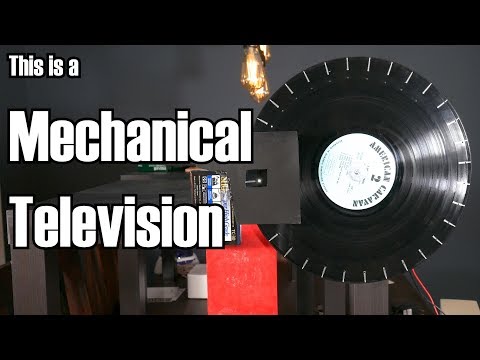
 For more infomation >> Skoda Fabia - Duration: 0:51.
  For more infomation >> Virgilio Ruiz García murió baleado | Al Rojo Vivo | Telemundo - Duration: 2:49.
  For more infomation >> FONDUE DE CHOCOLATE • PROTEICO & ZERO AÇÚCAR | FarofaFit por Gabi Castejon - Duration: 3:47.
  For more infomation >> Skoda Rapid - Duration: 0:51.
  For more infomation >> Skoda Fabia - Duration: 0:51.
 For more infomation >> CKY - Replaceable
 For more infomation >> Video: Don't get political on these social media pages - Duration: 1:46.
  For more infomation >> Nissan Pulsar 1.2 DIG-T N-Connecta *€ 3.800 VOORRAADVOORDEEL* - Duration: 0:54.



 For more infomation >> Requested changes for DMO - Duration: 6:18.
  For more infomation >> Minecraft short the floor is lava - Duration: 0:34.


 For more infomation >> Video: Camp Achieve helps inner city kids get healthy - Duration: 1:33.


No comments:
Post a Comment