Sunday, June 25, 2017

Youtube daily report w Jun 25 2017

As far as for future of city trams in Łódź we do not need to worry,

they will be successively repaired and rolling stock exchanged,

but in case of suburban trams

there is a high risk of imminent suspension of most of today's active connections.

Is such connections a relic of the past

or could a suburban tram be an efficient and essential element of Lodz Metropolitan Area transport network?

We'll talk about this in this episode.

Let's watch!

Lodz Suburban Trams

Suburban trams were created in this area for good reason.

Around Lodz, especially on north, west and south,

there were urban centers

connected with Lodz industry.

This condition generated movement of vehicles,

which, as it is today,

was concentrated in Lodz.

Already at the beginning of 20th century,

Łódź downtown was crowded with passenger and freight traffic

in form of thousands of coaches and carriages.

An alternative means of transport was sought,

which would provide a mass transport of people and goods

from suburban Lodz area cities and towns.

Outside Lodz borders, first tram left in 1901.

Two lines started then: to Pabianice and Zgierz.

Later, network was further developed,

among others: to Rzgów and Tuszyn,

Konstantynow, Alexandrow,

Ozorkow and Lutomiersk.

In period of biggest prosperity

network outside of today's Lodz borders counted over 63 kilometers of tracks.

It was about as much as

today's tram network in Szczecin,

which is the seventh tram network in Poland in terms of track length.

In 70s and 90s of last century,

a total of 1/3 tracks were closed,

leading to: Rzgów, Tuszyn and Aleksandrów Łódzki.

As a result, today's Lodz suburban tram network is about 42 kilometers long.

Cities and towns connected with suburban trams have reached different sizes.

A small Lutomiersk is inhabited today by about 1,500 people;

there are also not very large cities such as Konstantynow Lodzki or Ozorkow.

Other two cities covered by tram network are already quite large

- Zgierz and Pabianice.

For this reason, from perspective of mass transit,

most important routes for network are lines to Zgierz/Ozorkow and Pabianice,

because in their range there are tens of thousands of people.

In turn, Rzgow and Tuszyn,

which were already more distant from Lodz

(the route was more than 15 kilometers long)

did not reach the size of large

– in both cities live slightly more than 10 000 people.

It was not a surprise to me that line was closed.

The most regrettable, however, is tram route to the Lodz nearby Aleksandrow,

inhabited by over 21 000 people.

To ensure a car-independent, rail-based transport

it was only enough to maintain an almost 4.5-kilometers-long section of track.

Anyway, memories of trams have remained here today.

In city center section of track was preserved

and to old tram model was referring restaurant name "Herbrand".

There is a medical center right now.

Longest suburban route is line 46 to Ozorkow.

Line in total is almost 31-kilometers-long,

of which 19 km are outside of Łódź.

A full ride on this route can last up to 2 hours,

of which 70 minutes will be spent on a suburban segment.

This gives a very low transport speed for this section about 16 km/h.

In meantime, car going this route will be even 3-times faster than the tram,

which is already a huge chasm in quality of both connections.

A little more absurdity will add fact

that we will quicker arrive from Lodz center to about 140 km away Warsaw, than to Ozorkow.

It did not surprise me that

too many passengers did not take the tram on the full section between Ozorkow and Lodz

and most passengers used trams on inner Ozorkow section

or on route between Zgierz and Lodz.

Trams on line 46 run every 24 minutes on weekdays

and most importantly suburban section is serviced almost 24 hours a day.

Financing operation of suburban routes after 1989 fell to boroughs,

where the tracks are located.

This is only source of money for maintenance, despite fact that lines are relevant for entire Lodz agglomeration.

Last years of suburban network were marked by further exploitation

combined with lack of funds for modernization of lines and minor emergency repairs of critical failures,

although exception was in principle case of Konstantynów city,

where with renovation of provincial road, modernization of track was undertaken.

In long run neglect has led to numerous speed limits of

up to even 5 or 10 km/h,

resulting in very low transport speeds.

Unfortunately, on some sections track or traction network was brought into such a state

that the carrier was forced to suspend tram traffic.

This happened for 9.5 km section from Lodz to Pabianice

and an 8 km section between Konstantynow and Lutomiersk.

Suspension due to technical condition also threatens the longest line to Ozorkow.

Of course money on modernization is a difficult topic.

Scale of projected expenditure is enormous,

accounting for 70% of annual budget of all the municipalities covered by tram routes.

But EU funds are still available.

A problem may even be to collect own contributions.

It is problem for small boroughs, through which tracks run on route to larger cities.

The solution that would come to mind would seem to be support from budget of the voivodeship,

because these connections according to Act on Public Transport

are serving at least 2 poviats,

so they are voivodship connections.

However, authorities of voivodship have no interest in these projects.

In any case, this is definitely last bell if they want to take advantage of EU funds

that will no longer be so plentiful in next funding prospects.

Even if it will be managed to raise funds, you will still be asked what to do next.

It will soon be necessary to rethink issue of providing funding for line maintenance

and accumulation of funds for future upgrades.

There are various estimates of modernization cost of this tram network,

although some of them include considerably wider upgrades,

including repair of nearby roads

and purchase of new rolling stock.

Total cost would also depend on transport parameters

of upgraded suburban trams.

Due to nature of routes,

fewer intersections

and numerous single-rail sections,

it is reasonable to assume an average cost of 10 million PLN

per kilometer of repaired route.

Total cost of modernization of all routes

can be estimated at about 420 million PLN.

Why at all consider maintenance of such a construction as a suburban tram?

Tram has its usually separate corridor,

most of which is independent of traffic,

thus contributing to the capacity of access to Łódź.

We have single-track sections that allow traffic in both directions,

in case of cars, it would probably end up with an extra lane on only one side,

which would go wrong with goal of improving capacity.

Tram therefore takes up less space

than road network will need,

after it has been supplemented by more cars and buses

that would have to replace trams.

Probably no one would be talking to close trams,

if it had good traffic parameters, i.e. normal transport speed.

Trackways are mostly located centrally through villages through which they run,

so within the reach of most of residents.

Tram can therefore be backbone of transport from suburban cities to Łódź,

but also provide transport to Lodz Agglomeration Railway stations.

Rail stations are rarely located,

but trains are moving faster,

while tram stops are densely located,

even every few hundred meters.

Such a transport model could thus increase the accessibility of railways to residents of Pabianice,

Ozorkow, Zgierz and surrounding villages.

In Ozorków, for example, needed is only section of just 700-meters-long trackway

from Cegielniana loop,

so that trams could reach Ozorków New Town railway station.

In Pabianice there is already such a place for integration.

Perhaps it is also worth to make a transfer point in Zgierz

by moving 900-meters to east Zgierz North Station?

Proposal of Lodz President

to replace trams with electric buses

moving on separated buslanes has been widely discussed.

Such a concept is missing primary goal of introducing this means of transport to cities,

i.e. reducing emissions in central areas, densely built

and exposed to high emissions of traffic.

In addition, electric vehicles are recommended for urban route with high numbers of stops,

which allow them to recharge vehicles more and recover energy from braking.

There is also a question of more space that they would have to occupy.

On many sections the buses would have to share lane with cars,

which could cause congestion

and buses themselves would block route while stopping at bus stops.

Deterioration of traffic conditions would feel both sides of such change.

Regional tram networks you will also see in Upper Silesian conurbation

or in our western or southern country neighbors.

In one of episodes you saw Czech Most and Litvinov cities

- there is intercity section for trams reaching transport speed of 33 km/h.

Both cities have over 90 thousand inhabitants

and tram line connecting both cities is about 16 kilometers long.

Interesting case is a two-system tram

operating in Karlsruhe.

There, trams are moving in a regular track in area of city and on regional section using rail tracks.

Transformation of railway lines into a dual-mode regional tramway

has resulted in an increase in number of passengers,

to which has been provided direct access to many of 300,000 Karlsruhe's destinations.

Lodz Suburban Trams are national phenomenon.

This year for many routes it may be decisive

as infrastructure is already close to state of technical death.

Will there be means and wills to maintain this type of connection?

At same time, agglomeration railway is a small alternative to today's existing tramway connections,

but it may be a plan

to shift the pressure in locating inhabitants of cities and towns towards the railways.

It can guarantee a faster transport to center of Lodz,

though with less availability of stops and train stations.

On direction of changes in transport network of Lodz agglomeration we will not have to wait long

because coming years will probably be decisive for suburban tram network.

Meanwhile, great thanks for your attention and see you next time!

For more infomation >> Łódzkie Tramwaje Podmiejskie / Lodz Suburban Trams - Duration: 16:35.

-------------------------------------------

COMENDO PLANTAS na CASA da ÁRVORE | Travel and Share | Romulo e Mirella | T4. Ep. 196 - Duration: 8:48.

For more infomation >> COMENDO PLANTAS na CASA da ÁRVORE | Travel and Share | Romulo e Mirella | T4. Ep. 196 - Duration: 8:48.

-------------------------------------------

→BUMBUM GRANDE & TURBINADO! Teste Estes Exercícios Para Aumentar Seus Glúteos. Como Aumentar Gluteo - Duration: 4:18.

For more infomation >> →BUMBUM GRANDE & TURBINADO! Teste Estes Exercícios Para Aumentar Seus Glúteos. Como Aumentar Gluteo - Duration: 4:18.

-------------------------------------------

BRAWL STARS PER ANDROID? - ATTENZIONE ALLE APK VIRUS! - ITA - Duration: 1:01.

For more infomation >> BRAWL STARS PER ANDROID? - ATTENZIONE ALLE APK VIRUS! - ITA - Duration: 1:01.

-------------------------------------------

William shows how a guitar becomes a gitouki - Rapalje show 15 - Duration: 6:02.

Hello I'm a Maceál from Rapalje and in this show

William will show you

how I changed, modified and ruined

a perfectly fine guitar

Ride on

See you

I could never go with you

No matter how I wanted to

Hello I'm William From Rapalje

and I'm the one who's going to explain something about the instruments in the band

Because you had a few questions from

Malvina from Poland

and Michael from Germany

David is going to tell something about the bag pipes and Dieb about the fiddle

but my question been special about the gitouki

Which I actually learned to play for the band Rapalje

before I start playing this

kind of music I was only playing the guitar

the mouth organ and a tambourine

Which you will see in another version of the Rapalje Show and

And, eh

I have to stretch my T-shirt a bit

Because it's from a special band from Germany

Friends of mine and they gave it to me. But it's much to too small

for my lovely big body

So to Knasterbart:

Please buy bigger T-shirts! Yes?

That was in German

Good day, Michael Hyde

and good day

Malvina

These two people have special questions

About the instruments

Which being used in the band Rapalje

Michale Hyde, he's been asking

I'm interessed

How you modified your instruments

Or what so special is for your sound

I mean: It only takes a few seconds from your instruments

And you know that you are on the stage

Well, thank you very much Michael, that we are so recognizable about our instruments

And Malvina, she's been asking

Hey Guys I would love to know more about instruments you are Playing

Maybe you could tell something About it

Well that's what I'm going to do now

Now is one of these instruments I'm holding here

Is a

The gitouki

and it's very specialized because he's got an

It's a D

Bass string

that makes it very special

And, eh

In the other versions

Maceál is going to talk and tell something about his

mouth organs, his accordion

and I'm gonna explain something about the shape of this instrument

It actually was a guitar

Which been B shaped

with a Jigsaw and Maceál

if you look at very

by the close-up

you can actually see here

This's still this shape of the instrument stops here

It actually went like this

And like a

And this side the same

A sort of an accident with a jigsaw

And this is what made it it's special shape

The gitouki

Now I explain about this instrument

I'm gona

Show it also by starting a song

But the tuning of this instrument

is actually for lazy people

I think my colleague Maceál is a very lazy bone. It must be

Because actually invented this Instrument

but not because he's so lazy but just because he gave it a special sound

Actually its tuned like a guitar

Without the E and the A string

It's just like

it starts with a D string

the G string

the B

and a high E

And it gives a sound like this:

We've been through some fine things together

Chunks of memories still go on

We found things to do in stormy weather

Long may you run

Long may you run, baby

Long may you run

Know these changes had come

With your chrome heart shining high

In the sun

Long may you run

For more infomation >> William shows how a guitar becomes a gitouki - Rapalje show 15 - Duration: 6:02.

-------------------------------------------

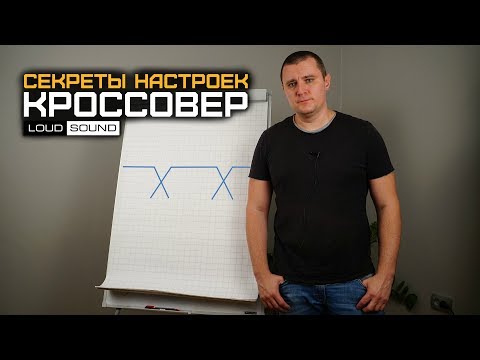
Caraudio. The Secrets of a Good Setup. Episode 1. X-over - Duration: 47:48.

Hi, everyone. This is LOUD SOUND.

Today, we're starting our new section, 'Sercrets of Audio Setup'.

My expertise regards car audio, but all you learn here can be applied to any sound setup.

It is all very alike. The bottomline is understanding the principle.

I will try to put it plain and simple so that your mom, on seeing this, could go and set your system up.

We're going to start this section with setting up a crossover. To my mind, it's the most important part.

That's what I always start with.

If your crossover is not set well you may not pull up max capacity of your speakers,

or you could burn your speakers, or your speakers can sound poorly.

We have the whole frequency range. Let's picture it as a straight line.

We can divide into three conventional parts. In fact, there are a few more, but we'll go with three.

Those will be 'the Bass', 'Mid-range' and 'the Higher pitch'.

And when you open your HU's Xover settings, if it's well-developed, you can see a picture like this.

As a rule, the developed Xovers are 3-way: bass, mid-range and higher pitch.

But there are certain HUs, like Pioneer 99, which have more bands to it.

This is the picture you see once you open the Xover settings in your HU ot processor.

This is the most common and the most understandable visualization of sound.

Meaning where the sound will stop playing and how roughly it will stop.

So, we enter and see this. This is the whole frequency range.

If we loosen up the Xover - the majority have this option -

This like here will straighten up into this one up here which means all bands will be playing all frequencies.

That is very wrong and you should never do that.

Why's that?

If we don't cut tweeters at this point and let them play all the frequencies below it, they're very likely to burn.

Your tweeters will have to play frequencies they are not supposed to play.

With a sub, if we loosen it up and let iy play above this, it will humm and play vocal parts.

This means, the power will be limited, and the sound will be crappy etc.

With the mid-bass, it's the same as with tweeters if we don't cut them at the bottom,

it may burn or fart

If we clip it wrong on the top, tho, nothing horrible is gonna happen. This part is the most forgiving.

Here, you can loosen up the top, play with the bottomline. Nothing bad's gonna happen.

Speakers like mid-range or mid-bass have natural muting on the top line of their range.

If they're set to play the frequencies they can't play they will lose some of the power, not much,

and if their range crosses paths with those of a tweeter, we might have a bump here.

At this point, it would be very interesting to answer the question I've been asked pretty often.

People have been accusing me of the fact our setting looks like this.

The frequrncies cross, and people ask what happen on these crossings, all the time.

It is like there is a sound loss. And so they ask what id played here, if this is 63 Hz, and this one's 25 Hz.

What is playing the frequencies in between.

If your ceossover has these parameters of clipping, this doesn't mean that this part is completely muted.

It is most likely there will be sound here.

And here is the hardest and the most intriquate part of the setup process - you gotta HEAR it.

You can't set a system using just the numbers.

I'm often asked, what frequency should a mid-bass be cliped at?

I always say, you can only do it by ear.

There are some directing points, some basic standards,

and very often you have to alter the order or the clipping frequency.

If you're not into this, you must be having a huge mess in your heads about what's what.

Today, I will tell it all to you in as much detail as possible.

If you still have questions, you're welcome to ask them in the comments.

We've reached the orders and the clipping frequencies.

So, let's grab one band. Let's say, it's subwoofer.

Initially, with all filters off, the sub plays all the frequencies. We need to cut it down to those necessary.

There are several ways to do that. First, you can clip it on your HU.

It's going to be called LPF.

The new HUs have crappy localization and interface translation, tbh.

Sounds bad ennough in English, and when they transalte it into Russian, something weird happens

There will b some frequency, some '-24 dB'. People don't understand what it means.

In the sub settings it's usually called LPF, and there are three parameters there.

In fact, every filter we're going to cover has three parameters.

Those are volume, clipping frequency (let's call it Freq) and clipping slope.

The slope denotes how steeply the band is going to mute or fade away.

In the Xover settings, each of these bands can be controlled in three directions.

Gain will be responsible for the band's volume.

So if we change the gain on the sub, the volume will go up or down.

Freq is the clipping frequency. Roughly speaking, let's check out this line where every frequency is played.

Let's say, we can choose from 30, 50, 63, 80, 100 Hz.

Usually, subs are clipped at 50 or 63 Hz, no lower, no higher. Very rarely, in some systems, they are clipped off those limits.

63 Hz is usually the freq for an SQ system when we need to retrieve more frequencies from the sub.

and to make it go well with the mid-bass.

In SPL systems, we don't need those frequencies because they humm, so they're left out.

Subs are clipped there in those SPL systems where the pressure peak is at 55-60 Hz.

In this case, it's better if you set the freq at 80 Hz but it's the peculiarity of the setting.

Okay, so let's pick a frequency. Habitually, with a SPL system, you start at 63 Hz.

So we clip it at 63 Hz.

So this will make our clipping frequency.

And the sound sent to the subwoofer low to high will start breaking here, at 63 Hz.

This doesn't mean that after 63 Hz the sub stops playing at all.

It starts playing quieter.

And the degree to which it starts plating lower is called the slope of muting or the order.

This parameter is measured in decibels (dB).

It's actually, dB/octave. In order to not go in too deep with the octabe explanations, let's assume it's this much on the frequency spectrum.

So the extent to which the sound gets quieter within this frequency band - say, here it's 24 dB - is the order or the slope.

Those horrifying figures you see - 6, 12, 18, 24, 36, 48, those are the order or the slope.

Ideally, in the coolest HUs and processors the order is 46 dB/octave, I think.

Which means the sound is almost going to go away completely after this frequency.

The lowest order is usually 6 dB/octave

And in this case, the sound is going to fade away gradually.

Clearly, the subwoofer is going to continue playing frequencies until this line goes down to zero volume.

This zero volume is not absolute. It depends on the volume you're listening to your music to at the moment.

So if you can't hear a sound at a certain volume, you kick up the volume, and you start hearing the sound.

This is another setting trick. Sometimes, to get a frequency we want, we need to turn up the gain

for the whole this range, for the whole band.

And then you try and play around with this thing.

Let's take a case. You clip your sub at 63 Hz with the 4th order which is 24 dB/octave.

But you don't like the fact it humms too much.

You go down to 50 Hz, again, 4th order (24 dB)

and here, you come to realize the frequencies you want are lacking. You need more of those.

In this case, we start altering the slope.

By reducing the slope, you might bring up some of the frequencies you don't hear there.

And it may be the comfortable option or you. So maybe here you should clip it with 18 dB/octave.

Later on, we can play around with the equalizer. We're gonna get there soon, too.

The equalizer looks somewhat like the Xover, but we do not chop off the frequencies as roughly there.

We can put them up or down.

Where you can find LPF. №1, it's your HU. №2 is an amp. So, an external procesor.

And it can be found in Xovers. The so-called passive crossovers.

IT's what they install in the doors. It's the worst type of filtering. You can change nothing in there.

Except for the coolass Xovers that have jumpers and stuff where you can regulate the slope, for instance.

You can regulate frequency and some other parameters, too. I saw one like that recently.

It's too hard, too painstaking to do it so I think it's better be replaced with a full-time processor.

So you can clip stuff correctly. So we write Passive X-over. And there are also active X-overs.

It somewhat reminds an external processor but in the latter, you usually set the sound via a laptop

or some control panel. They often call those rux.

An active X-over has analogue control, so you have to regulate the gain, the freq etc. with scrollers.

They are pretty rare in installs and on sale. We had some or maybe we still have leftovers. But they're not popular.

Even though the stuff's good. It's pretty cheap, it's easy to install but they're usually not flexible in setting.

Although many producers could develop this idea 'cuz it's a lot cheaper than an external processor.

So how does it look and wha should you scroll? Let's take an example.

In an HU, this is going to be called LPF, and after it there will be figures like 0, 100, 18.

As we've figured out already, 0 is most likely to be the gain, 100 is the freq, and 18 is the slope

Let me repeat myself. In HUs they're often called in a weird manner so keep looking and you'll find the figures.

On the amo, it's the very loved LPF scroller.

It usually limits the higher frequencies.

Let's say, it handles this range betwee 50 and 150 Hz.

And it often happens that when instaling a new amp - especially if the installer is not good enough -

they don't get into detail, and think this is bass boost or something, they just set this at minimum.

This is not the minimum, this turns out to be the max of the clipping.

So the subwoofer stops playing any frequencies above 50 Hz.

This figure can be different, can be lower. If you, say, clilp your sub at 35 Hz, then here, it will gradually stop playing.

We quite often have people coming in with 'weak bass'. Scroll the gain to the max, and here comes the bass.

What do you need to set? Let's say, you have an HU with this filter, and you have an external processor.

And, for example, you sure have an amp for your sub.

So we have whole three LPFs. Which one needs to be regulated?

There is no solid answer for it. The less the better. Because filters spoil the sound. Not much but still do.

So if one filter is enough for it, use that one.

For example, if you set it at 63 Hz on your HU, let it loose on the processor. And on the amp, turn it up to max so it clips nothing.

But as a rule, those scrollers let you finetune it all.

But if we have an external processor, usually we can last with all the filters off everywhere.

With correct wiring, everything can be clipped on the processor.

I think we'll have a separate video about processor setups. I will cover this matter closer in that video.

If we have a most common arrangement with an HU and an amp for the sub, you can set it on the HU only, and loosen it on the amp.

Or you can finetune it until it is perfect for your ear.

But that wouldn't do much work 'cuz the slope on an HU is always higher than that on an amp.

Amps usually have a 2nd order slope (12 dB/octave) meaning the amp won't be able to mute it down roughly.

And the HU will be muring the sound down a lot earlier.

And if you send already clipped signal to the sub, these frequencies won't be there in the first place.

This filter can actually spoil the sound. But it's something only SQers hear.

I haven't heard it spoil tat much, tbh. But you can play around with it. Why not?

Further setting goes by ear, anyway.

Now, let's move on to hi-pass filters (HPF) for the third band.

Let's see how we regulate this channel, or band.

First we'll see how we set up the id-bass speakers, then we'll move on to the mid-range, and then - to tweeters.

So, HPF or Hi-Pass Filter.

This is a filter that chops off the range the frequencies below a certain point.

Where can you find it? Just like the HPF, you can find it in your HU,

It's found in almost every HU. The only difference there is frequency.

In the cheaper HUs, it's usually limited at 250 Hz. In the more expensive ones, you can go a lot further, both up and down.

The same is with the external processors.

And with the amps, we face a funny situation. It is still a huge issue in the industry, globally, I think.

In amps, HPF filters are usually really crappy.

And there, you have to choose between crappy and very crappy.

It's cool when an amp has a well-developed HPF. But there are very few of those amps.

But they have been produced more and more lately.

Usually, those come from producers who get feedback from their users.

If we look at the steady-going brands, they keep producing amps as they are.

If lucky enough, they might make an amp with a nice advanced filter.

But usually, the HPF in amps are limited to 250 Hz, or 500 Hz. The latter is the higherst you can get.

So let's look at the mid-range frequencies.

This band can be housing the mid-bass speakers, the mid-range ones, or both.

Let's now check out a single speaker.

We need HPF in order to cut off the lower frequencies.

What do we need it for? The formula is simple. People often ask, where they should clip the mid-bass.

There is no solid answer here either. The lower you clip it, the more lower frequencies it's gonna play.

Punch will appear. If the speaker is well controlled, no farting, no squaking, no disturbances,

then the speaker is going to play these frequencies nicely. From my experience, this is the juiciest part.

If you take it rough on the sub and go higher than you should, there won't be punch.

You will only send your sub humming. It's not quick enough to process that stuff.

A nice id-bass in a nice volume when clipped at 50-60 Hz on the bottom will scream your soul out.

But there is a backbone to it. The speaker gets a long drive, and the power input needs to correspond to it.

And there's a huge risk of burning it. Hence the probable whooping.

So, this frequency we need to pull more out of the speakers.

Once you turn it up, the disturbancies will increase, too.

The simplest mid-bass setting I've promised looks very easy, actually.

You set it at 50 Hz, you listen to awesome punch, to awesome mid-bass,

and trying to yurn up the volume you hear your speaker whoop and make noises.

In this case, you start altering your frequency.

It is in Hz. So you turn it up from 50 Hz to 80 Hz. You do lose som of the bass touch from it,

but your speaker plays a loy cleaner, without whooping. And the risk of burning it decreases.

Next, follow the old scheme. Turn up the volume until your speaker plays how you want it to play.

And so on.

Many people listen to the mid-bass at 125 Hz.

Meaning the mid-bass speaker produces barely a sound below this point.

Basically, it works as a mid-range speaker.

This arrangement is mostly used in systems commonly called 'Screamers', for hardcore rap etc.

Trust me, if you listen to hardcore rap with a well-set sub, this mid-bass band is the last thing you'll need.

It's just if have an amazing punch and your bass is louder that it, you won't hear the punch anyway.

The bass'll overpower it all, and your mid-range speakers will play to the nowhere.

That's why this is the hardest about the loud systems. The hardest part there is the mid-bass I guess.

Because we can always make the higher band crazy loud with driver or a gazillion horn tweeters,

we can make crazy-ass bass, put in a crapload of power, install a finetuned box for it.

We can noise- and vibro-proof the car up and down.

But a id-bass always needs the volume and that is the endgame for it.

And so now systems have left the building, and cars no more house the systems but they're used to carry them around.

Inside the car, in order to fit the mid-bass level to that of other bands, you need a lot of volume and speakers

And there's usually not enough of those.

A perfect option is when you listen to music at the above average volume.

And you don't need to pack your doors with speakers, no need in car-tearing bass.

When you're in between of SQ and mad SPL, 2 mid-bass speakers per each one mid-range in a door would suffice.

And one or two tweeters depending on the make.

In that case, the mid-bass level can catch up with that of the bass and the mid-range speakers.

So then you'll be able to clip your mid-bass lower and enjoy the punch. However the issue is still there with the volume up.

Just like LPF, HPF can be regulated on your HU, your amp, and in this case, you very often need both filters

just because your HU's filter is crappy, and the amp's one is not much better.

And so you might want to use both filters to get rid of more of these frequencies to be able to turn it up.

In the case of mid-bass, we usually need the HPF up to only 200, 250 Hz tops (but it's rare).

250 Hz may be used whn we're dealing with a low-playing mid-range.

Anyway, it's stupid to clip a mid-bass like that. The whole point of mid-bass id to play the range between 60 and 300-400 Hz.

That is what a real mid-bass was made for.

You must be wondering, if mid-bass needs to be clipped at no higher than 200-250 Hz,

why would I say it's a burning issue of the industry that HPFs are only 250 or 500 Hz.

The thing is, this filter may be needed further. We are on the move to the mid-range now.

With the mid-range, we will have to clip it a lot further. We'll need to clip off frequencies 300-400 Hz and on.

But the main point of the issue is that sometimes, we need it to clip tweeters.

There are several ways to clip tweeters. We'll get there soon.

But to give you sneak peek, one of the ways is from an amp.

If you lack the filter or a processor on your HU, you let the tweeter play the whole range, and you burn it.

There are several ways out as you'll see in a bit.

But back to the HPF on amps. Some amps have HPF advanced enough to go up to 4 KHz or even 8 KHz.

8 KHz is 8,000 Hz. I hope, that was no surprise for you.

In this case, despite the fact it's most likely to be 2nd order you can get away with little loss.

So if your HU has no processor, and there is no external processor, too, at best, an amp can save your ass

There are worse scenarios, too. I'll cover them in a bit.

But if you want to amplify the signal for tweeters and clip it correctly,

you need an amp that filters -- ooh, missed a zero -- with an HPF no lower than 4 KHz.

Now we move to - what? To LPF. Surprise.

But we're most likely to have to clip the mid-bass speakers on the top, too.

In the majority of loud systems - we're gonna speak about the loud ones now - the MB are clipped at 125 HZ.

This way you can put in a lot of power. The speaker will scream really well.

In this case, we will need the whole range. We'll need it to play up to wherever it can reach.

In this case, we may need the LPF only to increase the volume within this range. Not significantly, though.

It's gonna fade away gradually, so if you lose the LPF, you'll limit the power but it won't be crucial.

So you won't hear any peculiar disturbances, no farting but there will be more frequencies going in,

hence there will be more power wich may lead to larger overheating.

So even if your system is supposed to screamm its ass off, it is recommended you have an LPF here.

And at this point, you stumble across the fact that there are only a few amps than can work with both these filters

This is called bonpass. The amp switches usually go between OFF, HP and LP.

So you can either set it at LP and cut off the higher frequencies, or at HP to cut off the lower ones.

The amps where both can work together usually have a BP (Bonpass) option.

LPFs are also an issue with the amps 'cuz there are not that many units that have a wide range for the LPF.

As a rule, an LPF filter on an amp can finish at 250 Hz which is enough for a stand-up system.

I will make it clear about what I think a stand-up sys is.

But if you want to cut it higher and you don't have a processor or a processor-equipped HU, most amps can't do that.

Let's take an example. Say, you're installing a 2-way with a tweeter and a mid-bass. So, no mid-range.

Consequently, you need to pull out all the mid-range frequencies out of the mid-bass.

Your HU is crap, you don't have a processor. So which amp do you need?

Do you need the one with BP but more expensive, or would just an LPF/HPF but cheaper one do?

A cheaper one with the LP, there you'll have LP limit right here and you'll retrieve no sound.

You have no mid-range speaker, so unless your mid-bass plays this band, your system is doomed.

Therefore, you have two options. You can buy this and use only HPF here if you need it.

Maybe you can clip it with your HU, and that would suffice. So you can put this at OFF and forget about it.

And in this case, your mid-bass plays all the frequencies it can.

If you're going with a 2-way, ad your MB plays it all, you won't need an LPF.

You can forget about it on your amp, let alone the HU.

You only set an HPF clipping it depending on the volume you are going to listen to.

And forget about it.

In a strand-up system - a stand-up system for me is a 3-way with tweeters, a mid-range and a mid-bass -

And in a stand-up sys, the mid-bass is clipped on the top very early.

It is very painful for many people.

In Stavropol, people consider it sort of an anti-religion. They need to get max volume out of it.

So if you clip your mid-bass with an LPF, it won't play the mid-range, it won't scream. It will just drum.

And this drumming, you can finetune to perfection.

But it will be just some dumb rhythm, maybe some bass guitar in the toppest section.

And that's it. It won't play more than that.

You will lose a lot off the overall system volume.

But you'll be able to get some really nice punch.

'Where di I clip the LP?' is also a FAQ. Again, no answer here. It's done by ear.

Here, things are a bit more difficult than what I've explained about the HPF.

With the HPF, we turn up the volume and cut off he frequencies so that there are less of the lower ones played.

But if you have LPF, you can move those two parameters towards each other.

So you can set the HPF turning up the volume, and then, if you still feel it's too quiet and you want more punch and volume,

you can play around with the LPF.

With the correct usage of the MB and with rather high volume, LPF lets you go down to 80 Hz.

In some really crazy cases you can even go to 63 Hz.

Do the speaker will give out some real nice bass. I can't even call it mid-bass.

It's really closer the the bass side of the spectrum. So you'll get some nice deep drumming.

But if you run this speaker alone with no mid-range and no tweeters, you'll get some spectacular mess.

Your covers will start rattling. Even if you have the best proofing in the world, something will definitely rattle.

At this point, many users get scared. They think they've done somethign wrong.

Just turn on the mid-range speaer, finish setting it up, and the whole mess will be levelled by it.

And here comes another secret of setting. Pretty often, bad shound should not be corrected

but rather masked by other bands.

One more thing that's important is that people often set the speakers separately

and they're often reluctunt to listen to how the speakers sound together.

You need to set them both ways. So you set them p separately, turn on a different band, fintune them together

then you can turn off one of the if you need to lidten to a certain one.

And so on. Well, setting up a sys is a multi-stage process.

'Okay, by ear. But how much, approximately? 500? 300? 250?' That is yet another FAQ.

Again, by ear only. Sometimes, things get really absurd. There have been cases where the line looked like this.

Sometimes, the mid-bass plays a very limited band of frequencies. And people can't but think it's too narrow.

Thinking that is not right. It's only right if it sounds right.

I've always said that. But people tend to argue and throw figures at my face. If I hear it sound right then that's what I do.

E.g. if our mid-range speaker plays a nice wide band, goes pretty low down, and plays it loud,

Then you won't even need your mid-bass to bark out those higher frequencies.

It is better that the MB plays louder and clearer but a narrow band within the lower range.

That is a working scenario, too. But in general, in an arrangement like this the MB plays up to 200-250 Hz. Sometimes less.

If it works fine - why not? On the other hand, there are very demanding systems with a castrated mid-range.

In that case, you won't have a choice but to pull your MB up the scale.

The most common example is BMW's stock audio.

I happened to loosen up those speakers under the seat up to 1.2 KHz and 1.8 KHz, too. All by ear.

And then you need to finetune it all with an equalizer 'cuz in that floor - our regards to the BMW engineers! --

With that placement, something -- some terrible things happen to the frequency response.

Sometimes, it takes a setting genius to get it down. I once had to set up a custom system in stock spots,

and it took me 4 hours to pre-set it, and 5 more hours the next day to finish it up.

And some systems are good to go right away. You just have to brush it up a notch - and there you go.

So, we're done with the MB. If you like it loud, no need in LPF. Use the HPF to manipulate the volume.

If you need more punch and higher quality, clip on both sides, move the filters towards each other

And, please, remember there are filters in both your HU and the amp. If you think, 'I don't have this filter',

a mid-bass can be clipped on the HU with an LPF, and on the amp with an HPF.

Those are viable options, too if your amp filters have the capacity.

Let's now move on to the mid-range speakers.

So we have already set up the subwoofer and the mid-bass speaker. Now, where's the mid-range?

If we're dealing with Pioneer 99 or the processor Bit one - not Bit Ten, 'cuz than one has 3 bands while Bit One has 4 of them -

With Pioneer 99, we will see this picture.

And this is just awesome. There's even the HPF for the sub and the LPF for the tweeters.

With Pioneer 99, you can do every single thing you can think of.

That's what's so great about it.

The most valuable thing in it is the crossover.

This is what Sony missed when designing the RSX-GS9 considered the 99 Killer.

But that HU -- it's not that it wasn't popular. I mean, I've never heard a bit of feedback about it. Never even laid hand on it.

The HU's unpopular. But if thay had this crossover, they would've sold well enough even in their pricing set.

With Pioneer 99, it's all crystal clear. So we set the subwoofer, we set the mid-bass, both sides of it.

Please, note that in this case everything can be set ont he HU. No need in processors, active X-overs, fancy amp filters.

When I'm working with Pioneer 99, I usually turn off all the filters, I set the gains to above average,

and I set it all from here. There's all in this, filters, orders, the volume, and no need to touch the amps, usually.

But what if we have a 3-way interface in out HU. For example, the old Alpine 55 has this arrangement.

We can set the subwoofer here, set the tweeters here, and so we're left with only one band in the middle.

What do you do in this case? So, here we have the sub.

The sub set is clear, right? We have tweeters here.

Tweeters are clear, too, right? But we also have a mid-range and a mid-bass.

Where do we hook them up?

There is a scheme I created, sunno, like, five years ago.

A system like this is easy peasy to hook up. There will be a slight setup limitation but it's not crucial.

Suppose both the mid-range an the mid-bass are wired to a 4-channel amp. The amp receives only one band.

Some 2-channel amp is feeding your tweeters, and some monoblock is feeding your sub.

But here, we have two ins and only one out on the HU.

What do we do?

We grab this out, and double it up via Y-cables.

We clip it with an HPF at the frequency the mid-bass is gonna play. The mid-range couldn't care less about thar freq. Let me explain why.

Let's say, this is 80 Hz. And the amp here receives the signal pre-clipped at 80 Hz.

So it plays the whole band up to the LPF filter. What do we clip with the LPF in this case?

In this case, we use the LPF to clip the mid-range speakers.

We clip at the point where the mid-ranges stop playing.

You can clip it or not. As I've already mentioned, this is the least critical frequency.

Very often it's left loose. It sometimes sounds really nice when the mid-ranges add up to tweeters.

You need to use the LPF if you want to retrieve max volume from the mid-ranges

But that is a less frequent occasion.

In the majority of cases, the deal is that the mid-range hits hard on your ears.

Sometimes, if your mid-range is up, and you can't turn the whole channel down 'cuz the mid-bass' volume is tied to it, too

And you can't turn it down on the amp, either, ' cuz with the annoying frequencies (usually 2-3 KHz) the others go, too.

What do we do here? Well, option one is, we get rid of those frequencies via the equalizer.

Or we can clip the id-range on the top.

We often clip the mid-ranges at 5 KHz, sometimes even at 4 KHz to alleviate the screaming.

And so, we need one more filter, 'cuz 80 Hz is too harsh for a mid-range speaker.

A mid-range cannot play in this part of the band. It will either burn or it will fart.

This is exactly the case where we need the amp's HPF.

We clip the channel that leads to the mid-ranges at 300 or 400 or 500 Hz depending on the result we're thriving.

And the HU's LPF is going to be limiting the band on the top.

With the mid-bass - you may remember me saying, a mid-bass can be clipped with LPF, too -

for that, we use the amp's LPF.

So, with the amp's HPF, we clip the id-range that is not clipped on the HU,

And with the LPF, we chop off the higher pitch from the mid-bass, if we need to.

Here, some limitations are in place. If the LPF works up to 120 Hz only, we can't use it

'cuz that way, the mid-bass will stop playing too early.

It is recommended you make sure you have filters up to 250 Hz and higher.

It's not rare that HPF filters on amps are insufficient.

Especially in the old - well, transition period Gladen amps.

Filters there were 175 Hz tops, and not a Hertz more. So the mid-ranges had to play down to 175 Hz no matter what.

So we have HPF here and on the HU. If we pull it too high on the HU, the mid-bass stops playing

My advise is, pick amps with richer filters. At least 450 Hz.

If it's 300 Hz, you're stepping on thin ice.

It is strongly suggested you do not go lower than 300 Hz with a loud mid-range section.

In SQ system, it wouldn't hurn if you go sown to 200 Hz.

Again, it is all individual. If your mid-range plays nice and loud, you can let it go down to 200-250 Hz, sometimes even 160 Hz.

Wow, I drew a guy.

If this was not clear and there's mess in your head, here's a picture. Make a screenshot or get it in my vk.com profile albums.

This is a perfectly simple scheme how to hook up a 3-way if your HU only has 3 outs - basically, a 2-way + sub.

Tweeter. We have tweeter left.

A.k.a. higher frequency or high piych.

It is known that the whole audible frequency range is from 20 Hz - you won't hear what's less - up to 20 KHz.

Many companies claim that their amps play up to 30-40 KHz.

Bullshit. An adult can only hear up to 16 KHz.

Children can hear 16 Hz to 20 KHz or so. Some hear more, some hear less, but in the main track, you won't hear higher that 16 KHz.

Somewhere in the middle, we have 500 Hz. This is the sub. As we've figured, it plays around 63 Hz.

In this part of the range, there are the mid-bass and the mid-range.

They cover the band from about 63 Hz up to 8 KHz.

That is in general. Although there are mid-range speakers hat can go higher.

And the higher pitch begins -- in SQ systems they clip it at 3-4 KHz or even lower,

But speaking from experience, when you're listening to loud systems --

if it's not a stage driver like those with huge magnets, caps and horns that can be screwed in on them.

Those monsters can pick up at 800 and 1000 Hz.

That sound is something soul-tearing, tbh. You may've heard those in the Kharchenko bros' Kalina on competitions.

They have driver like those. These drivers play really loud on a really low frequency for tweeters.

So tweeters can be subdivided into three groups. One, there are those small cute silk tweeters for SQ.

Well, I've written a lot and drawn a lot here, and my cam turned off. Not sure when exactly it happened,

But I'll try to pick up.

Let's leave off drivers and SQ tweeters. Here at LOUD SOUND, we just set up loud audio in cars.

As a rule, a stage hoen tweeter need the clip no lower than 8 KHz. Very rarely it is clipped at 6.3 KHz.

But, again, it's all done by ear. With 6.3 KHz, you go lower but you're still within the rather low burnout risk range.

When you go even lower, say, 5 KHz the risk of burning your tweeters is off the top.

Now, let's get to this sorn of fallout piece. Here, people often ask - not even ask, they troll.

They're like, 'How's that? Your mid-range stops playing at 6.3 KHz, and the tweeter picks up only at 8 KHz. What's in between?'

Let me remind you that the slope is not vertical. Which means after this frequency, the speaker doesn't stop playing.

At this point, the speaker starts playing lower, quieter.

It may turn put that the unfilteres frequency response looks like this, so there's a bump here,

and very often by clipping the band here we do not castrate the frequency responce but rather level it.

Anyway, even if we're damping it down, sometimes this is exactly where we need to dampen it.

These may be the frequencies that hit you ears.

Now, let's move on to the filtering.

We can clip it at 8 KHz on the HU if it is processor-equipped or on the processor. That's a positive scenario.

If we have none of the above,some decide to use the HPF on the amp, and, say, it's up to 250 Hz only.

And so tweeters tear butts going down to 250 Hz. We've had one client recently. He came saying he burnt all the tweeters.

So he shows how the previous atelier set it up. The fixed it all with the amps' HPF which was 500 Hz tops, I think.

It's too low, anyway

Tweeters are very unlikely to play lower than 4 KHz. They're gonna burn.

It's not what it was made for.

So what do you do if your HU has no processor, there's no external one, and your amp is piece of crap?

The best option, your top priority option would be buying an HU with an in-built processor.

I keep telling everyone that. Or use capacitors. I'll be back to them later.

They used to cost a fortune but now they are pretty affordable.

Now, you can buy a Pioneer 580, Kenwood 981, Alpine 92. All of it can clip your tweeter.

Did I say Kenwood? My bad. It's JVC 981.

This one would clip your tweeter, so the freq would be okay but there are order issues there. The slope's too flat.

Anyway, we're waiting for a software update 'cuz that's clearly the reason. In our JVC review we figured it.

'Cuz the JVC has the same processor as Pioneer, and the latter has no order issues whatsoever.

At the moment, the two best models you can get are Pioneer 580 or Alpine 92.

Or their CD-supporting version. Those are Pioneer 5900 and Alpine 193 or 195. Don't remember, tbh.

One of those two has both the CD and the X-over.

Well, CDs are not that hot today, so it's down to Pioneer 580 or Alpine 92.

An even better option would be buying a processor.

But it's really costly, and I understand that not everyone can afford it, let alone needs it in a simple system.

A processor is quite the luxury.

Let's see how we can use capacitors here.

How can we clip tweeters here?

So the HU - your HU is crap so its HPF is 250 Hz tops which means we don't want it.

The amp has it at 500 Hz top. Let's say, it's Kicx KAP-49. Its HPF is up to 500 Hz.

It's too little. And if you hook your tweeter up to it, it will burn anyway.

And before it burns, it will burst out crap 'cuz the mid-range frequencies are not for your tweeter.

It's not gonna last long anyway.

And the cheapest option would cost you ₽100.

You just buy two capacitors. We have tons of those.

There was a whole was about those μF or Volts. So with capacitors, I put the figures away, too.

We bought a bunch of different capacitors tried them with a bunch of different tweeters.

The process was pretty easy. I would hook up various tweeters to an HU with an in-built processor via different capacitors,

And with every capacitor, I would go lower and lower on the scale and listen to the sound movements.

They I would do the same in the opposite direction, and so I'd find what the capacitor would filter off.

Despite the bunch of theories, despite the home-bred experts' opinions

sating that this would clip it at 5 Khz, and that would clip at 1 KHz, or 10, or 12 KHz,

The fact is, he best capacitor clips it at 2-3 KHz which is pretty shitty.

It is possible that it starts off earlier, and at 5 KHz, it does clip, but the problem is that we basically get a 1st order filter,

and the fading will look like this.

At a certain point, it will get really dampened, probably somewhere around 2 KHz.

But all the frequencies in between will still be played, and quite loud, actually.

This is the cheapest option that costs ₽100. You won't burn your tweeter, but it will play the mid-range

This can be corrected with the equalizer.

If your eqzr is rather nice, you'll be able to dampen 3 KHz, 4 KHz, 5 KHz.

Whatever you have on you equalizer. You can brush it up.

But, please, remember that this will entail the dapening of the mid-range sound

'cuz there is a sole equalizer for all the bands.

And when killing these stickout frequencies, you'll kill those played by the mid-range speaker, too.

This is a tricky part of setting, too. You can highlight the mid-range here. But this is capacitors.

We've done our faid share of this setup technique, too.

And, well, you do bring the sound to a level but you don't use the system at full swing.

just because you have to turn down the tweeter to make these freqs lower when it is clipeed this way.

And these frequencies suffer from you equalizering. It's crappy. But it's cheap.

Another remedy is - well, I wouldn't say it's cheaper that replacing your HU but if you manage to find an amp --

the remedy is an amp with an advances HPF. But those amps usually cost quite the penny.

A good amp would give you 4, 5 or even 8 KHz HPF. But again, 8 KHz is where the slope begins.

But the steepness of the slope is a different thing. Amps usually filter with 2nd order.

So if an HU would kill the sound like this -- an amp would go flatter, and these freqs are gonna come through.

This is one of the options you can use to set your tweeters in a sys with an HU with or without a processor.

To sum up. I hope you found this video useful even though I'm sure it's a bit too long.

It's after midnight here and I'm still recording this video. Sorry if I missed something.

Or if I got it wring, please, correct me. But mind your manners.

Bad-mannered people are treated quite roughly by me. I don't reply, I just ban straight away.

I've never deleted normal comments even if they hit hard on my ego. I reply but don't delete those.

So if you noticed me sat something wrong, please, correct or add info.

It would be beneficial to all, I would learn something new, and so would people who read comments.

Anyway, I do not claim to be a caraudio guru. I'm just an amateur whose went just a bit too deep with his game. And so here I am...

Also, don't forge to give the thumb up. That way I'd know if you like the section.

And leave your opinion if we should continue it, and if yes, what esle can we speak about.

There are plans on telling you how to use the equalizer, how to install a sub, what types of boxes there are..

Maybe some more detailed videos on how to set this or that part of a system. We're open to your suggestions.

If a certain topic gets a more vivid response, I'd probably go straight away to covering that one.

Anyway, you know the drill.

Bye, everyone. Live LOUD!

[A]: Have you ever smoked cannabis?

[K]: Are you fcking recording it there?

[Coming up soon]

Nope.

Kostya, everyone has tried smoking pot.

Everyone has tried. Just ask. Look. Arty, have you ever tried smoking pot?

[A]: Nope.

He has not. Neither have I.

But everyone else has smoked it. So it's nothing to be embarrassed of.

For more infomation >> Caraudio. The Secrets of a Good Setup. Episode 1. X-over - Duration: 47:48.

-------------------------------------------

Big Cats Coloring Pages | Name and Sound | Learning Wild Animals for Kids - Duration: 11:14.

Leopard

Lion

Tiger

Jaguar

Cheetah

For more infomation >> Big Cats Coloring Pages | Name and Sound | Learning Wild Animals for Kids - Duration: 11:14.

-------------------------------------------

DIY - Geometric Concrete Pencil Holder - Duration: 5:16.

For more infomation >> DIY - Geometric Concrete Pencil Holder - Duration: 5:16.

-------------------------------------------

Nha Đam + Vitamin E: Bí Quyết Làm TRẮNG DA Của "Thánh Ăn Công Sở" Mềm Như Tuyết Trắng Mịn Như Nhung - Duration: 3:13.

For more infomation >> Nha Đam + Vitamin E: Bí Quyết Làm TRẮNG DA Của "Thánh Ăn Công Sở" Mềm Như Tuyết Trắng Mịn Như Nhung - Duration: 3:13.

-------------------------------------------

8 Ball Pool Unlimited Coins and Cash - 100% Working Links - Duration: 0:37.

For more infomation >> 8 Ball Pool Unlimited Coins and Cash - 100% Working Links - Duration: 0:37.

-------------------------------------------

「白頭髮」如雨後春筍越冒越多?注意,都是這「七種食物」惹的禍。 - Duration: 3:11.

For more infomation >> 「白頭髮」如雨後春筍越冒越多?注意,都是這「七種食物」惹的禍。 - Duration: 3:11.

-------------------------------------------

Человек Паук и Цветные Грузовики Синий Трактор и Автовоз Мультик про Машинки Веселые песни для детей - Duration: 7:25.

For more infomation >> Человек Паук и Цветные Грузовики Синий Трактор и Автовоз Мультик про Машинки Веселые песни для детей - Duration: 7:25.

-------------------------------------------

Làm Người Yêu Em Nhé Baby - Cherry Nguyễn Cover - Những Bài Cover Hay Nhất 2017 - Duration: 3:42.

For more infomation >> Làm Người Yêu Em Nhé Baby - Cherry Nguyễn Cover - Những Bài Cover Hay Nhất 2017 - Duration: 3:42.

-------------------------------------------

Formula 1 2017, le modelle e le wags del Circus - Duration: 3:13.

For more infomation >> Formula 1 2017, le modelle e le wags del Circus - Duration: 3:13.

-------------------------------------------

DUSTY RHODES (wrestler) - WikiVidi Documentary - Duration: 20:00.

For more infomation >> DUSTY RHODES (wrestler) - WikiVidi Documentary - Duration: 20:00.

-------------------------------------------

Ra mắt dự án Mizuki Park Bình Chánh - Dự án lớn nhất của Nam Long giai đoạn 2017-2024 - Duration: 7:05.

For more infomation >> Ra mắt dự án Mizuki Park Bình Chánh - Dự án lớn nhất của Nam Long giai đoạn 2017-2024 - Duration: 7:05.

-------------------------------------------

WHAT'S BEHIND 'UNPRECEDENTED' NUMBER OF RUSSIA-NATO AERIAL INTERCEPTS - Duration: 4:55.

For more infomation >> WHAT'S BEHIND 'UNPRECEDENTED' NUMBER OF RUSSIA-NATO AERIAL INTERCEPTS - Duration: 4:55.

-------------------------------------------

Łódzkie Tramwaje Podmiejskie / Lodz Suburban Trams - Duration: 16:35.

As far as for future of city trams in Łódź we do not need to worry,

they will be successively repaired and rolling stock exchanged,

but in case of suburban trams

there is a high risk of imminent suspension of most of today's active connections.

Is such connections a relic of the past

or could a suburban tram be an efficient and essential element of Lodz Metropolitan Area transport network?

We'll talk about this in this episode.

Let's watch!

Lodz Suburban Trams

Suburban trams were created in this area for good reason.

Around Lodz, especially on north, west and south,

there were urban centers

connected with Lodz industry.

This condition generated movement of vehicles,

which, as it is today,

was concentrated in Lodz.

Already at the beginning of 20th century,

Łódź downtown was crowded with passenger and freight traffic

in form of thousands of coaches and carriages.

An alternative means of transport was sought,

which would provide a mass transport of people and goods

from suburban Lodz area cities and towns.

Outside Lodz borders, first tram left in 1901.

Two lines started then: to Pabianice and Zgierz.

Later, network was further developed,

among others: to Rzgów and Tuszyn,

Konstantynow, Alexandrow,

Ozorkow and Lutomiersk.

In period of biggest prosperity

network outside of today's Lodz borders counted over 63 kilometers of tracks.

It was about as much as

today's tram network in Szczecin,

which is the seventh tram network in Poland in terms of track length.

In 70s and 90s of last century,

a total of 1/3 tracks were closed,

leading to: Rzgów, Tuszyn and Aleksandrów Łódzki.

As a result, today's Lodz suburban tram network is about 42 kilometers long.

Cities and towns connected with suburban trams have reached different sizes.

A small Lutomiersk is inhabited today by about 1,500 people;

there are also not very large cities such as Konstantynow Lodzki or Ozorkow.

Other two cities covered by tram network are already quite large

- Zgierz and Pabianice.

For this reason, from perspective of mass transit,

most important routes for network are lines to Zgierz/Ozorkow and Pabianice,

because in their range there are tens of thousands of people.

In turn, Rzgow and Tuszyn,

which were already more distant from Lodz

(the route was more than 15 kilometers long)

did not reach the size of large

– in both cities live slightly more than 10 000 people.

It was not a surprise to me that line was closed.

The most regrettable, however, is tram route to the Lodz nearby Aleksandrow,

inhabited by over 21 000 people.

To ensure a car-independent, rail-based transport

it was only enough to maintain an almost 4.5-kilometers-long section of track.

Anyway, memories of trams have remained here today.

In city center section of track was preserved

and to old tram model was referring restaurant name "Herbrand".

There is a medical center right now.

Longest suburban route is line 46 to Ozorkow.

Line in total is almost 31-kilometers-long,

of which 19 km are outside of Łódź.

A full ride on this route can last up to 2 hours,

of which 70 minutes will be spent on a suburban segment.

This gives a very low transport speed for this section about 16 km/h.

In meantime, car going this route will be even 3-times faster than the tram,

which is already a huge chasm in quality of both connections.

A little more absurdity will add fact

that we will quicker arrive from Lodz center to about 140 km away Warsaw, than to Ozorkow.

It did not surprise me that

too many passengers did not take the tram on the full section between Ozorkow and Lodz

and most passengers used trams on inner Ozorkow section

or on route between Zgierz and Lodz.

Trams on line 46 run every 24 minutes on weekdays

and most importantly suburban section is serviced almost 24 hours a day.

Financing operation of suburban routes after 1989 fell to boroughs,

where the tracks are located.

This is only source of money for maintenance, despite fact that lines are relevant for entire Lodz agglomeration.

Last years of suburban network were marked by further exploitation

combined with lack of funds for modernization of lines and minor emergency repairs of critical failures,

although exception was in principle case of Konstantynów city,

where with renovation of provincial road, modernization of track was undertaken.

In long run neglect has led to numerous speed limits of

up to even 5 or 10 km/h,

resulting in very low transport speeds.

Unfortunately, on some sections track or traction network was brought into such a state

that the carrier was forced to suspend tram traffic.

This happened for 9.5 km section from Lodz to Pabianice

and an 8 km section between Konstantynow and Lutomiersk.

Suspension due to technical condition also threatens the longest line to Ozorkow.

Of course money on modernization is a difficult topic.

Scale of projected expenditure is enormous,

accounting for 70% of annual budget of all the municipalities covered by tram routes.

But EU funds are still available.

A problem may even be to collect own contributions.

It is problem for small boroughs, through which tracks run on route to larger cities.

The solution that would come to mind would seem to be support from budget of the voivodeship,

because these connections according to Act on Public Transport

are serving at least 2 poviats,

so they are voivodship connections.

However, authorities of voivodship have no interest in these projects.

In any case, this is definitely last bell if they want to take advantage of EU funds

that will no longer be so plentiful in next funding prospects.

Even if it will be managed to raise funds, you will still be asked what to do next.

It will soon be necessary to rethink issue of providing funding for line maintenance

and accumulation of funds for future upgrades.

There are various estimates of modernization cost of this tram network,

although some of them include considerably wider upgrades,

including repair of nearby roads

and purchase of new rolling stock.

Total cost would also depend on transport parameters

of upgraded suburban trams.

Due to nature of routes,

fewer intersections

and numerous single-rail sections,

it is reasonable to assume an average cost of 10 million PLN

per kilometer of repaired route.

Total cost of modernization of all routes

can be estimated at about 420 million PLN.

Why at all consider maintenance of such a construction as a suburban tram?

Tram has its usually separate corridor,

most of which is independent of traffic,

thus contributing to the capacity of access to Łódź.

We have single-track sections that allow traffic in both directions,

in case of cars, it would probably end up with an extra lane on only one side,

which would go wrong with goal of improving capacity.

Tram therefore takes up less space

than road network will need,

after it has been supplemented by more cars and buses

that would have to replace trams.

Probably no one would be talking to close trams,

if it had good traffic parameters, i.e. normal transport speed.

Trackways are mostly located centrally through villages through which they run,

so within the reach of most of residents.

Tram can therefore be backbone of transport from suburban cities to Łódź,

but also provide transport to Lodz Agglomeration Railway stations.

Rail stations are rarely located,

but trains are moving faster,

while tram stops are densely located,

even every few hundred meters.

Such a transport model could thus increase the accessibility of railways to residents of Pabianice,

Ozorkow, Zgierz and surrounding villages.

In Ozorków, for example, needed is only section of just 700-meters-long trackway

from Cegielniana loop,

so that trams could reach Ozorków New Town railway station.

In Pabianice there is already such a place for integration.

Perhaps it is also worth to make a transfer point in Zgierz

by moving 900-meters to east Zgierz North Station?

Proposal of Lodz President

to replace trams with electric buses

moving on separated buslanes has been widely discussed.

Such a concept is missing primary goal of introducing this means of transport to cities,

i.e. reducing emissions in central areas, densely built

and exposed to high emissions of traffic.

In addition, electric vehicles are recommended for urban route with high numbers of stops,

which allow them to recharge vehicles more and recover energy from braking.

There is also a question of more space that they would have to occupy.

On many sections the buses would have to share lane with cars,

which could cause congestion

and buses themselves would block route while stopping at bus stops.

Deterioration of traffic conditions would feel both sides of such change.

Regional tram networks you will also see in Upper Silesian conurbation

or in our western or southern country neighbors.

In one of episodes you saw Czech Most and Litvinov cities

- there is intercity section for trams reaching transport speed of 33 km/h.

Both cities have over 90 thousand inhabitants

and tram line connecting both cities is about 16 kilometers long.

Interesting case is a two-system tram

operating in Karlsruhe.

There, trams are moving in a regular track in area of city and on regional section using rail tracks.

Transformation of railway lines into a dual-mode regional tramway

has resulted in an increase in number of passengers,

to which has been provided direct access to many of 300,000 Karlsruhe's destinations.

Lodz Suburban Trams are national phenomenon.

This year for many routes it may be decisive

as infrastructure is already close to state of technical death.

Will there be means and wills to maintain this type of connection?

At same time, agglomeration railway is a small alternative to today's existing tramway connections,

but it may be a plan

to shift the pressure in locating inhabitants of cities and towns towards the railways.

It can guarantee a faster transport to center of Lodz,

though with less availability of stops and train stations.

On direction of changes in transport network of Lodz agglomeration we will not have to wait long

because coming years will probably be decisive for suburban tram network.

Meanwhile, great thanks for your attention and see you next time!

For more infomation >> Łódzkie Tramwaje Podmiejskie / Lodz Suburban Trams - Duration: 16:35.

-------------------------------------------

The Walking Dead || Don't Give Up - Duration: 2:53.

For more infomation >> The Walking Dead || Don't Give Up - Duration: 2:53.

-------------------------------------------

3 Planets That Shouldn't Exist - Duration: 3:49.

There are at least 100 billion planets in the Milky Way alone, and some of them are

really strange.

Hello, I'm David, and welcome to AstroFocus, where we explore the universe in great detail.

This century alone, astronomers have found thousands of exoplanets and naturally some

of them are going to be really strange.

For example, HD 189773b is a planet that never stops raining glass, sideways.

This is a consequence of the enormous gas giant being so close to it's star.

which also makes the planet reach over 1000 degrees celsius.

Located 63 light years away from Earth, this blue planet has winds that can blow up to

5400 mph, which translates to 2 kilometres per second, which is seven times the speed

of sound.

When it was discovered in 2005, astronomers didn't know the colour of the planet.

It was only recently that astronomers figured out this cobalt blue colour.

Unfortunately the blue colour does not come from a liquid water ocean like from Earth

but from an atmosphere that has clouds containing silicate particles.

Astronomers found this out by observing both the light from the star and the light reflected

from the planet.

They noticed that the number of blue light dipped down when HD 189773b went behind its

star.

When it came back into view the blue light returned, while every other colour stayed

constant.

This was the first time we were able to tell the true colour of an exoplanet, which in

the future could tell us whether planets contain life or not.

This next planet is even stranger because it goes against common sense Chemistry.

Gilese 436 b is a planet that is literally a giant ball of ice on fire.

It's icy surface can almost reach temperatures of 450 degrees celsius.

The reason the ice on this planet can withstand being so high over it's melting point is

because the gravity on this planet is so strong.

It pulls the ice towards the core of the planet, compressing it into a solid, and stopping

the ice ever evaporating.

The last planet on my list is Gliese 581 c, which has been voted to be one of the most

habitable exoplanets we have ever discovered.

The reason it's so strange is because, like the moon to Earth, it's tidally-locked with

it's star.

Tidally locked means that an object takes the same amount of time to orbit as it does

to rotate, meaning that one side is always facing the star and one side is always facing

into space.

The side that it is facing the sun is obviously extremely hot while the other side is extremely

cold.

So how on Earth could this planet sustain life?

Well there is a narrow strip of land between the hot side and the cold side that is the

perfect temperature for life to exist.

We have actually sent a message to this planet in 2008 and it is expected to reach the planet

in 2029.

If you enjoyed this video check out my most recent video or this playlist.

Also, remember to subscribe for more content every Sunday.

Thank you so much for watching, I'll see you later.

For more infomation >> 3 Planets That Shouldn't Exist - Duration: 3:49.

-------------------------------------------

Meet Elle at Cassa Till - Chiang Mai - Episode 6 - Duration: 4:45.

hi guys, meet Elle again in the Perfect Homes youtube channel

and today I'm going to show you guys

a luxury two-bedroom apartment

in a very high security complex

so you would like it here

here is a living room, so I'm siting here

so in the living room. we have a couch air con

and also a TV. So it's a good size for your living here

and enjoy your time with your family in the living room

so behind me is a the kitchen so I will go to the kitchen

Let's go

here is a very big kitchen and also a western style

so there is not many unit that have an oven in Thailand

but there is in this unit, so you can enjoy your cooking

so you have an oven, and also fully equipped in the kitchen

and there is microwave and also hood, right

and then when you feel tired and come to the room

and get the cold drink here

and this is a very huge refrigerator and freezer

oh it's cold, that's great

also after you cook, you would sit here to eat

and this is for six people in the dinning table

Which is so nice

Alright, I'm opening the curtains

and also a balcony, it's a very long balcony that starts from master bedroom till second bedroom

Hello again

okay so here I am at the master bedroom

Let's see, very white and big. with a king size bed

has a TV, air con and also a balcony

alright so from the bedroom so you can

see the feel like Mountain View from

here because this condo is surround by the mountain

and also you can see a mountain view and

swimming pool view from the master bedroom

okay so follow me up, and now I'm going to the bathroom

come here, so the bathroom is huge

and have a lot of storage

everything can fit in here and there is a big mirror

and then here is a shower rain, and it's huge. Very huge bathroom

And now please come to another room

come here

here you go, here is another bedroom but it's still big as well

it's very comfortable bed, and also a king size bed. So it's great

and with Jack and Jill bathroom

come come

yeah here has a shower, mirror and toilet

And also this room has a big balcony

Let's see

ah-ha come to the big balcony

and yeah, we also have a washing machine

and here, this is the best view from the room

so you can see the mountains there and also

very close to the pool very nice and blue

alright so we're done in the room

so now I hope you'll like it here in Casa Till condo

and I wish to meet you here in the Casa Till and in Chiang mai

welcome you all to Chiang Mai

and don's forget, after this video

Don't forget to press like, subscribe

and please check out the fitness after this

For more infomation >> Meet Elle at Cassa Till - Chiang Mai - Episode 6 - Duration: 4:45.

-------------------------------------------

Amazing Girl Fishing By Head in Cambodia - Khmer Cast Net Fishing - Catching a Lot of Fish - Duration: 19:24.

Khmer Cast Net Fishing

For more infomation >> Amazing Girl Fishing By Head in Cambodia - Khmer Cast Net Fishing - Catching a Lot of Fish - Duration: 19:24.

-------------------------------------------

240 Sq. Ft. Tiny Cabin in Crossville, Tennessee | Small House Design Ideas - Duration: 2:50.

240 Sq. Ft. Tiny Cabin in Crossville, Tennessee | Small House Design Ideas

For more infomation >> 240 Sq. Ft. Tiny Cabin in Crossville, Tennessee | Small House Design Ideas - Duration: 2:50.

-------------------------------------------

Beautiful - Crush (FULL KOREAN COVER by Clark Mantilla) - Duration: 4:01.

Ohh..

It's a beautiful life Nan neoui gyeote isseulge

It's a beautiful life Neoui dwie seo isseulge

Beautiful love Haneurarae neowa itdamyeon

Sumswineungeonmaneurodo joa It's a beautiful life

Beautiful day Neoui gieogeseo naega saltende

Beautiful life Beautiful day

Nae gyeoteseo meomulleojwo

Beautiful my love Beautiful your heart

It's a beautiful life It's a beautiful life

It's a beautiful life Eonjena neol jikyeojulge

It's a beautiful life Naege gidaelsuga itge

Beautiful love Neoui nunmul neoui misodo

Gyeoteseo hamkke hal su itdorok It's a beautiful life

Beautiful day Michidorok neol saranghaesseotdeon nal

Beautiful life beautiful day Neoreul ilko sipji ana

Beautiful my love Beautiful your heart

It's a beautiful life

Sesange neowa dalmeun chueogi Tto deonggeureoni naege namgyeojeoisseo

Neowaui gieok neowaui chueok It's a sorrowful life

Sorrowful day Seulpeumeul igiji motaneun naege

Sorrowful life sorrowful day Nae gyeoteseo tteonajima

Chueoksoge naega salji antorok It's a beautiful life

For more infomation >> Beautiful - Crush (FULL KOREAN COVER by Clark Mantilla) - Duration: 4:01.

-------------------------------------------

Antthony "Summer Stroll" ShortSleeve Tee and Pant Set - Duration: 6:13.

For more infomation >> Antthony "Summer Stroll" ShortSleeve Tee and Pant Set - Duration: 6:13.

-------------------------------------------

The Best Nail Art 2017 | New Nail Art Designs Compilation June 2017 | Part 1 - Duration: 10:12.

Thanks for watching

Hope you have a great time

Please, like, comment and subscribe for more!!

For more infomation >> The Best Nail Art 2017 | New Nail Art Designs Compilation June 2017 | Part 1 - Duration: 10:12.

-------------------------------------------

Top 10 Japanese Movies You Shouldn't Watch with Your Parents - Duration: 5:24.

This film revolves around a family

comprising a sexually deviant father, an abused mother, a bullied son

and a daughter who prostitutes herself.

Their lives seem to change for the better

when a mysterious stranger appears

and helps find a balance in their disturbing natures.

This film tells the story of a reserved young woman

who moves in with her new boyfriend,

a pierced and tattooed guy she met at a nightclub.

Through him, she meets a sadistic tattoo artist and body piercer,

whom she strikes up a relationship with

in exchange for body modifications.

Floating between the two men,

she finds herself falling into a downward spiral of self-destruction.

This film tells the story of a blow-up doll

who comes to life and falls in love with a video store clerk.

Everything seems to be going perfect for the air doll

until something unexpected happens to her.

In this movie, an erotic novelist is writing a morbid story

of a family destroyed by incest, murder and abuse.

Her assistant sets on a mission to uncover the reality of this story,

but the reality might be too much to bear.

In this movie, a top star undergoes multiple cosmetic surgeries

to her entire body.

As her surgeries show side effect,

She makes the lives of those around her miserable

as she tries to deal with her career and her personal problems.

A Snake of June revolves around

the lives of a reserved career woman in her thirties,

and her hygiene-obsessed, workaholic husband.

One day the woman receives a letter

containing pictures of her pleasuring herself.

Mysterious phone calls soon follow,

but the male voice demands something other than money.

This film tells the story of a notoriously sadistic yakuza enforcer,

who enjoys giving and receiving pain in equal measures.

He works for a yakuza boss

who one day disappears with 300 million yen.

While searching for his boss,

he comes across a repressed and psychotic killer

who may be able to inflict levels of pain that he has only dreamed of.

This film tells the story of a woman

who is happily married yet deeply frustrated

with the non-existent physical relationship with her husband.

Her sexual deprivation leads her to the dark realms of prostitution and danger.

Soon after a brutal murder takes place in the red light district

and it becomes apparent that the woman is involved.

This film tells a story of a fainthearted fish store owner

who is sexually frustrated with his wife and is bullied by his daughter.

He then finds himself drawn into the world of a twisted serial killer

and his equally psychotic young wife.

This film tells the story of a 17- year-old high school student.

He looks for love from his father, who is a priest,

but his father has become emotionally detached from him.

Because of this, he starts to commit sins to regain his attention.

During this time, he falls in love with a girl who hates men.

He also gets involved with Zero Church,

a fanatic religious group with a bizarre agenda of their own.

For more infomation >> Top 10 Japanese Movies You Shouldn't Watch with Your Parents - Duration: 5:24.

-------------------------------------------

Columbus Trailer (HD) (English & French Subtitles) - Duration: 2:06.

For more infomation >> Columbus Trailer (HD) (English & French Subtitles) - Duration: 2:06.

-------------------------------------------

Antthony "Summer Stroll" Graphic Tee - Duration: 4:36.

For more infomation >> Antthony "Summer Stroll" Graphic Tee - Duration: 4:36.

-------------------------------------------

Talk Stoop Featuring Jemima Kirke - Duration: 4:41.

Ready?

Yeah, I'm ready.

[clears throat]

Let me just see that a second.

Oh, oh!

Oh, god. I'm sorry.

It's OK. It's all right.

Stuff happens.

No, we're good. It's good.

Everything is fine.

Right?

I feel fine about that.

So that's only, like-- - --jeans.

Just rub it in. - Because you know why?

I have another guest after you, or I would.

You know what? [bleep] that.

Here we go. - They're jeans.

They're supposed to be a little bit--

How often do wash your jeans?

I try to wash them all the time, because I

want them to be tight.

I love when I put my jeans on-- you

know how the girls always do, like, the jump into the jeans.

- Is that how you do it? - It makes me feel very sexy.

I don't see-- because when I do that,

I don't find it's sexy.

I find I hope no one's watching.

I love it.

I wish someone was watching. So So all right, let's do it.

So show us.

Well, you do like a--

you pick your jeans on.

Every guy in here knows what I'm talking about--

does this-- you know.

Do you have to, like, do that while you're at it?

You're just like--

and then the jeans, like-- and then the but

gets sort of cradled in that.

It's so good.

Whatever goes on in your jeans,

I want to get a pair of those.

Morgan, let's make sure we get those jeans,

because mine just go on and come off.

They're, like, mom jeans.

Those are the ones that you really have to jump into.

What? Mom jeans?

Yes.

Yes.

Yes, you have it all backwards.

I think I do and now, suddenly, I'm feeling

really [bleep] inadequate.

So thank you for that.

That's good.

That's what I'm here for.

We just want you to think about how

rich this is cinematically.

I read that you said that you fell into acting.

You did "Girls" because you were friends

with Lena from Saint Ann's.

Saint Ann's, by the way, in Brooklyn is

where the artsy cool kids go.

Were you a part of, like, the artsy cool girl group?

- Yeah. - Yeah.

Yeah, I was.

Yes, I was.

I smoked a ton of cigarettes and cut class

so I could smoke cigarettes, and, you know--

and I knew no one's name.

That was also, like--

Do you have a problem with memory or--

No, just like, who are you again?

That's what cool people do.

Like, the sort of like, oh, you're in my class?

I don't know.

Did you actually know their names, but you were

pretending like you didn't?

I actually didn't know their names.

I was authentic.

I was pretty authentic.

If it wasn't in the arts, what do

you think you want to be doing?

I would probably be a stay-at-home mom.

Well, let's talk about this for real now.

The fantasy is great, but the truth is kids are needy--

and the best, by the way.

I don't mean to, again, sound like I'm complaining.

But it's hard so you're home with them,

it's hard all the time.

Once they go to school from 9:00 to 3:00--

Yeah.

You just do your mornings, and then you pick them up.

And you do dinner, and you put them to bed.

And then you're off again.

You know, I wouldn't be, like, a stay-at-home mom with, like,

kids running around.

Like a baby in here, like, gah, kids!

Like, I just wouldn't.

I just wouldn't. That's not me.

I'm going to be a stay-at-home mom once they're in school.

Right

You're the babysitter?

Yeah, of course I'm a babysitter.

What do you think, I have kids?

"Girls" is wrapping up.

There is a legion of people who, I'm sure,

are going to not know what the heck to do

with themselves because they have

cleaved so dearly to the show.

What is the lasting gift that you think

the show gives to its viewers?

What I hope for it is that it will be part

of a sort of legacy of female TV shows

that have paved the way for new TV shows.

Like "Golden Girls."

Or-- yes, or "The Mary Tyler Moore Show"--

actually like those shows.

I mean, honestly, you're so boring.

In the arc of Jessa, how did she develop in a way

that you are proud of that you want people to take with them?

Well, I feel like Jessa started out

with a real strong identity.

Like, you could really tell-- you know who she is.

From the minute you met her, you're like, oh,

this girl's a free spirit.

You know, this girl's wild, will do anything.

[screams]

Oh, Jesus!

Oh, my god.

But I think what's happened to her

throughout the show is that she sort of shed

some of that costume a little.

And I think that there's a truth in that about growing

up and getting older is that we shed some of these things

that we thought--

that we held so strongly to that we thought were us.

Regardless of everything that happened,

you are still my dear friend.

I don't think we ever acted like friends.

And I love what you said, because it's

OK to be multifaceted. - Yes.

You know? And trying--

And also change your mind.

It's OK to change your mind about--

Totally.

Yeah-- who you are and what you think and feel.

In fact, I changed my mind about this interview right now.

Nah, I don't do it anymore. It's over.

Yeah, me too.

I'm not signing anything.

Stop talking.

It's over.

And you can't use a word of what I said.

Thank you for being on the show.

- Nice to meet you. - See you in the neighborhood.

Yes!

For more infomation >> Talk Stoop Featuring Jemima Kirke - Duration: 4:41.

-------------------------------------------

Take This 3 Times A Week And Eliminate Belly Fat Very Fast! - Duration: 1:31.

Visit Our Website Here : http://bit.ly/2q90Dxh

TAKE THIS 3 TIMES A WEEK AND ELIMINATE BELLY FAT VERY FAST!

Everyone desires flat belly no matter of the gender either male or female.

However, this is the most difficult body area for slimming down.

Women are more susceptible to accumulating fat in the abdominal area.

Melting the belly fat takes lot of exercising and hard work, but in this article we will

show you an efficient natural solution for burning fat in this problematic area.

Here below are the ingredients you need:

NEEDED INGREDIENTS:

One and a half cup of water 1 cinnamon stick

1 tbsp. of ginger (grated) 1 tbsp. of dandelion root

2 tbsp. of honey 5 mint leaves

METHOD OF PREPARATION:

Mix all the ingredients in a small pot and cook them until they reach the boiling point,

then simmer the mixture on low heat for 10 minutes.

USE:

Consume this beverage three times a day, and three times in a week.

The first drink needs to be consumed in the morning on an empty stomach.

The second drink has to be drunk after lunch to stimulate digestion and clean the intestines.

The third one is consumed just before going to sleep.

The drink cannot solely do the job if you do not exercise at least three times a week

or if you are not on a proper healthy diet.

If you follow this guideline the first results will be visible in just 3 weeks.

We advise you to measure your waist before you start to consume this beverage and in

three weeks you will be amazed by the results.

Thank you For Visiting Our Youtube Chanel Please don't forget to subscribe our channel

Subscribe : http://bit.ly/2rRgSLG

For more infomation >> Take This 3 Times A Week And Eliminate Belly Fat Very Fast! - Duration: 1:31.

-------------------------------------------

Diet With Eggs And Grapefruit – Lose 20 Pounds For 7 Days - Duration: 1:39.

Visit Our Website Here : http://bit.ly/2q90Dxh

Diet With Eggs And Grapefruit – Lose 20 Pounds For 7 days

This diet is becoming more actual because with this diet are burning fats and is reducing

a lot of weight within a few days. Realistically you can lose weight up to 20 pounds in just

7 days! Why to choose this diet ?

Grapefruit belongs to the group of foods that burn fats . In other words grapefruit has

nutrients that break down and remove fat from the body . Grapefruit also improves metabolism

and stimulates digestion . Egg especially whites have a lot of proteins . When you combine

these two foods the efficiency of weakening is assumed to increase multifold .diet weight

loss before and after

Diet with eggs and grapefruit is pretty strict , so it is not recommended for people with

serious health problems !

Basic principles of the diet

This diet can last up to 7 days! I recommend only 3-4, because it will give you good results,

and the body will not starve.

Menu

Eat 5 grapefruit daily combining with 5-9 egg whites. In the ideal case there should

be 10 serving per day ½ grapefruit and an egg white on every hour. Make sure you drink

plenty of water and have to stay moderately active, for example by walking 45 minutes

every day.

As you can see this diet excludes 100% of fat from nutrition. Contains only protein

and simple sugars from grapefruit, so results are guaranteed.

My advice is to drink a cup of green tea on morning without sugar, and before you go to

bed, drink another cup of tea, to clean the body of toxins and to use the benefits of

green tea, especially powerful antioxidant and effect for reducing weight.

Thank you For Visiting Our Youtube Chanel Please don't forget to subscribe our channel

Subscribe : http://bit.ly/2rRgSLG

For more infomation >> Diet With Eggs And Grapefruit – Lose 20 Pounds For 7 Days - Duration: 1:39.

-------------------------------------------

CAPTIVATED Chapter 3 | REAL LIFE VIDEOGAME | SHORT FILM | LOST PLACES GERMANY | Chapter 3: Abyss - Duration: 16:34.

Hey... hey!!

If you wanna drug me and just leave me someplace again

at least have the decency to not tie me up to a chair, god damnit!

Well, this is definitely not the place I woke up a couple of days ago.

Well look who it is.

Brave hero...

come one, shout some more

no one's going to hear you!

Maybe there's an old lady outside, who looks like you, she might hear me.

Do you really think, you are in a position to make jokes?

At least I am in a position to ask

why the hell you drugged me and tied me up to a chair.

You wouldn't even be in this situation, if you hadn't fucked up your last mission.

I found the stupid code you wanted me to find, in what part did I fuck up?

You won't get away with it now.

This was not part of our arrangement.

Don't even try to play dumb here.

You call that an arrangement?!

Listen, I only put up with you, because I know, that you have her!

I highly doubt, that you know anything.

Better check your own people, Boss!

Guess why I'm not dead yet.

Trust me,

if I wanted you dead, you would have died ten years ago,

alongside the other... nuisances.

The hail of bullets was a pretty obvious hint, if you ask me.

And now cut the crap, I know, that you got her!

Too bad, isn't it?

Now you will never know--

Yeah, yeah, didn't they teach you at the KGB to cut it the hell out?

That's really all, there is to it?

Go in, find the code, bring it back?

That's really all, there is to it.

Anything else I should know?

There is a slight chance that you might encounter some...

weird people.

Weird people?

You know, people who look kinda ragged and seem to worship some...

god... of the underworld.

Well, if anything happens...

I'll be ready!

What are you? 12?

Stay focussed and get the job done.

It's nailed shut.

There's a pentagram on the wall and

oh no... no no no no no

I'm going to need a key for this door.

Oh crap

I'm going to need a key for this door.

Lawson, how long before you planned to tell the board of your discovery?

I.. I am sorry, Professor Rothman,

I-I was planning to do just that as soon as--

You know the rules, Lawson.

- report it to the board immediately, or you're out.

Especially with something like that, we can't be careful enough.

From m-my experience, it is better if I carefully test such fabrics first before--

Do you know, what could happen, if this falls into the wrong hands?

The fabric will absorb any germs in it's environment in a matter of minutes,

and if it's exposed to a liquid afterwards,

the possible causative agent could multiply millionfold in only a few days,

before being released into the air.

Can you even fathom, what could happen,

if some crazy lunatic got their hands on this?

I... I... the testing is very--

Just get the testing done quickly, Gary.

... the board has to decide, what to do with it.

In any case, you won't be able to continue your research on it.

You can't take that away from me!

I just did.

You have until tomorrow.

If the board is not in possession of all your research by then, you will be let go.

Oh, the board would also like to talk to you about that Robertson-kid.

I called the hospital, they were

'not allowed to give information',

so the board would like to hear from you, what happened.

You know, 'Dave',

I've been meaning to ask you something since we got back to the base yesterday.

What is it this time?

I know, that there are still people out there,

despite that... epidemic.

How did you survive, anyways?

Our base has been a former bunker, build by the State Security, back in the GDR

...or at least, that's what Boss has told me.

Do you know, if Boss knew someone called "Gary Lawson"?

I think about 12 years ago, Boss wanted to buy some technology

Lawson was working on at the time, but he refused to sell .

Why are you asking?

I found out, that we was lecturing and working in that school building

you picked me up in.

That's were I found the suitcase.

Odd, isn't it?

Dave?

You still there?

There seems to be an old rusty key in the cassette box.

Professor Lawson?

Is--is that you?

Hello Morris.

Yes, it is me.

How are you?

Well, I sure now know to listen to your stupid stuff, when you explain it--

I hope, that you get well soon.

The tests are coming up, and, uh, you wouldn't want to miss them do you?

Bet your ass, I wouldn't--

Woah Morris, watch your language!

Sorry, Gary.

It'll be alright, Morris.

Say, do you remember exactly, what happened?

Well, you presented us your fabric thingy on what you were working on at the time,

during break you went outside,

and I splashed some water of it, to see, if your 'dramatic consequences' were true and...

well, seems like you were right, Gary--

See, not everything I teach is 'boring as hell',

it's actually really important.

Nobody has to know what really happened on that day, don't you think that, too?

The hell I do, Gary--

I'm gonna tell Rothman, and he's going to get your ass fired.

Sorry, Gary, call it 'revenge', if you like.

I feared as much.

No, wait... what are you doing?

Don't worry Morris, it won't hurt.

It will be over any second.

No...what...why?

What... what is this? This.. can't be!

Another one of these cassettes.

Hey, you wanted to talk to me?

Yes...

I know, that you will be leaving soon,

so I wrote a little something for you.

Seems like all the years

you annoyed the crap out of everyone by playing that thing day and night were worth something after all!

Hey, are you there, it's really urgent!

He...he has my sister?

Boss tricked you, he... he sent some men to kill you

GET OUT OF THERE!

That's really... you wrote that for me?

Don't tell me you heard it on the radio before.

No.. no, I... it's really beautiful.

One... one down..

. why... why are you telling me this?

There is no time to--

WHY ARE YOU TELLING ME THIS?!

I once was in your position,

I drugged you,

I set up the posters I--

God

is dead.

For more infomation >> CAPTIVATED Chapter 3 | REAL LIFE VIDEOGAME | SHORT FILM | LOST PLACES GERMANY | Chapter 3: Abyss - Duration: 16:34.

-------------------------------------------

DIY - Geometric Concrete Pencil Holder - Duration: 5:16.

For more infomation >> DIY - Geometric Concrete Pencil Holder - Duration: 5:16.

-------------------------------------------

Anuma - Pixelate - Duration: 4:26.

Don't forget to Like & Share the mix if you enjoy it!

For more infomation >> Anuma - Pixelate - Duration: 4:26.

-------------------------------------------

California Tiny House #1 | Tiny House Design Ideas | Le Tuan Home Design - Duration: 1:35.

CALIFORNIA TINY HOUSE #1

For more infomation >> California Tiny House #1 | Tiny House Design Ideas | Le Tuan Home Design - Duration: 1:35.

-------------------------------------------

Street Food World- Fried Sticky Rice - Street Food 2017 - Duration: 5:06.

Thank For Watching

No comments:

Post a Comment