Captain Toad: Treasure Tracker is a puzzle game developed by Nintendo and released on
the Wii U in 2014, with Switch and 3DS versions following in 2018.
The game is both a spin-off and a prequel of sorts to Super Mario 3D World, where the
gameplay concept originated.
And like Super Mario 3D World, Captain Toad was well received upon release.
Joystiq scored the game 4 out of 5 stars stating, "Treasure Tracker may be small in stature,
but it's packed with depth and detail."
Jim Sterling gave the game an 8 out of 10, noting, "A game like Captain Toad: Treasure
Tracker is a much needed injection of genuine joy in a perpetually gloomy industry, and
its unassuming arrival is a most welcome one."
Finally, Polygon scored the game an 8.5 out of 10 proclaiming, "Nintendo's exercise
in digging has found something pretty special — an action puzzle game that succeeds on
charm and smarts, rather than reflexes and spectacle."
So, is Captain Toad: Treasure Tracker a title worthy of a re-release on a successful platform,
or should this one have stayed on the Wii U?
Let's dive in.
Captain Toad: Treasure Tracker opens with a brief level.
The stage offers the player a chance to acclimate themselves to the controls without fear of
death, and also adjust the camera controls, which I needed to do.
After reaching the star, a giant bird named Wingo swoops in and steals it, which Toadette
refuses to let go of.
And then then the game begins proper.
Each of Captain Toad's 64 main levels act as a self-contained puzzle, with the goal
being to reach the star.
The stages themselves are usually small, with most of the playfield being visible, giving
the player a clear view of all of the obstacles obstructing the path.
While a seemingly simple task, Treasure Tracker does a nice job either forcing the player
to solve a problem to progress, learn patterns, or interact with enemies.
However, all of this is made more difficult by the fact Captain Toad is unable to jump,
presumably because his backpack is so full of treasure he can no longer leap.
On the first stage for example, the player needs to pull on a plunger, which sends part
of the level upwards, revealing the path to the star.
The pulling aspect doesn't stop there however, and pulling plants is a prominent gameplay
feature, ala Super Mario Bros. 2.
This leads to a second gameplay element, throwing.
Turnips are the primary weapon for Captain Toad, which can be used to defeat enemies
and snatch items.
While not a combat heavy game, enemies like Boos, Bullet Bills, Goombas, Hammer Bros.
and more all make appearances.
There are some new enemies as well like Flaptors, which patrol the sky and attack when a Toad
ventures underneath them.
The Piranha Sprout can be plucked once they retreat into the ground.
And as this game was released in 2014, Zombie like enemies can be found.
Mud Troopers will slowly march towards the player, but will freeze in the light of either
Toad's headlamp.
Yeah, the unassuming headlamp prominently featured on each character is actually quite
useful.
Mud Troopers will eventually vanish, temporarily halting their mission.
Boos act in the same way.
After 4 or so seconds, the ghosts will be defeated by the light.
The headlamp will also reveal hidden coins and of course light the way in some of the
darker stages.
The headlamp can also be turned off, which one might think is an arbitrary feature considering
how useful it can be.
However, enemies like Shy Guys are actually responsive to light, and shutting the headlamp
off allows Captain Toad and Toadette to sneak around these enemies more easily.
Of course, this wouldn't be a first party Wii U game without a heavy dose of gamepad
controls.
First and foremost, the gamepad can be used to tilt and rotate the camera.
Thankfully this is not the only way to adjust the camera, with the right analog stick performing
the function just fine, or even the shoulder buttons.
Sadly, the motion control aspect cannot be disabled, meaning any hand movements, will
result in the camera rotating around, intentional or not.
In theory the motion controlled camera should allow a greater degree of freedom, allowing
the player access to plucking and throwing while simultaneously having access to camera
movement.
However if given a choice, I would have preferred this feature optional.
It's not a flaw per say, just an occasional nuisance.
This analog stick versus motion controls is also present during minecart sections.
While on the minecart, the gamepad screen offers a first person view to launch turnips.
Again, one could use the motion controls to aim the launcher, but I found the analog stick
to be more direct and precise.
The touchscreen is put to heavy use too.
It can be used to reveal hidden coins on the playfield for example, and even freeze enemies.
And freezing enemies is surprisingly useful.
The protagonists are not the quickest, even when holding the run button, and I found using
the touchscreen to freeze enemies in place to be a great way to compensate for their
lack of swiftness.
Granted holding the gamepad in one hand is a little unwieldy…
The touchscreen is also mandatory for puzzle solving.
Captain Toad: Treasure Tracker is a puzzle game after all, so there are plenty of platforms
that can be moved using the gamepad.
This is a prominent element of many stages and is the most sound use of the touchscreen.
Less sound are spinwheels.
At various times the Toads will reach a wheel which has to be turned using the touch screen,
either clockwise or counter clockwise.
As expected, having to refocus one's attention to a different screen is less than desirable
and I would have preferred just using a button, or spinning the analog stick.
Lastly, another optional use is revealing these normally hidden walkways.
Platforms activated by sound also return, having the player blow or yell into the gamepad's
microphone to force platforms along a predetermined path.
Overall, Captain Toad: Treasure Tracker features simple and intuitive controls.
It's generally a one button game, requiring thoughtful inputs and camera manipulations
for success, which fits really well with the puzzle solving nature of the adventure.
Also fitting in with the puzzle solving mechanics are the items.
The super mushroom allows the Toads to take an extra hit of damage, and the invincibility
mushroom acts as a handicap for less skilled players who died too many times on a level.
Finally, there are 1-up mushrooms.
The mandatory items include the double cherry and the super pickaxe.
The pickax allows the player to smash through impenetrable blocks and also mow-down enemies,
but it is on a timer so a player must use it wisely or risk missing out on collectables.
The double cherry allows the Toads to clone themselves, which then allows them to press
specific buttons which need to be engaged in tandem, or activate elevators which have
specific toad requirements.
But other than that, Captain Toad is again relatively simply with a small roster of items
and tools.
Of course the gameplay isn't as simple as just getting to the star and calling it a
day.
Each stage also has three super gems to collect.
These aren't necessarily mandatory, however at various points in the game there will be
a gem threshold to meet before further levels open up.
I believe up to 155 out of a total of 192, or about 80%.
So yeah, I guess they are mandatory.
Anyway, as fun as just getting to the end of each stage is, I think the real heart of
Captain Toad: Treasure Tracker is finding the gems, and for completionist sake I did
grab all 192 of them.
It is here where the specific level style, and the camera, really come into play.
For one, levels are grid-like, mostly made up of cubes and right angles.
This lays out a specific set of rules for the player to learn and understand.
With a rigid set of rules for players to learn and master, finding gems becomes an engaging
challenge, rather than a tedious fetch quest.
This leads into the camera, and again the first stage does a great job setting up the
player for success.
Right away a gem is shining through the rock wall, but the player needs to maneuver around
to go up a ramp to get it.
Another is hiding behind some blocks, which can be destroyed with touch.
The third is is revealed by talking with some wandering toads which happen to inhabit the
level.
Each stage also has an optional goal.
In the first stage, this comes in the form of a golden mushroom which can clearly be
seen when rotating the playfield.
However, secondary goals won't always be in the form of a golden mushroom.
Sometimes it's something silly, like not collapsing the bridge.
This is kind of an easy one to achieve, as the goal is revealed after beating the stage.
However others are far more difficult.
Sometimes the goal is to defeat every enemy.
This seems like it would be easy, but one must remember Toad cannot jump, adding an
element of resource management as to not waste turnip throws.
Other goals might be to not alert the Shy Guys.
This can become stressful as the player needs to be aware of all of the Shy Guy patterns
and not accidentally stumble into their walking path.
But freezing them with the touchscreen can makes things more comfortable.
However the best secondary goals are the ones that fit in with the puzzle themes of the
game, like clearing a level within a certain limit of touches.
While I did collect all of the gems, I did not complete all of the secondary goals, but
if I had more time this is the kind of thing I would really get into, and I find it adds
a ton of extra replay value and challenge to the game.
Graphically, Captain Toad: Treasure Tracker is appealing.
The texture work is great, never appearing blurry or pixelated.
Enemies feature a healthy amount of polygons, always looking seamless.
There are plenty of special effects as well, like tasteful lens flare and reflective water.
Actually the lighting as a whole is terrific.
Stages will be basked it the bright light of sunshine or sunsets all while casting realistic
shadows.
Night time levels will go completely black, with the headlamp doing a great job casting
a sharp looking spotlight.
Other areas are more evenly lit by things like lava, which itself offers a pleasant
looking heatwave.
The beachy areas even have a bit of haze, like a humid tropical island.
Honestly, Captain Toad: Treasure Tracker features all of the graphical bells and whistles one
would expect from an 8th generation title rendered in high definition at a silky smooth
60 frames per second.
Even better is the art direction.
Despite being block-based in structure, the artists did an awesome job making stages feel
vibrant and alive.
I was particularly impressed with areas like this Haunted House.
It seems the limits provided by the game really brought out the artist's creativity.
The train levels are also cool, giving the player two different layers of a train carts
to explore.
There are levels filled with long slides to slide down, ancient temples to manipulate,
a wind up toy, spooky forests, castles, underground mines, a tree fort, a pachinko table, swamps,
a Donkey Kong inspired level, along with plenty of far more abstract concepts.
Despite the structured level design, the themes are vast and varied and Captain Toad: Treasure
Tracker feels fresh from the very first level through to the final ones.
None feel half baked either, and each are easy on the eyes.
While it may not be the best looking Wii U title, either technically or artistically,
it's a great looking game overall and I suspect it will withstand the test of time.
Same goes for the music.
While Toad and Toadette sound like nonsensical children when they do speak, the music is
wonderful.
Again I most revisit the opening stage because it's awesome.
There is a distinct and catchy melody that is pleasing, however it also has a certain
ambitious vibe going, like Captain Toad is ready to embark on a grand adventure.
This level of whimsical charm is carried throughout the game.
I really dig the unique twang and upbeat notes found in Briny Bowl Swimming Hole, the big
swinging sounds of Razzle Dazzle Slider, and the nods to Super Mario Bros. 3 found in Sliding
Slab Shuffle.
Now I can't say how much of the music is remixed from previous titles as I'm certainly
not an expert on the series, but from beginning to end the soundtrack has an upbeat playful
style that I personally find irresistible.
But of course, a high degree of technical polish and simple controls aren't enough
to make Captain Toad: Treasure Tracker a worthy game.
What it really boils down to is the design of the puzzles.
Now, despite not reviewing many puzzle games for the channel, mostly because it isn't
exactly a popular genre, it is one of my favorites.
And I really enjoy the brand of puzzler where there is a specific end goal, a mission to
solve, or a level to crack.
And in this regard, Captain Toad: Treasure Tracker mostly delivers.
Now I say mostly… because getting to the star is a trivial task.
Honestly, in all but a few levels, making it to the end can be accomplished by the most
novice of gamers.
Since it's generally hard to die, and there are no time limits, the solution can be be
stumbled upon if nothing else.
However there are a couple of levels where this isn't so.
Take Drop Road Dash for example.
This level is made up almost completely of collapsing platforms, meaning a player is
going to have to hoof it..
Magma Road Marathon offers a similar alternative gameplay style.
The player is forced over these dash panels which drastically increase Toad's pace and
do not allow the player to slow down.
In these moments, Captain Toad: Treasure Tracker becomes less of a puzzle game and more of
a reactionary platformer, without jumping.
I'm a bit torn on these moments if I'm honest.
On one hand it's a jarring departure from the normal gameplay.
On the other hand it does a sufficient job varying up the gameplay to keep things from
feeling repetitive.
On the flip side, the boss fights do a great job adding elements of urgency while also
forcing the player to solve puzzles to take them down.
The bosses come in the form of Draggadon and the previously mentioned Wingo.
The three Draggadon stages take place inside a volcano like structure, forcing the player
to make their way upwards while avoiding a constant barrage of fire attacks.
At first the player just needs to hide behind rocks, but later they will need to actively
interact with the environment to form barriers in a timely fashion.
Wingo on the other hand is fought just twice.
But backing up a bit, I should note Captain Toad: Treasure Tracker is broken into 3 different
books or episodes.
The first episode is 18 stages and is played as Captain Toad, as Toadette was kidnapped,
sorta.
In the second episode, also 18 stages, the roles are reversed and Toad is the one flown
off and the player pilots Toadette, who has an identical moveset.
However the end of chapter 2 does not conclude with a Wingo battle.
Instead Captain Toad and Toadette are just sorta reunited.
The third chapter is also different, and 28 stages long, with the player sometimes piloting
him, and other times her.
But honestly it really doesn't matter, I just find it odd the second chapter doesn't
have a boss battle to conclude the episode.
But I'm getting a little off topic.
The Wingo battles are much different than the Draggadon battles.
Here, the player must first race up a tower while the bird creates gusts of wind.
The wind will blow Toad around the screen, and also move around platforms.
The moving platforms can then be used to progress through the stages.
The player will then battle the bird directly by plucking turnips and then launching them
at Wingo.
While combat is certainly not Captain Toad's forte, the simple plucking and throwing mechanic
works well enough and Wingo's movements never exceed the capabilities of the hero.
While Captain Toad: Treasure Tracker barely has a narrative, the final cutscene does act
as a precursor to the events found in Super Mario 3D World, which is a nice little easter
egg.
So, with all of that out of the way we arrive back to the question asked at the beginning
of the video, is Captain Toad: Treasure Tracker worthy of a re-release or is their a reason
this is one of the cheaper first party Wii U titles out there.
While few would argue this isn't a solid game, Captain Toad: Treasure Tracker isn't
a perfect title by any stretch.
There are head scratching moments, like when riding Draggadon for seemingly no reason.
And a couple stages are frustrating, like Ghost Gallery Gambit.
In fact, there is something somewhat strange with the game engine as a whole where depth
can be hard to perceive, almost like an early PlayStation game.
Even on my second play-though I would occasionally get tripped up as a platform was not located
where I perceived it to be.
Same goes for the Clear Pipe Puzzle Complex.
While again not a deal-breaker, I do find the level design does not always match the
limitations of the visual presentation.
Finally, a few of the stages are just duds, like Biddybud Snow Stroll.
Moving around activating or avoiding collapsing platforms is just a tedious task and there
really isn't much clever puzzle solving to be found.
My final comments are more subjective and overarching.
Captain Toad: Treasure Tracker is not a difficult game nor is it a long game.
Beating the 64 levels and collecting all 192 gems took just 5 and half hours on my second
go.
Now I'm not here to tell someone how to value their hard earned money, but paying
$40 retail for 5 and a half hours of gameplay isn't going to be for everyone.
Thankfully the Wii U version of the game is significantly cheaper, which is nice.
But back to the difficulty.
As noted, the primary goal of each stage is to reach the star.
And in many cases, there really isn't much in the way of reaching this objective.
However the difficulty can be obscured somewhat by the excellent difficulty curve.
The opening stage has just a single hazard, a shy guy, but others are filled with far
more peril.
But the journey from a single enemy to a stage full of hazards is mostly linear.
Things progress in a logical way so no challenge is overwhelming.
Concepts are reused and expanded upon keeping things fresh without overly complicating the
gameplay.
Throwing a turnip is a common mechanic in the game.
As is entering pipes.
This means when there are flying enemies out of normal reach, a player can put two and
two together and figure out a way past.
Even better, the turnip plant grows back indefinitely, making sure a player cannot get stuck.
This level of thoughtfulness and care permeates the adventure.
Take the double cherry power-up.
In theory it would be easy to have one of the Toads walk off a ledge or get stuck into
an impossible situation.
However level layouts are well crafted, ensuring a player won't get stuck without the minimal
necessary toads.
However there are optional goals that will require skillful play to have all of the clones
reach the exit.
I love how gravity is often used to add an element of platforming to an otherwise platform
free game.
Clever players will position movable platforms and doors to let Toad squash a bunch of goombas
for example.
And there is an entire rotating level where the player needs to fall from platform to
platform to reach various gems.
In fact, physics are often used to good effect, like using the weight of the hero to cause
large platforms to rotate, ultimately creating a path forward.
Early on, the player is taught to use Bullet Bills to smash through blocks.
Later on, the player will need to use the spin wheel to precisely aim the shots, increasing
the skill of a seemingly easy task.
Enemies are first avoided, and later used to open up new areas of levels.
And this is where the greatness of Captain Toad: Treasure Tracker really shines.
The challenge provided is not in trying to control the character, but instead solving
puzzles.
And when the game presents a puzzle within a puzzle, like finding a key to unlock a door,
moving platforms to pave the way forward, or pressing on alternating buttons to raise
and lower platforms, Captain Toad: Treasure Tracker is engaging.
The levels are tightly crafted, with few blocks or elements being wasted or feeling random.
Everything has a place and purpose.
This goes for the camera as well, which can always be positioned to give the player the
exact view they are looking for, meaning every pattern can be studied and learned.
When one takes damage, it always feels like the player's fault, rather than the game
presenting unfair challenges.
Well, almost always.
While I'm still scratching my head as to why there are two characters, when their movesets
are identical, I still come away from Captain Toad: Treasure Tracker with a smile on my
face.
The game is absolutely delightful, with a gentle difficulty curve, few sloppy moments,
and a great blend of puzzle solving and light collecting.
For those seeking more, there are alternate goals and bonus levels.
Of course some will be bored by the whole thing if they don't particularly like puzzlers.
But if you dig the genre, or are looking for something a little different, Captain Toad:
Treasure Tracker delivers.
From the tight level design to the simple controls, this game is a fun and engaging
romp filled to the brim with charm, and I highly recommend it.
 For more infomation >> Trump Gets Karma On Stormy With Strong Arm Of The Law After Insane Trafficking Details Come Out - Duration: 5:25.
  For more infomation >> Karatbars Official Presentation 2017 - (SUBTITULOS EN ESPAÑOL) - Duration: 21:44.
  For more infomation >> Karatbars Introduction (SUBTITULOS EN ESPAÑOL) - Duration: 9:53.

 For more infomation >> Menchu Álvarez del Valle, pletórica con el debut de su bisnieta Leonor en Asturias - Duration: 2:30.
  For more infomation >> Paradise Riverside - Duration: 5:33.
  For more infomation >> Chữa Bệnh Cao Huyết Áp Chỉ Bằng Vài Nhánh Tỏi Khỏi Cần Tốn Tiền Dùng Thuốc Tây Làm Chi - Duration: 11:31.
  For more infomation >> El heredero del reino alauita y el avión de 57 millones de euros que le ha regalado Marruecos - Duration: 2:32.

 For more infomation >> Corinna sobre las grabaciones: "No puedo permitir ser utilizada en un conflicto que no me atañe" - Duration: 3:00.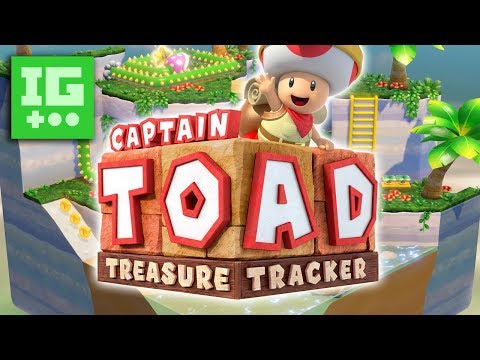
 For more infomation >> What happens when you consume a lot of vitamin D | Natural Health - Duration: 6:01.
 For more infomation >> 《爸爸6》jasper回归,新宝宝小名可爱,期待范丞丞、毕雯珺实习 - Duration: 9:33.
  For more infomation >> 范丞丞加盟《爸爸去哪儿6》的录制,00后"实习爸爸"将诞生? - Duration: 3:22.
  For more infomation >> 《爸爸6》路透照:范丞丞表情严肃,Jasper小汤圆软萌,嗯哼没来 - Duration: 6:54.
  For more infomation >> Mấy Anh Muốn Sướng Thì Phải Như Này Phim Hay Mỗi Ngày Ngọc Vlogs - Duration: 2:22.
 For more infomation >> Nonstop Việt Mix 2018 || Liên Khúc Nhạc Trẻ Remix 8x 9x Gây Nghiện || Trung Ckc - Duration: 1:13:49.
 For more infomation >> Fabio Quartararo: "I Have Some Offer From MotoGP Team" - Duration: 1:28.
 For more infomation >> 7/8/18 12:57 (I-35, Oklahoma City, OK 73129, USA) - Duration: 14:19.


 For more infomation >> University of Kansas Defaces American Flag On Campus, Flies It With Foul Message - Duration: 4:10.
 For more infomation >> Monthly Montage | June 2018 Part Two - Duration: 21:27.
  For more infomation >> Trump Just Put All Crooked Judges On Notice With Sudden Executive Order Overnight – He's Had it! - Duration: 6:33.
 For more infomation >> 장 윤정은 2 년 후에 돌아왔다. - Duration: 1:47.
  For more infomation >> 크러쉬, 앨범 '원더로스트' - Duration: 4:10.
  For more infomation >> 갓세븐 '굿데이 뉴욕' - Duration: 5:30.
 For more infomation >> 한혜진 차우찬 결별 궁금증 알아보기 - Duration: 4:17.
 For more infomation >> Odiados por causa do amor (Homilia Diária.898: Sexta-feira da 14.ª Semana do Tempo Comum) - Duration: 5:22.
  For more infomation >> Botafogo pode negociar Igor Rabello com o Genoa|x3and1baller - Duration: 3:23.
  For more infomation >> Modric celebra classificação da Croácia e diz que imprensa inglesa incentivou o time - Duration: 3:47.
  For more infomation >> The Last Word with Lawrence O'Donnell 7/12/2018 | MSNBC Today July 12, 2018 - Duration: 41:19.
  For more infomation >> O Grito da Morte | Trailer - Duration: 1:31.
  For more infomation >> Infertilidade – O que é, Causas e Tratamentos - Duration: 4:27.
  For more infomation >> STJD alivia para brigões de Palmeiras e Fla e pune apenas Luan - Duration: 1:40.
  For more infomation >> Com gol de Carneiro, São Paulo vence Azulão em jogo-treino no Morumbi|x3and1baller - Duration: 3:36.
  For more infomation >> Neymar joga pôquer de madrugada após eliminação na Copa|x3and1baller - Duration: 2:16.
  For more infomation >> Marcelo dá adeus emocionado a CR7 em mensagem enigmática|x3and1baller - Duration: 3:06.
  For more infomation >> কীসের জোরে ফাইনালে পৌছে গেল ক্রোয়েশিয়া, দেখুন গোপন তথ্য | Croatia Winning moment | World Cup news - Duration: 1:58.
  For more infomation >> Fluminense encaminha acerto com atacante equatoriano|x3and1baller - Duration: 3:39.
  For more infomation >> Müslüm Gürses Hangimiz Sevmedik - Duration: 3:57.
  For more infomation >> Dermatite de Estase – Causas, Sintomas e Tratamentos - Duration: 4:45.
  For more infomation >> Khea - S.A.D LETRA EN LOS SUBTITULOS - Duration: 2:11.
  For more infomation >> Sem Jailson, Weverton se prepara para maior chance no Palmeiras|x3and1baller - Duration: 2:55.
  For more infomation >> Korres Olive Oil Olive Blossom Body Trio - Duration: 10:43.
  For more infomation >> Gli abbinamenti impossibili - Duration: 1:32.

No comments:
Post a Comment